

Q141) A 50 year old obese woman with history of uncontrolled Hypertension and congestive heart failure is admitted with complaints of palpitations for the past one week. Her symptoms have worsened over the past 24 hours. An electrocardiogram shows atrial fibrillation with rapid ventricular response. After adequately controlling her heart rate with pharmacotherapy, warfarin therapy is initiated at 10mg per day and the patient is discharged. Three days after her discharge, patient presents to the ER with erythematous and painful lesion on her right thigh 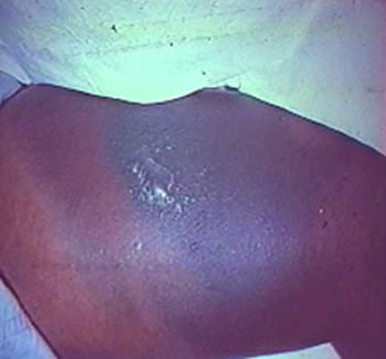
The most likely etiology of this condition is:
A) Cholesterol Embolism
B) Toxic Epidermal Necrolysis
C) Steven Johnson Syndrome
D) Sudden drop in Protein C levels
E) Necrotizing Fascitis
142) The next IMMEDIATE step in managing this patient is:
A) Initiate Heparin
B) Surgical Debridement
C) Intravenos Clindamycin
D) Stop Warfarin, administer Vitamin K and initiate Heparin
E) Intravenos Corticosteroids
Appropriate treatment has been initiated and the patient symptoms have much improved. Patient is concerned about the potential risks from her chronic atrial fibrillation.Which of the following is important in long term management of this patient’s atrial fibrillation associated risks?
A) Clopidogrel
B) Low molecular weight heparin daily
C) Initiate Warfarin at a low dose and titrate slowly to INR of 2 to 3
D) Aspirin only
E) No anticoagulation is necessary
Filed under: USMLE Test Prep |


 Archer USMLE Step 3 Blog
141.D
142.D
143.C
d
d
c
d protein c deficiency
d treat vit k and heparin
a
141.d
142.d
143.c
D,D,C
d, d, c