Posted on April 14, 2012 by Archer USMLE Reviews
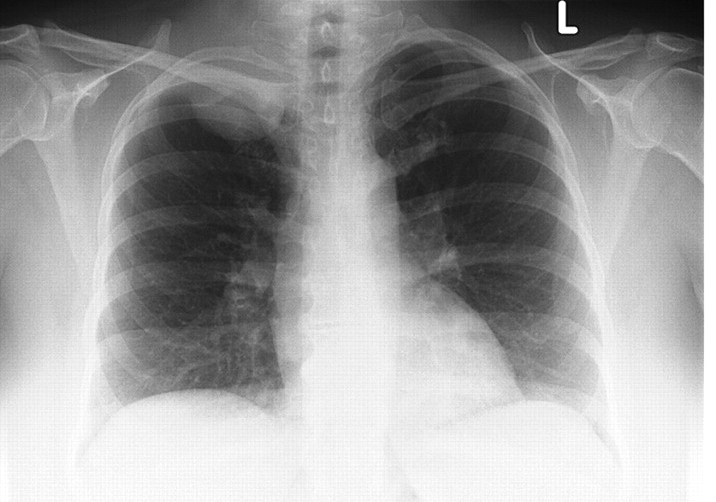
351) A 22 year old woman presents to the emergency room with complaints of shortness of breath, dizziness and tingling in her extremities. Her past medical history is unremarkable. She denies any history of blood clots in her family. She denies any recent long flight trips. She does not smoke. On examination, pulse is 110/min and respiratory rate is 26/min. She is afebrile and blood pressure is within normal limits. Pulse oximetry reveals 99% on room air. There are no physical abnormalities . A D-dimer level is 50µg/l . An electrocardiogram shows sinus tachycardia without ant ST-T changes. Chest x-ray is unremarkable. Which of the following is the most appropriate next step in management?
A) Start Conazepam
B) Re-breathing in to a paper bag
C) Start Calcium Gluconate
D) Re-assure and teach to deliberately slow down respiration
E) Admit to ward and start high flow oxygen
Filed under: Uncategorized, USMLE Test Prep | Tagged: Archer Psychiatry, Archer pulmonology, Psychiatry, USMLE Step 3 psychiatry, USMLE STEP 3 PULMONOLOGY | 12 Comments »
Posted on April 14, 2012 by Archer USMLE Reviews
350) A 68 year old man with recently diagnosed Parkinson’s disease is evaluated during a follow-up visit. He was started on medications to help with the motor symptoms of his disease. He reports that the medications have not helped him much however, he has been experiencing difficulty concentrating on his job and has lost interest in life. He reports inability to relish his life, sadness and decreased appetite. On examination, his mood is depressed . His facial expressions are masked. He has a resting tremor and generalized slowness of movements. Which of the following is the most appropriate next step in management?
A) Discontinue Anti-parkinson’s medications
B) Increase the dose of anti-parkinson’s medications
C) Inquire about Suicidal ideation
D) Refer to Neurology
E) Admit to Psychiatry ward
Filed under: Uncategorized, USMLE Test Prep | Tagged: Archer Psychiatry, Psychiatry, USMLE Step 3 psychiatry | 7 Comments »
Posted on April 14, 2012 by Archer USMLE Reviews
349) A 46 year old man presents to your office with generalized itching. The itching is severe during shower and for past few weeks, it has become intolerable. He denies any headache, chest pain or shortness of breath. He does not smoke and consumes alcohol only occasionally. He works as a public health officer in New York City. He reports no sleep related problems, denies snoring at night or day-time drowsiness. He denies any past medical problems . On examination, he is overweight, afebrile, Blood pressure 110/60 mm Hg, Heart Rate 88/min, Respiratory rate is 16/minute. Physical examination is benign. There is no splenomegaly. A CT Scan of the chest, abdomen and pelvis does not reveal any neoplasm. Laboratory investigations reveal :
WBC : 9.0k/µl
Hemoglobin 20gm% ( N = 13.5 to 16.5gm%
Hematocrit 62%
Mean Corpuscular Volume ( MCV) 65µl
Platelet count 280k/µl
Serum Creatinine 0.8mg%
Serum Calcium 9.8mg%
Erythropoetin Level 3U/L ( Normal 5 to 25U/L)
Which of the following is features can be seen with this condition?
A) Low serum uric acid
B) Iron deficiency
C) Elevated HGBA2 fraction on HGB electrophoresis
D) Reduced Leucocyte Alkaline Phosphatase
E) Elevated Reticulocyte Count
Filed under: Uncategorized, USMLE Test Prep | Tagged: Archer hematology, Hematology, usmle hematalogy, USMLE step 3 Hematology | 13 Comments »
Posted on April 9, 2012 by Archer USMLE Reviews
348) A 6 year old boy is evaluated in your office for complaints of generalized swelling of his body. His mother reports she has noticed increasing swelling of his face, abdomen and extremities over the past 3 weeks. He does not have any significant past medical problems There is no history of fever or sore-throat. He denies shortness of breath or cough. On examination, he is afebrile, Blood pressure 100/60 mm Hg, Heart Rate 88/min, Respiratory rate is 16/minute. He appears comfortable. His face is grossly swollen. There is mild ascites. Lower extremities reveal gross edema up until the level of knees. Urinalysis showed 3+ proteinuria, no red cell or casts. A 24 hour Urine total protein is obtained and it shows proteinuria at 7.0 gm/24 hours. Serum total protein 4.0gm% and albumin 2.0gm% . He is advised to start sodium restricted diet. Which of the following management options is most appropriate next step for this patient?
A) Admit and start Albumin infusion
B) Corticosteroid Trial
C) Renal Biopsy
D) Obtain Anti-Streptolysin O titer
E) Furosemide
Filed under: Uncategorized, USMLE Test Prep | Tagged: ARCHER NEPHROLOGY, archer pediatrics, Archer pulmonology, dr.red nephrology lecture, usmle step 3 nephrology, USMLE STEP 3 PULMONOLOGY, USMLE STEP3 PEDIATRICS | 10 Comments »
Posted on April 9, 2012 by Archer USMLE Reviews
347) A 34 year old man is recently diagnosed with Stage IIA Hodgkin’s lymphoma and has received one cycle of chemotherapy with Adriamycin, Bleomycin, Vinblastine and Dacarbazine. He is scheduled to receive three more cycle followed by involved field radiation therapy. One week after his first cycle of chemotherapy, he presents to your office with increasing swelling of his legs. He denies any fever, chest pain, rash or shortness of breath. On examination, breath sounds are decreased in bilateral lower lungs. There is 2+ edema in his lower extremities. Laboratory investigations show reduced albumin at 2.5gm%. Urinalysis reveals 3+ proteinuria with out any evidence o red cells or red cell casts. A MUGA ( Multigated Acquisition Scan) has been ordered to evaluate his cardiac function and results are pending. Which of the following is most likely explanation of his presentation?
A) Adriamycin Cardiomyopathy
B) Allergic interstitial nephritis
C) Focal Segmental Glomerulosclerosis
D) Bleomycin nephrotoxicity
E) Minimal Change Disease
Filed under: Uncategorized, USMLE Test Prep | Tagged: ARCHER NEPHROLOGY, Archer oncology, dr.red nephrology lecture, usmle step 3 nephrology, USMLE STEP 3 ONCOLOGY | 11 Comments »
Posted on April 9, 2012 by Archer USMLE Reviews
346) A 54 year old woman presents to your office with progressively increasing swelling of her bilateral lower extremities and abdominal distension. She denies any fever, cough or shortness of breath. Her medical history is significant for hypertension and osteoarthritis. She takes Enalapril and Hydroclorthiazide for her hypertension and Ibuprofen for osteoarthritis on a daily basis . She denies any rash. On examination, she is afebrile, Blood pressure 130/80 mm Hg and respiratory rate is 18/min . Auscultation reveals reduced breath sounds on both sides. Abdominal exam is remarkable for shifting dullness consistent with ascites. Lower extremities reveal gross edema up until the level of knees. Urinalysis shows no eosinophils or redcells or casts, 3+ proteinuria, no nitrite or leukoesterase. Urine total protein is 6.0 gm/24 hours. Serum total protein 4.0gm% , albumin 2.0gm%. SGOT, SGPT and Alkaline phosphatase are within normal limits. Serum creatinine is o.8mg%. Skin examination si normal with out any rash. Which of the following management options is most appropriate next step for this patient?
A) Discontinue Enalapril
B) Renal Biopsy
C) Discontinue Ibuprofen
D) Furosemide
E) Obtain Anti-Nuclear Antibodies
F) Trial of Corticosteroids
Filed under: Uncategorized, USMLE Test Prep | Tagged: ARCHER NEPHROLOGY, dr.red nephrology lecture, usmle step 3 nephrology | 17 Comments »
Posted on April 9, 2012 by Archer USMLE Reviews
345) A 8 year old boy is brought to the Emergency room by his mother with complaints of shortness of breath. His mother reports she has noticed increasing swelling of his face, abdomen and extremities over the past 4 weeks. She scheduled an appointment with his pediatrician in the upcoming week however, she brought him to the ER today because he started getting distressed because of breathing difficult. The patient does not have any significant medical problems and mother reports he has always been a “good kid” at the school. There is no history of fever or sore-throat. On examination, he is afebrile, Blood pressure 100/60 mm Hg (Standing) , 108/60 ( Lying Down) and Heart Rate 92/min ( Standing), 88/min (Lying Down). He is tachypneic with respiratory rate is 26/min and is using accessory muscles. His face is grossly swollen. Breath sounds are reduced on both sides and there is massive ascites with scrotal edema. Lower extremities reveal gross edema up until the level of knees. Urinalysis showed 3+ proteinuria, no red cell casts or hematuria. Urine total protein is 8.0 gm/24 hours. Serum total protein 4.0gm% and albumin 2.0gm% . A chest X-ray shows bilateral pleural effusions. Which of the following management options is most appropriate next step for this patient?
A) Renal Biopsy
B) Corticosteroid Trial
C) Furosemide
D) Furosemide with Albumin infusion
E) Consult Nephrology
Filed under: Uncategorized, USMLE Test Prep | Tagged: ARCHER NEPHROLOGY, archer pediatrics, Archer pulmonology, dr.red nephrology lecture, usmle step 3 nephrology, USMLE STEP 3 PULMONOLOGY, USMLE STEP3 PEDIATRICS | 7 Comments »
Posted on April 7, 2012 by Archer USMLE Reviews
344) A 65 year old man with history of smoking is recently diagnosed with Stage IA non-small cell lung cancer of the right lung. He has no other significant past medical history. He was subsequently admitted and underwent wedge lower left pulmonary resection via. Video-assisted thoracic surgery (VATS). On the 2nd postoperative day, a chest x-ray reveals right sided pleural effusion was detected on chest X-Ray. On examination, he is afebrile. Breath sounds are decreased on the right side and there is dullness to auscultation. A thoracentesis is performed and a chest tube is inserted. Which of the following is most likely to be found on this pleural fluid analysis?
A) Low glucose
B) Elevated LDH > 1000 IU/L
C) High Amylase
D) Cholesterol level > 200mg%
E) Triglycerides > 110mg%
Filed under: Uncategorized, USMLE Test Prep | Tagged: Archer pulmonology, USMLE STEP 3 PULMONOLOGY | 6 Comments »
Posted on April 7, 2012 by Archer USMLE Reviews
343) A 52 year old woman with history of triple-negative, metastatic breast cancer presents to the Emergency Room with increasing shortness of breath. She received multiple courses of chemotherapy in the past and her cancer has progressed despite initial response to chemotherapy. On examination, she is afebrile, respiratory rate is 24/min, Blood pressure 120/70 mm Hg and Heart Rate 106/min. Breath sounds are decreased on right side of the chest and there is dullness to auscultation. A chest X-ray shows collapsed right lung and massive right sided pleural effusion. A thoracentesis is performed followed by thoracostomy tube is placement and about 2000 ml fluid is drained. About one houar after the procedure, the patient develops severe shortness of breath and cough with pink and foamy sputum. A pulse oximetry shows Sa02 at 86%. Which of the following most likely explains her newly developed symptoms?
A) Alveolar Hemorrhage
B) Lymphangiocarcinomatosis
C) Chylothorax due to Thoracic Duct Injury
D) Pulmonary edema
E) Acute Respiratory Distress Syndrome
Filed under: Uncategorized, USMLE Test Prep | Tagged: Archer pulmonology, USMLE STEP 3 PULMONOLOGY | 6 Comments »
Posted on April 7, 2012 by Archer USMLE Reviews
342) A 65 year old man presents with progressively increasing shortness of breath. He has a 100 pack year history of smoking. His past medical history is significant for coronary artery disease and congestive heart failure. He has been admitted several times in the past one year for Congestive heart failure exacerbations which resulted from his non-compliance with diet and medications. His medications include aspirin, metoprolol, enalapril, and spironolactone and tiotropium inhaler. On examination, he is afebrile with respiratory rate 24/min, pulse 106beats/min, blood pressure 140/90. Crepitations are heard at bilateral lung bases and breath sounds decreased bilaterally. A 2D echocardiogram reveals ejection fraction at 30% . An EKG reveals changes consistent with left ventricular hypertrophy. A Chest X-ray shows moderate pleural effusions bilaterally. Which of the following is the most appropriate next step in management of pleural effusion?
A) Intravenous Furosemide
B) Tube Thoracostomy
C) Tube thoracostomy followed by Pleurodesis
D) Needle thoracentesis
E) Implantable Cardioverter-Defibrillator (ICD) placement
Filed under: Uncategorized, USMLE Test Prep | Tagged: Archer cardiology, Archer pulmonology, USMLE STEP 3 CARDIOLOGY, USMLE STEP 3 PULMONOLOGY | 10 Comments »
Posted on April 7, 2012 by Archer USMLE Reviews
341) A 78 year old man presents with progressively increasing shortness of breath. He has a 100 pack year history of smoking. His past medical history is significant for chronic obstructive pulmonary disease, coronary artery disease and congestive heart failure. He has been admitted several times in the past one year for Congestive heart failure exacerbations which resulted from his non-compliance with diet and medications. His medications include aspirin, metoprolol, enalapril, and spironolactone and tiotropium inhaler. On examination, he is afebrile with respiratory rate 24/min, pulse 106beats/min, blood pressure 140/90. Breath sounds are decreased and there is dullness to percussion on the left side of the chest. Heart sounds are regular and there is no S3 gallop. A 2D echocardiogram reveals ejection fraction at 30% and a brain natriuretic peptide 250 pg/ml (Normal less than 100pg/ml) . An EKG reveals changes consistent with left ventricular hypertrophy. A Chest X-ray is shown below:
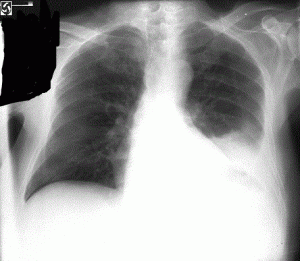
Which of the following is the most appropriate next step in management?
A) Intravenous Furosemide
B) Tube Thoracostomy
C) Intravenos Nitroglycerin
D) Needle thoracentesis
E) Implantable Cardioverter-Defibrillator (ICD) placement
Filed under: Uncategorized, USMLE Test Prep | Tagged: Archer cardiology, Archer pulmonology, USMLE STEP 3 CARDIOLOGY, USMLE STEP 3 PULMONOLOGY | 10 Comments »
Posted on April 7, 2012 by Archer USMLE Reviews
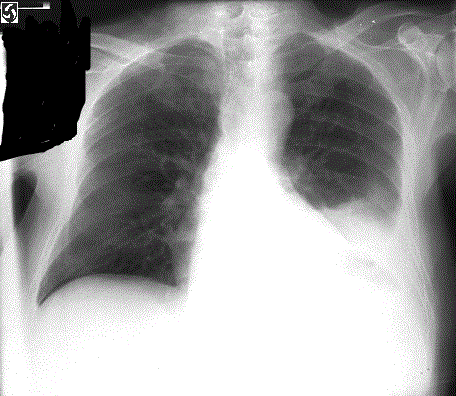
340) A 52 year old woman with history of triple-negative, metastatic breast cancer presents to the Emergency Room with increasing shortness of breath. This is her third Emergency room visit in the past 2 months. Earlier, she was admitted to the hospital twice for massive pleural effusion and underwent therapeutic thoracentesis. She was told that the cancer had spread to her lungs and pleura. She received multiple courses of chemotherapy in the past and her cancer has progressed despite initial response to chemotherapy. Her oncologist recommended palliative care. On examination, she is afebrile, respiratory rate is 24/min, Blood pressure 120/70 mm Hg and Heart Rate 106/min. Breath sounds are decreased on right side of the chest. D-dimer level is 60ng/ml ( normal < 500 ng/ml) . A chest X-ray is shown below:

Which of the following management options is most appropriate for this patient?
A) Obtain Pleural biopsy
B) Tube thoracostomy and Pleurodesis
C) Start Heparin and obtain CT Angiogram
D) Pleuro-perintoneal shunt
E) Repeat Therapeutic thoracentesis
Filed under: Uncategorized, USMLE Test Prep | Tagged: Archer cardiology, Archer oncology, archer palliative care, Archer pulmonology, Archer radiology, USMLE STEP 3 CARDIOLOGY, USMLE STEP 3 ONCOLOGY, usmle step 3 palliative care, USMLE STEP 3 PULMONOLOGY, USMLE STEP 3 RADIOLOGY | 17 Comments »
Posted on April 3, 2012 by Archer USMLE Reviews
339) A 55 year old man presents to the Emergency Room with complaints of swelling of his face and worsening cough for the past two days. Swelling increases on lying down. He complaints of shortness of breath for past 2 hours. He has no significant past medical problems. He smoked about 1 pack per day for the past 25 years and consumes alcohol socially. On examination, he is in moderate respiratory distress with audible, loud Stridor. His face is grossly swollen and the veins over the neck, anterior chest and the face are engorged. On auscultation, there are no crepitations, s1 and s2 are regular and normal and there is no s3 gallop . A chest X-ray is shown below:
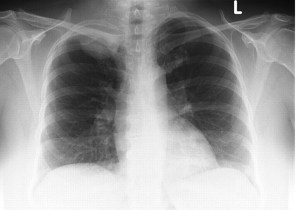
Which of the following is the most appropriate next step in management?
A) Radiation Therapy
B) Chemotherapy
C) CT guided Per-cutaneous Needle Biopsy
D) Video-Assisted Thoracoscopic Surgery (VATS)
E) Epinephrine
Filed under: Uncategorized, USMLE Test Prep | Tagged: Archer cardiology, Archer oncology, Archer pulmonology, Archer radiology, USMLE STEP 3 CARDIOLOGY, USMLE STEP 3 ONCOLOGY, USMLE STEP 3 PULMONOLOGY, USMLE STEP 3 RADIOLOGY | 9 Comments »
Posted on April 3, 2012 by Archer USMLE Reviews
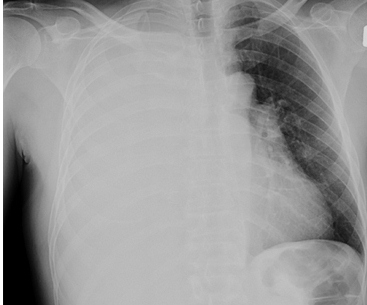
338) A 65 year old man presents to the Emergency Room with complaints of swelling of his face and worsening cough for the past two days. Swelling increases on lying down. He has no significant past medical problems. He smoked about 1 pack per day for the past 45 years and consumes alcohol socially. On examination, his vitals are satble with a blood pressure of 130/80 mm Hg. His face is grossly swollen and the veins over the neck, anterior chest and the face are engorged. There is no stridor. There is no laryngeal edema. Chest is clear to auscultation bilaterally. Cardiovascular examination shows normal s1 and s2 and there is no s3 gallop . A chest X-ray is shown below:
Which of the following is the most appropriate next step in management?
A) Radiation Therapy
B) Chemotherapy
C) CT guided Per-cutaneous Needle Biopsy
D) Video-Assisted Thoracoscopic Surgery (VATS)
E) Endotracheal Intubation
Filed under: Uncategorized, USMLE Test Prep | Tagged: Archer cardiology, Archer oncology, Archer pulmonology, Archer radiology, USMLE STEP 3 CARDIOLOGY, USMLE STEP 3 ONCOLOGY, USMLE STEP 3 PULMONOLOGY, USMLE STEP 3 RADIOLOGY | 12 Comments »
Posted on April 1, 2012 by Archer USMLE Reviews
337) A 62 year old man with past medical history of hypertension is admitted with bright red bleeding per rectum. He has no pain. He had four other episodes of bright red bleeding in the past one year. All the episodes were painless. He refused colonoscopy at that time. He denies any constipation or diarrhea. He reports no weight-loss. He denies any chest pain or shortness of breath. On physical examination, his vitals are stable. Cardiovascular examination reveals a 4/6 early peaking systolic murmur that radiates to his neck and the carotids. Reminder of his exam is benign. The patient agrees for endoscopic evaluation and is scheduled for Colonoscopy. Which of the following is most likely to be diagnosed on Colonoscopy?
A) Ischemic Colitis
B) Colon cancer
C) Diverticulosis
D) Arterio-Venous Malformations
E) Internal Hemorrhoids
Filed under: Uncategorized, USMLE Test Prep | Tagged: Archer cardiology, ARCHER GASTROENTEROLOGY, USMLE STEP 3 CARDIOLOGY, USMLE STEP 3 GASTROENEROLOGY | 12 Comments »
Posted on April 1, 2012 by Archer USMLE Reviews
336) A 21 year old hispanic woman is evaluated in your office for recently diagnosed Hypertension. On previous two visits, her blood pressure was 150/90 mm HG. She denies any family history of Hypertension. Her Past medical history is significant for multiple Urinary tract infections and enuresis as a child. She has no other complaints. On examination, her repeat blood pressure is 148/92 mm HG. There are no abdominal bruits. Ultrasonography reveals scarring of both kidneys. Which of the following is an important feature of this condition?
A) Positive Anti-DsDNA
B) Strong Genetic Pre-disposition
C) Association with Berry aneurysms
D) Postural Hypotension
E) Abdominal Striae
Filed under: Uncategorized, USMLE Test Prep | Tagged: Archer cardiology, ARCHER NEPHROLOGY, archer pediatrics, dr.red nephrology lecture, USMLE STEP 3 CARDIOLOGY, usmle step 3 nephrology, USMLE STEP3 PEDIATRICS | 14 Comments »




 Archer USMLE Step 3 Blog