Posted on April 21, 2012 by Archer USMLE Reviews
387) A 56 year old man with history of depression and hypertension is brought to the Emergency Room by his sister for altered mental status. There is no history of fever, nausea, vomiting or diarrhea. There is no evidence of any witnessed seizure. She is not aware of what medications he takes. On examination, he is disoriented and lethargic. He is afebrile, Pulse is 84/min, Respiratory rate 18/min, Blood pressure 80/40 mm Hg, Oxygen saturation 98%. He does not respond to verbal commands. Gag reflex is present. Respiratory examination si normal with out any wheezing, rhonchi or crepitations. Cardiac examination and abdominal exam is benign. Intravenous Naloxone and Thiamine were administered in the field without any response. An electrocardiogram is normal. Serum electrolytes and complete blood count, finger stick glucose are within normal limits. Arterial blood gases does not show any acidemia. A urine drug screen reveals:
Cocaine – Negative
Amphetamines – Negatives
Benzodiazepenes – Positive
Opiates – Negative
Cannabis – Negative
Tricyclic Anti-Depressants – positive
A suction of his airway and central line are placed and he is started on intravenous fluids. His systolic blood pressure remains in 70 to 80 mm Hg range
Which of the following is the most appropriate next step?
A) Activated Charcoal
B) Intravenous Flumazenil
C) Serum Alkalinization
D) Start Norepinephrine
E) Intravenous Lidocaine
Filed under: Uncategorized, USMLE Test Prep | Tagged: Archer cardiology, archer poisoning questions, drug overdose questions, poisoning, USMLE STEP 3 CARDIOLOGY, usmle step 3 poisoning questions | 24 Comments »
Posted on April 21, 2012 by Archer USMLE Reviews
386) A 54 year old man presents to the emergency room with dizziness and intermittent palpitations for the past 12 hours. He denies any syncopal episodes or headache or seizures. He has no significant cardiac history. He was seen in the outpatient clinic one week ago for pneumonia and was started on Moxifloxacin. His other medical problems include hypertension for which he is on enalapril and Gastro-esophageal reflux disease for which he takes esomoprazole. Physical examination reveals regular heart sounds and no murmurs. Complete Blood Count and Serum electrolytes are within normal limits. An electrocardiogram is obtained and is shown below:

Which of the following is the most appropriate action at this time?
A) Intravenous Magnesium sulfate
B) Discontinue Moxifloxacin
C) Discontinue Esomoprazole
D) Transvenous Pacing
E) Intravenous Isoproterenol
Filed under: Uncategorized, USMLE Test Prep | Tagged: Archer cardiology, USMLE STEP 3 CARDIOLOGY | 11 Comments »
Posted on April 21, 2012 by Archer USMLE Reviews
385) A 74 year old man with advanced dementia is sent from nursing for evaluation of umbilical hernia. He is accompanied by his sister who thought that the bulge looked ” ugly” and demanded that he be evaluated for surgery. The patient has been nursing home bound for the past four years. There is no history of nausea or vomiting. When fed, he eats normally. The patient is not oriented and is unable to give further history. He does not have living will or a power of attorney. On examination, his vitals are stable. He appears comfortable. Abdominal examination showed a palpable bulge in the umbilical area which is reducible. There is no erythema and the patient winces when pressure is applied. There is no rigidity. When tried to explain him about possible surgery, the patient does not comprehend. He is not oriented to place, person or time. Which of the following is the most appropriate action at this time?
A) Do not consent for surgery
B) Obtain Psychiatry evaluation for Capacity assessment
C) Re-Evaluate his competence to make decisions
D) Consent him for surgery
E) Obtain Consent from his sister
Filed under: Uncategorized, USMLE Test Prep | Tagged: ARCHER ETHICS, usmle ethics, usmle step 3 ethics | 10 Comments »
Posted on April 21, 2012 by Archer USMLE Reviews
384) A 55 year old airline pilot presents for a follow-up visit for hypertension. He was diagnosed with hypertension a year ago and has been on treatment with hydrochlorthiazide and lisinopril. He denies any chest pain, palpitations or shortness of breath on exertion. He has no other significant health issues. His Hemoglobin a1C about 6 months ago was 5.0% . A lipid profile obtained 3 months ago showed a total chlesterol of 270mg% with HDL cholesterol of 34mg%. He smokes about 1 pack per day but denies any drug or alcohol abuse. There is no family history of Diabetes or coronary artery disease or abdominal aorta aneurysm. On examination, his blood pressure is 138/74. Cardiac examination shows regular heart sound with no S3 gallop or S4. There are no audible murmurs. Abdominal examination is benign and there are no audible bruits. A complete blood count, comprehensive metabolic panel and urinalysis are unremarkable. A resting electrocardiogram shows changes consistent with left ventricular hypertrophy. He had a colonoscopy five years ago which was normal. Which of the following is indicated at this time?
A) No additional Tests
B) Exercise Stress Test
C) Cardiac catheterization
D) Abdominal Ultrasound for Aortic aneurysm
E) Fecal Occult Blood Testing
Filed under: Uncategorized, USMLE Test Prep | Tagged: Archer cardiology, archer general internal medicine, archer preventive medicine, USMLE STEP 3 CARDIOLOGY, usmle step 3 preventive medicine | 9 Comments »
Posted on April 21, 2012 by Archer USMLE Reviews
383) A 38 year old african-american male nurse is evaluated in your office because his blood pressure was found to be elevated when the doctor Employee Health Center checked his blood pressure. He was checked in the Employee Health 3 months ago and at that time, his blood pressure was 146/94 mm Hg and a repeat reading by the same doctor was 148/92 mm Hg a month ago. He checked his blood pressure at home two times at his home and it was ranging between 120/76 to 124/82. He does not trust this doctor at his work place so, he decided to come and visit you. He denies any dizziness, chest pain, palpitations or shortness of breath. He does not smoke or does not drink alcohol. Several members in family have history of Hypertension. On examination, his blood pressure is 150/94. His Body Mass Index is 26kg/m2. Cardiac examination shows regular heart sounds. There are no audible murmurs. An electrocardiogram reveals positive voltage criteria for left ventricular hypertrophy. A subsequent 2D-Echo reveals left ventricular hypertrophy with good ejection fraction at 60% and no valvular problems. Serum creatinine is 1.0mg% and Urinalysis is normal. A lipid profile has been ordered. Which of the following is the most appropriate investigation to be ordered next?
A) Exercise Stress Test
B) Ambulatory Blood Pressure Monitoring
C) Hemoglobin A1C
D) Plasma Metanephrines
E) Captopril Renal Scan
Filed under: Uncategorized, USMLE Test Prep | Tagged: Archer cardiology, archer preventive medicine, USMLE STEP 3 CARDIOLOGY, usmle step 3 preventive medicine | 7 Comments »
Posted on April 21, 2012 by Archer USMLE Reviews
382) A 36 year old Caucasian man presents for a pre-employment health physical. He denies any health problems in the past. He does not smoke or drink alcohol. He denies drug abuse. He enjoys good health and has no significant medical issues. He has no family history of Hypertension, Dyslipidemia, Diabetes or coronary artery disease. On examination, his blood pressure is 118/74. Body Mass Index is 24kg/m2. Cardiac examination shows regular heart sound with no S3 gallop or S4. There are no audible murmurs. Abdominal examination is benign and there are no audible bruits. A complete blood count, comprehensive metabolic panel, urinalysis and urine drug screen are unremarkable. Which of the following is indicated at this time?
A) No additional Tests
B) Serum Total Cholesterol and HDL – cholesterol
C) Hemoglobin A1C
D) Fasting Plasma Glucose
E) Prostate Specific Antigen
Filed under: Uncategorized, USMLE Test Prep | Tagged: Archer cardiology, archer general internal medicine, archer preventive medicine, The Healthy Patient!, USMLE STEP 3 CARDIOLOGY, usmle step 3 preventive medicine | 8 Comments »
Posted on April 21, 2012 by Archer USMLE Reviews
381) A 32 year old Caucasian man is evaluated in your office for hypertension. He reports that he was first noted to have high blood pressure 6-months ago at which time the reading was 146/92 . At that time, he was asked to follow-up in the office however, he disregarded the advise. Recently, during a pre-employment check-up and again at a community health fair, he was noted to have high blood pressure above 150/90 . He denies any dizziness, chest pain, palpitations or shortness of breath. He does not smoke or does not drink alcohol. His mother was diagnosed with hypertension at 60 years of age and father has had hypertension since the age of 50. He On examination, his blood pressure is 154/98. Body Mass Index is 24kg/m2. Cardiac examination shows regular heart sound with no S3 gallop or S4. There are no audible murmurs. Abdominal examination is benign and there are no audible bruits. Femoral and radial pulses are normal with out any delay. Ophthalmological examination is normal An electrocardiogram is normal with no evidence of left ventricular hypertrophy. Serum creatinine is 1.0mg% and Urinalysis is normal. Which of the following is the most appropriate next step in evaluating his Hypertension?
A) Renal Artery Magnetic Resonance Angiography
B) 24 Hour Urinary Metanephrines
C) Plasma Renin Activity- Aldosterone Ratio
D) Ambulatory Blood Pressure monitoring
E) No additional diagnostic work-up
Filed under: Uncategorized, USMLE Test Prep | Tagged: Archer cardiology, USMLE STEP 3 CARDIOLOGY | 12 Comments »
Posted on April 21, 2012 by Archer USMLE Reviews
379) A 38 year old man from India presents to out-patient clinic with complaints of abdominal pain and bloating. He also reports having intermittent diarrhea. His symptoms are worse upon eating and have progressively worsened over the past 6 months. He has lost about 6 lbs weight over the same period. He has come to visit his sister in the United States and she forced him to seek medical attention. Upon review of systems, he reports intermittent cough associated with mild shortness of breath and wheezing. His past medical history includes frequent episodes of sinus infections. On examination, he appears comfortable. Chest, Cardiac and Abdominal examination is benign. Chest X-ray is normal. Laboratory investigations are shown below:
WBC : 9.0k/µl
Differential : Neutophils 42%, Lymphocytes 30%, Monocytes 8%, Eosinophils 18%
Hemoglobin 13.5gm%
Platelet count 280k/µl
HIV serology : Negative
Stool for ova and parasites : Negative
Liver function Tests: Normal
Serum Creatinine : 1.0mg%
Urinalysis : normal
Which of the following is the most likely diagnosis?
A) Chagas Disease
B) Eosinophilic Gastroenteritis
C) Churg Strauss Syndrome
D) Wegener’s Granulomatosis
E) Tropical Pulmonary Eosinophilia ( Microfilariasis)
380) Which of the following is the most appropriate next step?
A) Upper GI Endoscopy
B) Pulmonary Function Tests
C) Trypanosoma Cruzi Antibodies
D) Di-ethyl carbazine therapy
E) Anti-Proteinase -3 antibodies ( C-ANCA)
Filed under: Uncategorized, USMLE Test Prep | Tagged: ARCHER GASTROENTEROLOGY, USMLE STEP 3 GASTROENEROLOGY | 7 Comments »
Posted on April 20, 2012 by Archer USMLE Reviews
378) A 34 year old caucasian woman comes for re-evaluation of her chronic epigastric pain and burning. She feels bloated and full even after eating small amounts of food. She denies any chest pain or shortness of breath. She failed several courses of treatment with h2-blockers and proton pump inhibitiors. She has had two endoscopies in the past which were normal, most recent endoscopy was three months ago. There was no evidence of gastric stasis on endoscopies after overnight fast. She was tested for H.pylori infection in the past and was negative. She denies dysphagia, weightloss, nausea, vomiting, dark colored stools or rectal bleeding. There is no family history of gastric malignancy. She does not smoke or drink alcohol. A ultrasound of the abdomen did not reveal any evidence of gall stones. Amylase and Lipase levels have been normal on several occassions. She has been anxious and unable to sleep at night. On examination, she is slightly under-weight for her age. Abdominal examination does not reveal any tenderness or palpable masses. Stool guaiac is negative. A complete blood count as well as comprehensive metabolic panel are normal. Which of the following is the most appropriate next step?
A) Antidepressants
B) Repeat Endoscopy
C) Recommend to take Antacid therapy as needed
D) Scintigraphic gastric emptying study
E) Observation
Filed under: Uncategorized, USMLE Test Prep | Tagged: ARCHER GASTROENTEROLOGY, USMLE STEP 3 GASTROENEROLOGY | 22 Comments »
Posted on April 20, 2012 by Archer USMLE Reviews
377) A 42 year old man with no significant past medical is evaluated in your office for complaints of burning epigastric pain in his abdomen for the past 2 months. The pain is worse after eating and it is worse at night. He denies any chest pain or shortness of breath. He takes over the counter antacids when the pain occurs and that seems to relieve the pain temporarily. He lives in New York City and has never traveled outside the United States. He denies dysphagia, weightloss, nausea, vomiting, dark colored stools or rectal bleeding. There is no family history of gastric malignancy. He does not smoke or drink alcohol. On examination, he is athletic. Abdominal examination does not reveal any tenderness or palpable masses. Stool guaiac is negative and complete blood count does not show any anemia. Which of the following is the most appropriate next step?
A) Obtain Upper GI Endoscopy
B) Obtain H.Pylori Serology by ELISA
C) Start Empiric trial with Omeprazole
D) Reassure because his dyspepsia is functional
E) Obtain H.Pylori Stool Antigen
Filed under: Uncategorized, USMLE Test Prep | Tagged: ARCHER GASTROENTEROLOGY, USMLE STEP 3 GASTROENEROLOGY | 21 Comments »
Posted on April 20, 2012 by Archer USMLE Reviews
376) A 56 year old Hispanic man with no significant past medical history presents to community health center with complaints of burning pain in his abdomen and bloating for the past 2 months. The pain is more is more in the epigastric area and is worse after eating and it is worse at night. He denies any chest pain or shortness of breath. He takes over the counter antacids when the pain occurs and that seems to relieve the pain temporarily. He denies dysphagia, weightloss, nausea, vomiting, dark colored stools or rectal bleeding. There is no family history of gastric malignancy. He does not smoke or drink alcohol. On examination, he is well-built. Abdominal examination does not reveal any tenderness or palpable masses. Stool guaiac is negative and complete blood count does not show any anemia. Which of the following is the most appropriate next step?
A) H.Pylori antibodies
B) Trial of Proton Pump Inhibitors
C) Empiric therapy for H.Pylori
D) Ultrasound Gall Bladder
E) Endoscopy
Filed under: Uncategorized, USMLE Test Prep | Tagged: ARCHER GASTROENTEROLOGY, USMLE STEP 3 GASTROENEROLOGY | 13 Comments »
Posted on April 20, 2012 by Archer USMLE Reviews
375) A 65 year old woman is evaluated in your office for weight-loss of 20lbs over the past 6 months. She thinks she has lost weight because she is scared of eating since food causes her to have significant abdominal pain. Pain is particularly worse when she takes a fatty meal and is associated with nausea and early satiety. She has a history of coronary artery disease for which she underwent percutaneous coronary intervention 2 years ago. She denies any chest pain, palpitations or irregular heart beat. She smoked 1 pack cigarettes per day for the past 40 years. On examination, her vitals are stable. Cardiac and abdominal examination are benign. Stool occult blood is negative. Which of the following is the most likely etiology of her symptoms?
A) Mesenteric vein thrombosis
B) Mesenteric atherosclerosis
C) Gastric Malignancy
D) Cholelithiasis
E) Mesenteric arterial thrombosis
Filed under: Uncategorized, USMLE Test Prep | Tagged: ARCHER GASTROENTEROLOGY, USMLE STEP 3 GASTROENEROLOGY | 13 Comments »
Posted on April 20, 2012 by Archer USMLE Reviews
373) A 70 year old woman presents to the emergency room with complaints of abdominal pain for the past one day. The pain is in in lower abdomen and is mild to moderate. It has started suddenly and is persistent. She also reports having had two episodes of loose and bloody stools this morning. Her past medical history is significant for coronary artery disease, hypertension and chronic kidney disease. On examination, she is afebrile, blood pressure is 130/80 mm Hg, pulse 90/min and respiratory rate 18/min. Cardiac examination reveals normal and regular heart sounds without murmurs. There is tenderness in the left lower quadrant of the abdomen. There is no rebound tenderness or rigidity. The patient is started on intravenous fluids. Stool studies reveal blood but no leukocytes. Clostridium difficle toxin is negative. Stool cultures are sent. Complete blood count shows White blood cell count at 20,000/µl with left shift. She is started on IV hydration. Which of the following is the most likely diagnosis?
A) Mesenteric Infarction
B) Acute Diverticulitis
C) Acute Mesenteric Ischemia
D) Ischemic Colitis
E) Inflammatory Bowel Disease
374) The patient in the above question undergoes appropriate diagnostic work up and the diagnosis is confirmed. Which of the following is the most appropriate next step in management ?
A) Broad spectrum antibiotics
B) Mesenteric angiography
C) Obtain Surgery Consult
D) Percutaneous Transluminal Angioplasty and Mestenteric stent
E) Start Methylprednisolone and Mesalmaine
Filed under: Uncategorized, USMLE Test Prep | Tagged: ARCHER GASTROENTEROLOGY, archer surgery, USMLE STEP 3 GASTROENEROLOGY, usmle step 3 surgery | 13 Comments »
Posted on April 20, 2012 by Archer USMLE Reviews
372) A 65 year old man presents to the Emergency room with complaints of severe abdominal pain that began 30 minutes ago while at rest. He reports diffuse pain that all over his abdomen, the lower back as well as in the flanks. His past medical history is significant for diabetes mellitus and peripheral vascular disease. He denies any abdominal trauma. He smokes about 1 pack cigarettes per day . On examination, he is in severe distress secondary to pain. He is afebrile, blood pressure is 80/40 mm Hg, pulse 120/min and respiratory rate 24/min. Abdomen is mildly distended with mild tenderness and a palpable pulsatile mass. Femoral and dorsalis pedis pulses are diminished. An electrocardiogram reveals sinus tachycardia. The patient is started on intravenous fluids and is placed on a cardiac monitor. Which of the following is the most appropriate next step?
A) CT scan of the abdomen
B) Exploratory laporotomy
C) Cardiac enzymes
D) Focused Abdominal Sonography in Trauma ( FAST)
E) Start Insulin Drip.
Filed under: Uncategorized, USMLE Test Prep | Tagged: Archer cardiology, ARCHER GASTROENTEROLOGY, archer surgery, USMLE STEP 3 CARDIOLOGY, USMLE STEP 3 GASTROENEROLOGY, usmle step 3 surgery | 22 Comments »
Posted on April 20, 2012 by Archer USMLE Reviews
371) A 45 year caucasian man is evaluated in your office prior to surgery for refractory heartburn symptoms. He was diagnosed with Gastro-esophageal reflux disease 2 years ago. Initially, his disease was mild and was responsive to over the counter antacids. He was started on PPI ( proton pump inhibitor trial 6 months ago and has not responded. He switched physicians and tried different brands of proton pump inhibitors with no benefit. An endoscopy was performed a year ago and repeat endoscopy 3 months ago revealed erosions and inflammations consistent with reflux esophagitis with out any background of barrett’s esophagus. The patient is scheduled for fundoplication surgery and is here for pre-operative evaluation. Which of the following should be performed at this time ?
A) 24 hour esophageal pH monitoring
B) Barium esophagogram
C) Esophageal motility studies
D) No additional tests needed , clear patient for surgery
E) H.Pylori Urea Breath Test
Filed under: Uncategorized, USMLE Test Prep | Tagged: ARCHER GASTROENTEROLOGY, archer surgery, USMLE STEP 3 GASTROENEROLOGY, usmle step 3 gastroenterology, usmle step 3 surgery | 20 Comments »
Posted on April 17, 2012 by Archer USMLE Reviews
370) A 47 year old woman presents to your office with complaints of change in her menstrual cycles. Lately, she has had very irregular periods and sometimes, they have been heavy. She reports her cycles have been irregular for past 8 months. Her most recent period was two weeks ago and was much heavier than usual. She also has started experiencing hot flashes. She is not on oral contraceptive pills. She does not smoke or use alcohol. She has no other past medical problems and otherwise, feels healthy. Her family history is unremarkable. Physical examination including pelvic examination is unremarkable. A urine pregnancy test and Thyroid stimulating hormone are within normal limits. Urinalysis is normal. Which of the following is the most appropriate initial step in management?
A) Reassure that she is menopausal transition and observe
B) Obtain Serum FSH level
C) Start Oral Contraceptive Pills
D) Endometrial Biopsy
E) Oral Progestin
Filed under: Uncategorized, USMLE Test Prep | Tagged: archer obstetrics, obgyn, usmle step 3 gynecology and obstetrics, usmle step 3 obstetrics | 18 Comments »
Posted on April 17, 2012 by Archer USMLE Reviews
369) A 56 year old post-menopausal woman presents to your office for evaluation of occasional vaginal spotting for past two weeks. She has not had a menstrual period for the past five years. She has never taken hormone replacement therapy. She denies any fever or dysuria. She is sexually active and enjoys it. Her bleeding is unrelated to sexual activity. She has no other past medical problems and otherwise, feels healthy. Physical examination is unremarkable. A transvaginal ultrasound reveals endometrial stripe thickness of 3mm. She is reassured and sent home. Two months later she is re-evaluated in your office for persistent vaginal spotting that has not resolved. She has seen another primary care physician a week ago for a second opinion because she was concerned. He repeated a transvaginal ultrasound which showed endometrial stripe thickness unchanged at 3 mm. Which of the following is the most appropriate management recommendation?
A) A trial of vaginal estrogen
B) Reassure and Observe
C) Vaginal pH testing
D) Oral Progestin Trial
E) Endometrial Biopsy
Filed under: Uncategorized, USMLE Test Prep | Tagged: archer obstetrics, obgyn, usmle step 3 gynecology and obstetrics, usmle step 3 obstetrics | 13 Comments »
Posted on April 17, 2012 by Archer USMLE Reviews
368) A 58 year old post-menopausal woman presents to your office with intermittent vaginal bleeding for the past 1 month. She has not had a menstrual period for the past six years. She has never taken hormone replacement therapy. She reports burning and irritation upon sexual intercourse. She denies any fever or dysuria. She has no other past medical problems and otherwise, feels healthy. On pelvic examination, vaginal epithelium is smooth, dry and shiny with complete loss of rugae. There are no obvious masses or polyps. Vaginal pH is 6.5 . Urinalysis is normal and is negative for nitrite or leucoesterase. A transvaginal ultrasound reveals endometrial stripe thickness of 2mm. Which of the following is the most appropriate next step in management?
A) Endometrial biopsy
B) Vaginal Estrogen Cream
C) Vaginal Lubricant Cream
D) Oral Estradiol
E) Check serum estradiol levels
Filed under: Uncategorized, USMLE Test Prep | Tagged: archer obstetrics, obgyn, usmle step 3 gynecology and obstetrics, usmle step 3 obstetrics | 12 Comments »
Posted on April 17, 2012 by Archer USMLE Reviews
367) A 62 year old woman presents to your office with complaints of vaginal spotting for the past three months. Occasionally, she also had vaginal bleeding. She is concerned with this new development because she has not has not had a menstrual period for the past ten years. She has never taken hormone replacement therapy. She also reports burning and irritation upon sexual intercourse. She denies any fever or dysuria. She has no other past medical problems and otherwise, feels healthy. On pelvic examination, vaginal epithelium is smooth, dry and shiny with complete loss of rugae. There are no obvious masses or polyps. Vaginal pH is 6.5 . Urinalysis is normal and is negative for nitrite or leucoesterase. Which of the following is the most appropriate next step in management?
A) Endometrial biopsy
B) Vaginal Estrogen Cream
C) Vaginal Lubricant Cream
D) Oral Estradiol
E) Check serum estradiol levels
Filed under: Uncategorized, USMLE Test Prep | Tagged: archer obstetrics, obgyn, usmle step 3 gynecology and obstetrics, usmle step 3 obstetrics | 8 Comments »
Posted on April 17, 2012 by Archer USMLE Reviews
366) A 59 year old woman is evaluated in your office for vaginal bleeding. The patient has not had a menstrual period for the past eight years. She has never taken hormone replacement therapy. Over the past 6 months she has had several episodes of spotting. The bleeding is more pronounced after sexual activity. Physical examination including pelvic examination is unremarkable. Which of the following is the most common cause of post-menopausal bleeding?
A) Endometrial Carcinoma
B) Endometrial Hyperplasia
C) Cervical polyps
D) Vaginal Atrophy
E) Fibroids
Filed under: Uncategorized, USMLE Test Prep | Tagged: archer obstetrics, obgyn, usmle step 3 gynecology and obstetrics, usmle step 3 obstetrics | 6 Comments »
Posted on April 17, 2012 by Archer USMLE Reviews
365) A 26 year old woman presents to the outpatient gynecology clinic with complaints of for intermittent vaginal bleeding. She has started Combination oral contraceptive pills 3 months ago. Initially, she had spotting in the first month after starting OC pills however, she now has frank bleeding for past 4 weeks. Her scheduled menstrual period usually, occurs during the pill free period of the month. She denies any dysuria , fever, vaginal discharge or post-coital bleeding. She smoked about 1 pack per day for the past eight years. She denies alcohol or drug use. Physical examination including pelvic examination is unremarkable. There is no vaginal discharge or adnexal tenderness. A urine pregnancy test is negative. Which of the following is the first step in managing this patient’s intermenstrual bleeding?
A) Observation
B) Smoking Cessation
C) Pelvic ultrasound
D) Increase Estrogen component of the pill
E) Change the progesterone component to Levonorgestrel
Filed under: Uncategorized, USMLE Test Prep | Tagged: archer obstetrics, obgyn, usmle step 3 gynecology and obstetrics, usmle step 3 obstetrics | 7 Comments »
Posted on April 17, 2012 by Archer USMLE Reviews
364) A 28 year old woman seeks your advice regarding an effective contraception method. She is sexually active with her long term boy-friend. He has been using condoms however, he prefers not to use them on a regular basis . She tells you that she does not want to consider an Intra-Uterine Device Her past medical history is significant for Gastro-esophageal reflux disease and well- controlled Epilepsy. Her medications include omeprazole and carbamazepine. She does not smoke. On examination, she is age appropriate with normal vitals. Physical examination including pelvic examination is normal. Which of the following contraceptive methods is most appropriate for this patient?
A) Continuous Combination Oral Contraceptive Pills
B) Cyclical Combination Oral Contraceptive Pills
C) Diaphragm with Spermicides
D) Estrogen-Progesterone vaginal ring ( Nuva-Ring)
E) Depot Medroxy Progesterone
Filed under: Uncategorized, USMLE Test Prep | Tagged: archer obstetrics, obgyn, usmle step 3 gynecology and obstetrics, usmle step 3 obstetrics | 7 Comments »
Posted on April 17, 2012 by Archer USMLE Reviews
363) A 25 year old woman presents to your office with complaints of inter-menstrual vaginal bleeding for the past one month. She is sexually active. She never used barrier methods for contraception but she has been on cyclical combination oral contraceptive pills ( Ethinyl estradiol + Levonorgestrol) for the past 3 months. She denies any fever or vaginal discharge or dysuria or pain. Her menstrual periods occur as scheduled every month during the pill free period however, she also has been experiencing inter-menstrual bleeding only for the past one month and sometimes, more after sexual activity. She never had irregular bleeding in the past and her scheduled periods have always been regular and on time. She denies smoking , alcohol or drug use. Upon physical examination, she is afebrile. There is no obvious vaginal discharge. When gentle endocervical swabbing is attempted, bleeding from endocervix is noted. On bimanual examination, she has no adnexal tenderness. A urine pregnancy test is negative. Which of the following is the most appropriate first management option?
A) Reassure that this is OC Pill related bleeding and will abate.
B) Test for N. gonorrhoeae and C. trachomatis
C) Increase the dose of Ethinyl Estradiol
D) Empiric antibiotic therapy for Gonorrhea and Chlamydia
E) Discontinue OC pills
Filed under: Uncategorized, USMLE Test Prep | Tagged: archer obstetrics, obgyn, usmle step 3 gynecology and obstetrics, usmle step 3 obstetrics | 10 Comments »
Posted on April 17, 2012 by Archer USMLE Reviews
362) A 26 year old woman presents to your office with complaints of intermittent vaginal bleeding after she started using oral contraceptive pills 1 month ago. She uses continuous oral contraceptive pill combination of ethinyl estradiol and norethindrone. She reports her bleeding is troublesome and interferes with activity. Because of the bleeding, she is considering discontinuing the oral pills but her partner does not want to use barrier methods of contraception. She is distressed and seeks some remedy to address this issue. She never had irregular bleeding in the past and her scheduled periods have always been regular and on time. Her bleeding is unrelated to sexual activity and is not associated with pain. She denies any dysuria, fever or vaginal discharge. She denies smoking or alcohol use. Physical examination including pelvic examination is unremarkable. There is no vaginal discharge or adnexal tenderness. A urine pregnancy test is negative and serum thyroid stimulating hormone as well as prolactin level are within normal limits. Which of the following is the most appropriate management option?
A) Observation
B) Stop the pills for 3 days and then resume at least 21 days
C) Pelvic ultrasound
D) Discontinue Oral Contraceptive pills
E) Vaginal fluid Nucleic Acid Test for Chlamydia Trachomatis
Filed under: Uncategorized, USMLE Test Prep | Tagged: archer obstetrics, obgyn, usmle step 3 gynecology and obstetrics, usmle step 3 obstetrics | 5 Comments »
Posted on April 16, 2012 by Archer USMLE Reviews
361) A 22 year old woman is seen in the outpatient clinic for intermittent vaginal bleeding. For the past two months, she has had spotting and occasionally, frank bleeding even before her scheduled menstrual period. It is unrelated to sexual activity and is not associated with pain. She denies any dysuria or fever. She is sexually active with her fiancee and she reports taking cyclical combined oral contraceptive pills ( OC pills) for the past 2 months. She has been following the exact directions regarding the use of oral contraceptive pills and her scheduled period occurs during the contraceptive free interval however, this unscheduled spotting and bleeding is bothering her. She denies smoking or alcohol use. Physical examination including pelvic examination is unremarkable. There is no vaginal discharge or adnexal tenderness. A urine pregnancy test is negative and serum thyroid stimulating hormone as well as prolactin level are within normal limits. Which of the following is the most appropriate management option?
A) Pelvic ultrasound
B) Reassure and counsel on consistent OC pill use
C) Increase estrogen component of the pills
D) Switch to continuous combined OC pill regimen
E) Discontinue Oral Contraceptive pills
Filed under: Uncategorized, USMLE Test Prep | Tagged: archer obstetrics, obgyn, usmle step 3 gynecology and obstetrics, usmle step 3 obstetrics | 6 Comments »
Posted on April 16, 2012 by Archer USMLE Reviews
Posted on April 16, 2012 by Archer USMLE Reviews
360) A 30 year old woman presents to your office accompanied by her husband. She is concerned about her inability to conceive despite having regular intercourse for the past six months. Her menstrual cycles have always been regular and she has not been using oral contraceptives for the past 10 months. She denies any cold or heat intolerance. She has no other complaints. She does not smoke or drink alcohol. On examination, she is age-appropriate. Pelvic examination is benign. A urine pregnancy test is negative. You counsel the couple and advise them on continuing regular sexual intercourse. Which of the following is the most appropriate next step?
A) Semen analysis
B) Re-evaluate in 6 months
C) Obtain luteal-phase progesterone level
D) Serum FSH level
E) Hysterosalpingography
Filed under: Uncategorized, USMLE Test Prep | Tagged: archer obstetrics, obgyn, usmle step 3 gynecology and obstetrics, usmle step 3 obstetrics | 10 Comments »
Posted on April 16, 2012 by Archer USMLE Reviews
359) A 50 year old woman with history of Diabetes Mellitus presents to your office with complaining of discomfort in her both legs for past few months. She describes unpleasant sensations as well as abnormal sensations such as including tingling, creeping and itching sensations deep in her legs while sitting. Walking a few steps relieves her symptoms. She denies any pain in the legs upon walking or at rest. Physical examination reveals slightly diminished pulses in bilateral lower extremities. Which of the following is the first step in managing her symptoms?
A) Nerve Conduction Studies
B) Cilostozol
C) Dopamine Agonists
D) Obtain Serum ferritin
E) Gabapentin
Filed under: Uncategorized, USMLE Test Prep | Tagged: archer general internal medicine, archer neurology, neurology, neurology usmle mcqs, usmle step 3 neurology | 11 Comments »
Posted on April 16, 2012 by Archer USMLE Reviews
358) A 36 year old man presents to your office for an annual health examination. During review of systems, he reports feeling excessively sleepy during the day and forgetful at work. He states no matter how much he slept, it does not make him feel rested in the morning. He denies snoring at night. He is athletic and maintains his body weight in a healthy range. He denies alcohol consumption, smoking or excessive caffeine use. His girlfriend reports that he abruptly moves his legs often during the night and that disturbs her as well. She has noticed him flexing his leg and extending his great toe repeatedly. The patient is not aware of this and he denies any pain or discomfort in his legs. Physical examination is unremarkable. Laboratory investigations including complete blood count, serum creatinine, electrolytes and a thyroid stimulating hormone are within normal limits. Which of the following is the most likely diagnosis?
A) Complex Partial Seizures
B) Restless leg syndrome
C) Nocturnal Leg Cramps
D) Myoclonus
E) Periodic Limb Movement Disorder
F) Sleep Apnea
Filed under: Uncategorized, USMLE Test Prep | Tagged: archer general internal medicine, archer neurology, Archer pulmonology, archer sleep medicine, neurology, neurology usmle mcqs, sleep medicine, usmle step 3 neurology | 7 Comments »
Posted on April 15, 2012 by Archer USMLE Reviews
357) A 52 year old man is seen in your office for pain in his legs that bothers him during sleep. He describes these episodes as aching and painful tightness particularly, in his posterior calves. The pain is relieved by forcefully stretching his leg muscles in opposite direction. He experiences these at least for about 2 to 3 nights per week and interferes with his sleep. He works as a coach for the local high-school soccer team and is physically very active. He has no other past medical problems and enjoys healthy living. On examination, his blood pressure is 122/80. Oral mucosa re moist. There are no focal neuroligical deficits. Extremities appear normal with out any deformity, swelling or palpable tenderness. Peripheral pulses are normal. Serum electrolytes, Calcium, magnesium , a complete blood count, thyroid stimulating hormone and blood glucose are all within normal limits. Which of the following is the most appropriate next step in managing his problem?
A) Start Ropinirole
B) Start Bromocriptine
C) Recommend non-pharmacological measures
D) Quinine Trial
E) Oral Iron Trial
Filed under: Uncategorized, USMLE Test Prep | Tagged: archer general internal medicine, archer neurology, usmle step 3 neurology | 10 Comments »
Posted on April 15, 2012 by Archer USMLE Reviews
356) A 7 year old boy is evaluated in your office for frequent episodes of “staring spells” while at school. His teacher reports that he does not seem to concentrate during the class and stares blankly in to space. He has had many such episodes in the past six months that got his teacher very concerned. Waving a hand in front of his eyes and calling out his name does not seem to disrupt these episodes. Often he returns to his norm when the boy next to him physically moves him or tickles him. He is otherwise, healthy and plays well with other kids without any issues. His mother also has noticed such episodes while he was watching television at home. On examination, he appears comfortable and healthy. There are no physical abnormalities. He is attentive to your questions and does not seem to be distracted. Which of the following is the most appropriate next step?
A) Re-assurance
B) Obtain Electro-Encephalogram
C) Refer to Child Psychiatry
D) Start Methylphenidate trial
E) Refer to Neurology
Filed under: Uncategorized, USMLE Test Prep | Tagged: archer neurology, archer pediatrics, neurology usmle mcqs, usmle step 3 neurology, USMLE STEP3 PEDIATRICS | 12 Comments »
Posted on April 15, 2012 by Archer USMLE Reviews
355) A 6 year old boy is brought to your office with history of staring spells. He has had three such episodes in the past one month. His mother reports that during the episode he states blankly in to space for about two to three minutes. He does not respond to verbal commands during such episodes. The episodes are usually, followed by a period during which he is either confused or drowsy for about 30 minutes. On two such occasions, he reported unpleasant taste sensation prior to the staring spells. On examination, he appears comfortable and healthy. There are no physical abnormalities. Basic laboratory investigations including thyroid stimulating hormone are normal. Which of the following is the most appropriate diagnosis?
A) Attention Deficit Hyperactivity Disorder
B) Absence Seizures
C) Complex Partial Seizures
D) Simple Partial Seizures
E) Generalized Seizures
Filed under: Uncategorized, USMLE Test Prep | Tagged: archer neurology, archer pediatrics, neurology usmle mcqs, usmle step 3 neurology, USMLE STEP3 PEDIATRICS | 14 Comments »
Posted on April 15, 2012 by Archer USMLE Reviews
354) A 74 year old woman is being treated in the hospital for community acquired pneumonia. She has been receiving ceftriaxone and azithromycin. On second day after admission she is found by the nurse to be staring in to the space and shaking her left extremity. When you walk in to the room, she recognizes you and reports that she is unable to control movements in her left extremity. On examination, she is afebrile and vitals are stable. A rhythmic movement of her left upper extremity is noted. She is conscious and is repeatedly grinding her teeth. An electroencephalogram has been ordered. Based on the clinical information, which of the following is the most likely diagnosis?
A) Complex Partial Seizures
B) Generalized Tonic-Clonic Seizures
C) Absence Seizures
D) Aura
E) Drug induced myoclonus
Filed under: Uncategorized, USMLE Test Prep | Tagged: archer neurology, usmle step 3 neurology | 9 Comments »
Posted on April 15, 2012 by Archer USMLE Reviews
353) A 54 year old woman is found by her husband wandering and trying to undress herself two miles away from her home . Her husband tried to question her, however, she did not recognize him, did not respond to his questions and when he tried to restrain her, she became physically aggressive. Upon presentation in the Emergency Department, she appears confused and does not recall the event. There is no history of drug abuse or alcoholism. There is no history of any significant past medical problems. Examination shows normal vitals. There are no focal neurological deficits. She is confused and not oriented to place and person. Which of the following is the most likely diagnosis?
A) Temporal Lobe Epilepsy
B) Depersonalization Disorder
C) Domestic abuse
D) Dissociative Fugue
E) Manic Episode
Filed under: Uncategorized, USMLE Test Prep | Tagged: archer neurology, Archer Psychiatry, Psychiatry, usmle step 3 neurology, USMLE Step 3 psychiatry | 9 Comments »
Posted on April 15, 2012 by Archer USMLE Reviews
352) A 26 year old man is brought by the Emergency Medical Services because he was found on the streets of Miami and as per by-standers, was unable to recall where he came from. Upon questioning in the Emeregency Room, he denies any drug abuse or alcoholism. He reports that his name is John and he worked as a plumber. He does not remember if he had a family or what work he did. He says he can not remember how he got to Miami and where he traveled from. A flight ticket receipt from Las-Vegas to Miami is found in his coat pocket. He has an identity card in his wallet that states his name as Steven and that he serves as a Cop in Los Angeles Police Department. He appears comfortable. Examination shows normal vitals. There are no focal neurological deficits. An official from Los Angeles police department reports that Steven had always been a great colleague, did not have any problems in the past and he was surprised that he suddenly did not show up at work for the past two days. Which of the following is the most likely diagnosis?
A) Post Traumatic Stress Disorder
B) Dissociative Identity disorder
C) Dissociative amnesia
D) Depersonalization
E) Dissociative Fugue
Filed under: Uncategorized, USMLE Test Prep | Tagged: Archer Psychiatry, Psychiatry, USMLE Step 3 psychiatry | 7 Comments »
Posted on April 14, 2012 by Archer USMLE Reviews
351) A 22 year old woman presents to the emergency room with complaints of shortness of breath, dizziness and tingling in her extremities. Her past medical history is unremarkable. She denies any history of blood clots in her family. She denies any recent long flight trips. She does not smoke. On examination, pulse is 110/min and respiratory rate is 26/min. She is afebrile and blood pressure is within normal limits. Pulse oximetry reveals 99% on room air. There are no physical abnormalities . A D-dimer level is 50µg/l . An electrocardiogram shows sinus tachycardia without ant ST-T changes. Chest x-ray is unremarkable. Which of the following is the most appropriate next step in management?
A) Start Conazepam
B) Re-breathing in to a paper bag
C) Start Calcium Gluconate
D) Re-assure and teach to deliberately slow down respiration
E) Admit to ward and start high flow oxygen
Filed under: Uncategorized, USMLE Test Prep | Tagged: Archer Psychiatry, Archer pulmonology, Psychiatry, USMLE Step 3 psychiatry, USMLE STEP 3 PULMONOLOGY | 12 Comments »
Posted on April 14, 2012 by Archer USMLE Reviews
350) A 68 year old man with recently diagnosed Parkinson’s disease is evaluated during a follow-up visit. He was started on medications to help with the motor symptoms of his disease. He reports that the medications have not helped him much however, he has been experiencing difficulty concentrating on his job and has lost interest in life. He reports inability to relish his life, sadness and decreased appetite. On examination, his mood is depressed . His facial expressions are masked. He has a resting tremor and generalized slowness of movements. Which of the following is the most appropriate next step in management?
A) Discontinue Anti-parkinson’s medications
B) Increase the dose of anti-parkinson’s medications
C) Inquire about Suicidal ideation
D) Refer to Neurology
E) Admit to Psychiatry ward
Filed under: Uncategorized, USMLE Test Prep | Tagged: Archer Psychiatry, Psychiatry, USMLE Step 3 psychiatry | 7 Comments »
Posted on April 14, 2012 by Archer USMLE Reviews
349) A 46 year old man presents to your office with generalized itching. The itching is severe during shower and for past few weeks, it has become intolerable. He denies any headache, chest pain or shortness of breath. He does not smoke and consumes alcohol only occasionally. He works as a public health officer in New York City. He reports no sleep related problems, denies snoring at night or day-time drowsiness. He denies any past medical problems . On examination, he is overweight, afebrile, Blood pressure 110/60 mm Hg, Heart Rate 88/min, Respiratory rate is 16/minute. Physical examination is benign. There is no splenomegaly. A CT Scan of the chest, abdomen and pelvis does not reveal any neoplasm. Laboratory investigations reveal :
WBC : 9.0k/µl
Hemoglobin 20gm% ( N = 13.5 to 16.5gm%
Hematocrit 62%
Mean Corpuscular Volume ( MCV) 65µl
Platelet count 280k/µl
Serum Creatinine 0.8mg%
Serum Calcium 9.8mg%
Erythropoetin Level 3U/L ( Normal 5 to 25U/L)
Which of the following is features can be seen with this condition?
A) Low serum uric acid
B) Iron deficiency
C) Elevated HGBA2 fraction on HGB electrophoresis
D) Reduced Leucocyte Alkaline Phosphatase
E) Elevated Reticulocyte Count
Filed under: Uncategorized, USMLE Test Prep | Tagged: Archer hematology, Hematology, usmle hematalogy, USMLE step 3 Hematology | 13 Comments »
Posted on April 9, 2012 by Archer USMLE Reviews
348) A 6 year old boy is evaluated in your office for complaints of generalized swelling of his body. His mother reports she has noticed increasing swelling of his face, abdomen and extremities over the past 3 weeks. He does not have any significant past medical problems There is no history of fever or sore-throat. He denies shortness of breath or cough. On examination, he is afebrile, Blood pressure 100/60 mm Hg, Heart Rate 88/min, Respiratory rate is 16/minute. He appears comfortable. His face is grossly swollen. There is mild ascites. Lower extremities reveal gross edema up until the level of knees. Urinalysis showed 3+ proteinuria, no red cell or casts. A 24 hour Urine total protein is obtained and it shows proteinuria at 7.0 gm/24 hours. Serum total protein 4.0gm% and albumin 2.0gm% . He is advised to start sodium restricted diet. Which of the following management options is most appropriate next step for this patient?
A) Admit and start Albumin infusion
B) Corticosteroid Trial
C) Renal Biopsy
D) Obtain Anti-Streptolysin O titer
E) Furosemide
Filed under: Uncategorized, USMLE Test Prep | Tagged: ARCHER NEPHROLOGY, archer pediatrics, Archer pulmonology, dr.red nephrology lecture, usmle step 3 nephrology, USMLE STEP 3 PULMONOLOGY, USMLE STEP3 PEDIATRICS | 10 Comments »
Posted on April 9, 2012 by Archer USMLE Reviews
347) A 34 year old man is recently diagnosed with Stage IIA Hodgkin’s lymphoma and has received one cycle of chemotherapy with Adriamycin, Bleomycin, Vinblastine and Dacarbazine. He is scheduled to receive three more cycle followed by involved field radiation therapy. One week after his first cycle of chemotherapy, he presents to your office with increasing swelling of his legs. He denies any fever, chest pain, rash or shortness of breath. On examination, breath sounds are decreased in bilateral lower lungs. There is 2+ edema in his lower extremities. Laboratory investigations show reduced albumin at 2.5gm%. Urinalysis reveals 3+ proteinuria with out any evidence o red cells or red cell casts. A MUGA ( Multigated Acquisition Scan) has been ordered to evaluate his cardiac function and results are pending. Which of the following is most likely explanation of his presentation?
A) Adriamycin Cardiomyopathy
B) Allergic interstitial nephritis
C) Focal Segmental Glomerulosclerosis
D) Bleomycin nephrotoxicity
E) Minimal Change Disease
Filed under: Uncategorized, USMLE Test Prep | Tagged: ARCHER NEPHROLOGY, Archer oncology, dr.red nephrology lecture, usmle step 3 nephrology, USMLE STEP 3 ONCOLOGY | 11 Comments »
Posted on April 9, 2012 by Archer USMLE Reviews
346) A 54 year old woman presents to your office with progressively increasing swelling of her bilateral lower extremities and abdominal distension. She denies any fever, cough or shortness of breath. Her medical history is significant for hypertension and osteoarthritis. She takes Enalapril and Hydroclorthiazide for her hypertension and Ibuprofen for osteoarthritis on a daily basis . She denies any rash. On examination, she is afebrile, Blood pressure 130/80 mm Hg and respiratory rate is 18/min . Auscultation reveals reduced breath sounds on both sides. Abdominal exam is remarkable for shifting dullness consistent with ascites. Lower extremities reveal gross edema up until the level of knees. Urinalysis shows no eosinophils or redcells or casts, 3+ proteinuria, no nitrite or leukoesterase. Urine total protein is 6.0 gm/24 hours. Serum total protein 4.0gm% , albumin 2.0gm%. SGOT, SGPT and Alkaline phosphatase are within normal limits. Serum creatinine is o.8mg%. Skin examination si normal with out any rash. Which of the following management options is most appropriate next step for this patient?
A) Discontinue Enalapril
B) Renal Biopsy
C) Discontinue Ibuprofen
D) Furosemide
E) Obtain Anti-Nuclear Antibodies
F) Trial of Corticosteroids
Filed under: Uncategorized, USMLE Test Prep | Tagged: ARCHER NEPHROLOGY, dr.red nephrology lecture, usmle step 3 nephrology | 17 Comments »
Posted on April 9, 2012 by Archer USMLE Reviews
345) A 8 year old boy is brought to the Emergency room by his mother with complaints of shortness of breath. His mother reports she has noticed increasing swelling of his face, abdomen and extremities over the past 4 weeks. She scheduled an appointment with his pediatrician in the upcoming week however, she brought him to the ER today because he started getting distressed because of breathing difficult. The patient does not have any significant medical problems and mother reports he has always been a “good kid” at the school. There is no history of fever or sore-throat. On examination, he is afebrile, Blood pressure 100/60 mm Hg (Standing) , 108/60 ( Lying Down) and Heart Rate 92/min ( Standing), 88/min (Lying Down). He is tachypneic with respiratory rate is 26/min and is using accessory muscles. His face is grossly swollen. Breath sounds are reduced on both sides and there is massive ascites with scrotal edema. Lower extremities reveal gross edema up until the level of knees. Urinalysis showed 3+ proteinuria, no red cell casts or hematuria. Urine total protein is 8.0 gm/24 hours. Serum total protein 4.0gm% and albumin 2.0gm% . A chest X-ray shows bilateral pleural effusions. Which of the following management options is most appropriate next step for this patient?
A) Renal Biopsy
B) Corticosteroid Trial
C) Furosemide
D) Furosemide with Albumin infusion
E) Consult Nephrology
Filed under: Uncategorized, USMLE Test Prep | Tagged: ARCHER NEPHROLOGY, archer pediatrics, Archer pulmonology, dr.red nephrology lecture, usmle step 3 nephrology, USMLE STEP 3 PULMONOLOGY, USMLE STEP3 PEDIATRICS | 7 Comments »
Posted on April 7, 2012 by Archer USMLE Reviews
344) A 65 year old man with history of smoking is recently diagnosed with Stage IA non-small cell lung cancer of the right lung. He has no other significant past medical history. He was subsequently admitted and underwent wedge lower left pulmonary resection via. Video-assisted thoracic surgery (VATS). On the 2nd postoperative day, a chest x-ray reveals right sided pleural effusion was detected on chest X-Ray. On examination, he is afebrile. Breath sounds are decreased on the right side and there is dullness to auscultation. A thoracentesis is performed and a chest tube is inserted. Which of the following is most likely to be found on this pleural fluid analysis?
A) Low glucose
B) Elevated LDH > 1000 IU/L
C) High Amylase
D) Cholesterol level > 200mg%
E) Triglycerides > 110mg%
Filed under: Uncategorized, USMLE Test Prep | Tagged: Archer pulmonology, USMLE STEP 3 PULMONOLOGY | 6 Comments »
Posted on April 7, 2012 by Archer USMLE Reviews
343) A 52 year old woman with history of triple-negative, metastatic breast cancer presents to the Emergency Room with increasing shortness of breath. She received multiple courses of chemotherapy in the past and her cancer has progressed despite initial response to chemotherapy. On examination, she is afebrile, respiratory rate is 24/min, Blood pressure 120/70 mm Hg and Heart Rate 106/min. Breath sounds are decreased on right side of the chest and there is dullness to auscultation. A chest X-ray shows collapsed right lung and massive right sided pleural effusion. A thoracentesis is performed followed by thoracostomy tube is placement and about 2000 ml fluid is drained. About one houar after the procedure, the patient develops severe shortness of breath and cough with pink and foamy sputum. A pulse oximetry shows Sa02 at 86%. Which of the following most likely explains her newly developed symptoms?
A) Alveolar Hemorrhage
B) Lymphangiocarcinomatosis
C) Chylothorax due to Thoracic Duct Injury
D) Pulmonary edema
E) Acute Respiratory Distress Syndrome
Filed under: Uncategorized, USMLE Test Prep | Tagged: Archer pulmonology, USMLE STEP 3 PULMONOLOGY | 6 Comments »
Posted on April 7, 2012 by Archer USMLE Reviews
342) A 65 year old man presents with progressively increasing shortness of breath. He has a 100 pack year history of smoking. His past medical history is significant for coronary artery disease and congestive heart failure. He has been admitted several times in the past one year for Congestive heart failure exacerbations which resulted from his non-compliance with diet and medications. His medications include aspirin, metoprolol, enalapril, and spironolactone and tiotropium inhaler. On examination, he is afebrile with respiratory rate 24/min, pulse 106beats/min, blood pressure 140/90. Crepitations are heard at bilateral lung bases and breath sounds decreased bilaterally. A 2D echocardiogram reveals ejection fraction at 30% . An EKG reveals changes consistent with left ventricular hypertrophy. A Chest X-ray shows moderate pleural effusions bilaterally. Which of the following is the most appropriate next step in management of pleural effusion?
A) Intravenous Furosemide
B) Tube Thoracostomy
C) Tube thoracostomy followed by Pleurodesis
D) Needle thoracentesis
E) Implantable Cardioverter-Defibrillator (ICD) placement
Filed under: Uncategorized, USMLE Test Prep | Tagged: Archer cardiology, Archer pulmonology, USMLE STEP 3 CARDIOLOGY, USMLE STEP 3 PULMONOLOGY | 10 Comments »
Posted on April 7, 2012 by Archer USMLE Reviews
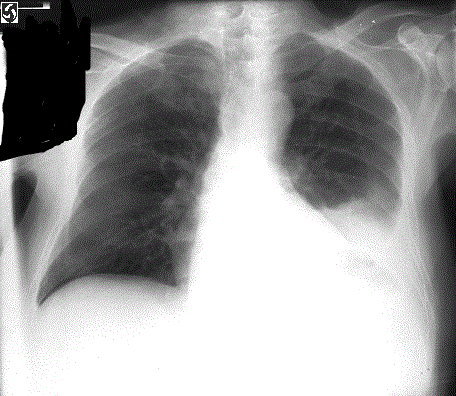
341) A 78 year old man presents with progressively increasing shortness of breath. He has a 100 pack year history of smoking. His past medical history is significant for chronic obstructive pulmonary disease, coronary artery disease and congestive heart failure. He has been admitted several times in the past one year for Congestive heart failure exacerbations which resulted from his non-compliance with diet and medications. His medications include aspirin, metoprolol, enalapril, and spironolactone and tiotropium inhaler. On examination, he is afebrile with respiratory rate 24/min, pulse 106beats/min, blood pressure 140/90. Breath sounds are decreased and there is dullness to percussion on the left side of the chest. Heart sounds are regular and there is no S3 gallop. A 2D echocardiogram reveals ejection fraction at 30% and a brain natriuretic peptide 250 pg/ml (Normal less than 100pg/ml) . An EKG reveals changes consistent with left ventricular hypertrophy. A Chest X-ray is shown below:
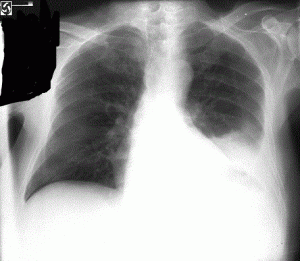
Which of the following is the most appropriate next step in management?
A) Intravenous Furosemide
B) Tube Thoracostomy
C) Intravenos Nitroglycerin
D) Needle thoracentesis
E) Implantable Cardioverter-Defibrillator (ICD) placement
Filed under: Uncategorized, USMLE Test Prep | Tagged: Archer cardiology, Archer pulmonology, USMLE STEP 3 CARDIOLOGY, USMLE STEP 3 PULMONOLOGY | 10 Comments »
Posted on April 7, 2012 by Archer USMLE Reviews
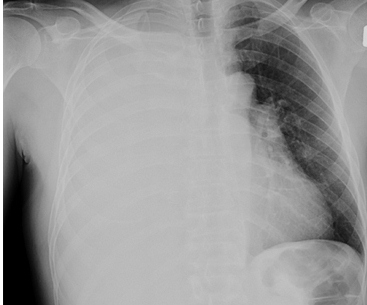
340) A 52 year old woman with history of triple-negative, metastatic breast cancer presents to the Emergency Room with increasing shortness of breath. This is her third Emergency room visit in the past 2 months. Earlier, she was admitted to the hospital twice for massive pleural effusion and underwent therapeutic thoracentesis. She was told that the cancer had spread to her lungs and pleura. She received multiple courses of chemotherapy in the past and her cancer has progressed despite initial response to chemotherapy. Her oncologist recommended palliative care. On examination, she is afebrile, respiratory rate is 24/min, Blood pressure 120/70 mm Hg and Heart Rate 106/min. Breath sounds are decreased on right side of the chest. D-dimer level is 60ng/ml ( normal < 500 ng/ml) . A chest X-ray is shown below:

Which of the following management options is most appropriate for this patient?
A) Obtain Pleural biopsy
B) Tube thoracostomy and Pleurodesis
C) Start Heparin and obtain CT Angiogram
D) Pleuro-perintoneal shunt
E) Repeat Therapeutic thoracentesis
Filed under: Uncategorized, USMLE Test Prep | Tagged: Archer cardiology, Archer oncology, archer palliative care, Archer pulmonology, Archer radiology, USMLE STEP 3 CARDIOLOGY, USMLE STEP 3 ONCOLOGY, usmle step 3 palliative care, USMLE STEP 3 PULMONOLOGY, USMLE STEP 3 RADIOLOGY | 17 Comments »
Posted on April 3, 2012 by Archer USMLE Reviews
339) A 55 year old man presents to the Emergency Room with complaints of swelling of his face and worsening cough for the past two days. Swelling increases on lying down. He complaints of shortness of breath for past 2 hours. He has no significant past medical problems. He smoked about 1 pack per day for the past 25 years and consumes alcohol socially. On examination, he is in moderate respiratory distress with audible, loud Stridor. His face is grossly swollen and the veins over the neck, anterior chest and the face are engorged. On auscultation, there are no crepitations, s1 and s2 are regular and normal and there is no s3 gallop . A chest X-ray is shown below:
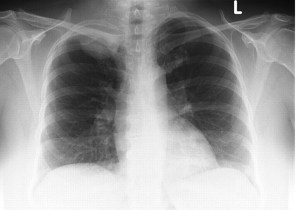
Which of the following is the most appropriate next step in management?
A) Radiation Therapy
B) Chemotherapy
C) CT guided Per-cutaneous Needle Biopsy
D) Video-Assisted Thoracoscopic Surgery (VATS)
E) Epinephrine
Filed under: Uncategorized, USMLE Test Prep | Tagged: Archer cardiology, Archer oncology, Archer pulmonology, Archer radiology, USMLE STEP 3 CARDIOLOGY, USMLE STEP 3 ONCOLOGY, USMLE STEP 3 PULMONOLOGY, USMLE STEP 3 RADIOLOGY | 9 Comments »
Posted on April 3, 2012 by Archer USMLE Reviews
338) A 65 year old man presents to the Emergency Room with complaints of swelling of his face and worsening cough for the past two days. Swelling increases on lying down. He has no significant past medical problems. He smoked about 1 pack per day for the past 45 years and consumes alcohol socially. On examination, his vitals are satble with a blood pressure of 130/80 mm Hg. His face is grossly swollen and the veins over the neck, anterior chest and the face are engorged. There is no stridor. There is no laryngeal edema. Chest is clear to auscultation bilaterally. Cardiovascular examination shows normal s1 and s2 and there is no s3 gallop . A chest X-ray is shown below:
Which of the following is the most appropriate next step in management?
A) Radiation Therapy
B) Chemotherapy
C) CT guided Per-cutaneous Needle Biopsy
D) Video-Assisted Thoracoscopic Surgery (VATS)
E) Endotracheal Intubation
Filed under: Uncategorized, USMLE Test Prep | Tagged: Archer cardiology, Archer oncology, Archer pulmonology, Archer radiology, USMLE STEP 3 CARDIOLOGY, USMLE STEP 3 ONCOLOGY, USMLE STEP 3 PULMONOLOGY, USMLE STEP 3 RADIOLOGY | 12 Comments »
Posted on April 1, 2012 by Archer USMLE Reviews
337) A 62 year old man with past medical history of hypertension is admitted with bright red bleeding per rectum. He has no pain. He had four other episodes of bright red bleeding in the past one year. All the episodes were painless. He refused colonoscopy at that time. He denies any constipation or diarrhea. He reports no weight-loss. He denies any chest pain or shortness of breath. On physical examination, his vitals are stable. Cardiovascular examination reveals a 4/6 early peaking systolic murmur that radiates to his neck and the carotids. Reminder of his exam is benign. The patient agrees for endoscopic evaluation and is scheduled for Colonoscopy. Which of the following is most likely to be diagnosed on Colonoscopy?
A) Ischemic Colitis
B) Colon cancer
C) Diverticulosis
D) Arterio-Venous Malformations
E) Internal Hemorrhoids
Filed under: Uncategorized, USMLE Test Prep | Tagged: Archer cardiology, ARCHER GASTROENTEROLOGY, USMLE STEP 3 CARDIOLOGY, USMLE STEP 3 GASTROENEROLOGY | 12 Comments »
Posted on April 1, 2012 by Archer USMLE Reviews
336) A 21 year old hispanic woman is evaluated in your office for recently diagnosed Hypertension. On previous two visits, her blood pressure was 150/90 mm HG. She denies any family history of Hypertension. Her Past medical history is significant for multiple Urinary tract infections and enuresis as a child. She has no other complaints. On examination, her repeat blood pressure is 148/92 mm HG. There are no abdominal bruits. Ultrasonography reveals scarring of both kidneys. Which of the following is an important feature of this condition?
A) Positive Anti-DsDNA
B) Strong Genetic Pre-disposition
C) Association with Berry aneurysms
D) Postural Hypotension
E) Abdominal Striae
Filed under: Uncategorized, USMLE Test Prep | Tagged: Archer cardiology, ARCHER NEPHROLOGY, archer pediatrics, dr.red nephrology lecture, USMLE STEP 3 CARDIOLOGY, usmle step 3 nephrology, USMLE STEP3 PEDIATRICS | 14 Comments »
Posted on March 31, 2012 by Archer USMLE Reviews
335) A 75 year old hispanic man presents with right upper quadrant abdominal pain for past two weeks. He reports that the pain is excruciating and sharp when he takes a deep breath. He denies any recent trauma or fever or night sweats or cough. He reports lack of appetite and 30 lbs weight loss in the past 3 months. He immigrated to United States from Mexico about 15 years ago. He has no significant medical problems and has never been to a doctor in the past 25 years. A chest x-ray does not reveal any significant abnormalities. An ultrasound of the abdomen shows normal appearing gall bladder with gall stones but no evidence of cholecystitis. Common bile duct is within normal limits. Murphy’s sign is negative. Laboratory investigations reveal:
Total Protein : 7.5gm%
Albumin : 4.0gm%
Total bilirubin : 0.4 mg% ( N = 0.3 to 1.0 mg%)
AST : 30U/L ( N= 5 to 40U/L
ALT : 28 U/L ( N= 8 to 55U/L)
Alkaline Phosphastase ( ALP) : 750 U/L ( N= 4 to 130U/L)
GGTP : 40U/L ( N= 3 to 60U/L)
Which of the following is the most appropriate next step in management ?
A) Laparoscopic Cholecystectomy
B) HIDA scan
C) Bone Scan and Prostate Specific Antigen
D) Quantiferon Gold Test
E) MRI of the Pancreas
Filed under: Uncategorized, USMLE Test Prep | Tagged: ARCHER GASTROENTEROLOGY, Archer oncology, STEP 3 ONCOLOGY, USMLE STEP 3 GASTROENEROLOGY, USMLE STEP 3 ONCOLOGY | 16 Comments »
Posted on March 31, 2012 by Archer USMLE Reviews
334) A 50 year old male nurse is evaluated in your office for a recently discovered lung nodule. About 1 month ago, he had whole body CT scans because he read over the internet that these can be helpful in early detection of cancer. A high resolution CT scan of chest revealed a 7 mm nodule with very smooth edges. The margins are well-defined and there is no calcification. The patient has never smoked in his life and he has no family history of cancer. He has no other risk factors for lung cancer. He denies any night sweats, weightloss or chronic cough. His recent Tuberculin skin test was negative. Laboratory investigations including complete blood count and comprehensive metabolic panel are within normal limits.
Which of the following is the most appropriate management option?
A) Obtain a Positron Emission Tomography scan ( PET/CT scan)
B) No further follow-up
C) CT guided biopsy of the nodule
D) Follow-up CT scan at 6-12 months and then at 2 years if no change
E) Refer to Cardiothoracic surgery for Wedge Resection
Filed under: Uncategorized, USMLE Test Prep | Tagged: archer preventive medicine, Archer pulmonology, archer step 3 pulmonology, cancer prevention, usmle step 3 preventive medicine, USMLE STEP 3 PULMONOLOGY | 9 Comments »
Posted on March 31, 2012 by Archer USMLE Reviews
333) A 75 year old woman with past medical history of Type 2 Diabetes mellitus, Hypertension and Ischemic stroke presents to your office for a new patient visit. She has been under the care of another primary care physician who has retired from practice so the patient has decided to establish care with you. She has left sided residual weakness from her old cerebrovascular accident. She has no other complaints. She requests you for a refill of warfarin which she has been taking for three years . This drug was prescribed by her former physician for “stroke prevention” . Her recent echcardiogram shows an ejection fraction of 60% and a recent cardiovascular stress test was negative for ischemia. Her other medications include Metformin, Glyburide and enalapril. Her laboratory investigations including complete blood count are normal and her INR is 1.5. Which of the following is the most appropriate management?
A) Increase warfarin to achieve a target INR of 2.0 to 3.0
B) Discontinue Warfarin and start Aspirin/Dipyridamole combination
C) Continue low-dose Warfarin with target INR 1.5 to 2.0
D) Add Aspirin to her current regimen
E) Add Clopidogrel to her current regimen
Filed under: Uncategorized, USMLE Test Prep | Tagged: Archer cardiology, archer neurology, neurology mcqs, USMLE STEP 3 CARDIOLOGY, usmle step 3 neurology | 12 Comments »
Posted on March 4, 2012 by Archer USMLE Reviews
332) A 22 year old ballet dancer is evaluated in your office during a routine annual physical examination. She does not have any complaints except for excessive fear of gaining weight. She reports that her mother thinks she has lost a lot of weight in the past two years however, she personally believes she is excessively fat and seeks help to lose more weight. Her menstrual cycles are irregular occurring, once every three to four months. On examination, she is very thin and has a dry, scaly skin. Her Body Mass Index is 15.0. She is afebrile, heart rate is 54/min and blood pressure 86/54 mm Hg. Complete blood count shows mild anemia. Urine pregnancy test is negative. Which of the following findings are consistent with her diagnosis?
A) Metabolic Acidosis
B) Parotid swelling
C) Hyperkalemia
D) Low serum cortisol
E) Increased Pulmonary vital capacity
Filed under: Uncategorized, USMLE Test Prep | Tagged: Archer Gynecology, ARCHER NEPHROLOGY, archer sports medicine, usmle step 3 gynecology, usmle step 3 nephrology, usmle step 3 sports medicine | 15 Comments »
Posted on March 4, 2012 by Archer USMLE Reviews
331) A 16 year old girl is evaluated in the office for mild to moderate pain in her left ankle. She reports that she heard a pop sound followed by the pain when she was about to walk briskly on her way to college. She is unable to walk normally and cannot lift up on to her toes while weight bearing. Her past medical history is significant for recurrent episodes of urinary tract infections. On examination, she is afebrile. There is no bruising or swelling in her left foot. There is tenderness at the back of her left foot about 2 cm above the posterior calcaneus. Squeezing of the left calf muscle fails to result in passive plantar flexion at the ankle. Which of the following element if obtained from the patient’s history would help in determining the cause of her presentation?
A) Eating habits
B) Menstrual History
C) Sexual History
D) Recent antibiotic use
E) Family history of Muscular Dystrophy
Filed under: Uncategorized, USMLE Test Prep | Tagged: aRCHER ORTHOPEDICS, Archer Rheumatology, archer sports medicine, USMLE STEP 3 ORTHOPEDICS, USMLE step 3 Rheumatology, usmle step 3 sports medicine | 9 Comments »
Posted on February 28, 2012 by Archer USMLE Reviews
330) A 55 year old man is brought by the EMS to the emergency room in a disoriented state. The patient has alcohol smell on his breath. Reviews of his past records reveal history of chronic alcohol abuse. His girlfriend arrives in the ER few minutes later and she reports that the patient has not been eating anything because he has been drinking heavily and vomiting over the past three days. On examination, he is afebrile, blood pressure 130/82 mm Hg, RR 18/min and Pulse 82/min. When the nurse attempts to check blood pressure, the patient develops carpo-pedal spasm (Trousseau sign). Chest is clear to auscultation.
Laboratory investigations reveal:
Ethanol level 140mg%
Serum Sodium 142 meq/L
Serum Potassium 3.2meq/L
Serum Chloride 106meq/L
Calcium 6.2 mg% (N = 9.0 to 10.5)
Bicarbonate 25 meq/L
Creatinine 1.2 mg%
Albumin 3.9 gm% (N = 3.5 to 5.0 gm %)
Patient is treated with Calcium gluconate and then, another dose of calcium chloride. Repeat serum calcium level is 5.8mg%. Trousseau sign is still positive.
Which of the following is the most appropriate next step in managing this patient?
A) Obtain Serum Ionized Calcium
B) Obtain Serum Magnesium Level
C) Obtain Paratharmone level
D) Start potassium chloride
E) Obtain Vitamin D level
Filed under: Uncategorized, USMLE Test Prep | Tagged: ARCHER FLUID AND ELECTROLYTES, ARCHER NEPHROLOGY, dr.red nephrology lecture, usmle step 3 nephrology | 10 Comments »
Posted on February 28, 2012 by Archer USMLE Reviews
329) A 62 year old man presents to your office complaining of dry cough for past several months. Recently, he also noticed shortness of breath on exertion. He denies any fever, hemoptysis or weight loss. He has no history of infections. He does not smoke. He worked as a soft-ware consultant for past 40 years. He has no other medical problems and has never been hospitalized. On examination, he is afebrile, blood pressure 120/80 mm Hg, RR 18/min and Pulse 82/min. There are no palpable chest-wall masses or lymphadenopathy. On auscultation, fine crackles are heard at bilateral lung bases. A high resolution CT scan of the lungs shows sub-pleural cyst formation with honey combing. The patient undergoes an open lung biopsy for confirmation of diagnosis. Which of the following histo-pathological patterns is likely to be found in this condition?
A) Non-specific Interstitial Pneumonia ( NSIP)
B) Desquamative Interstitial Pneumonia (DIP)
C) Usual Interstitial Pneumonia (UIP)
D) Bronchiolitis Obliterans Organizing Pneumonia (BOOP)
E) Acute Interstitial Pneumonia (AIP)
Filed under: Uncategorized, USMLE Test Prep | Tagged: Archer pulmonology, archer step 3 pulmonology, USMLE STEP 3 PULMONOLOGY, usmle-step-3-pulmoology | 11 Comments »
Posted on February 28, 2012 by Archer USMLE Reviews
328) A 66 year old man is seen in your office for progressive shortness of breath on exertion for the past one year. He also reports dry cough. He denies any fever, hemoptysis or weight loss. He has no history of infections. He denies smoking. He has no other medical problems and has never been hospitalized. On examination, he is afebrile, blood pressure 120/80 mm Hg, RR 18/min and Pulse 82/min. There are no palpable chest-wall masses or lymphadenopathy. On auscultation, crackles are heard all over the lung fields, more pronounced at lung bases. Extremities show mild digital clubbing.
A chest x-ray is shown below:

Which of the following is expected to be seen with this disease?
A) Young age at onset
B) Rapid progression
C) High Resolution CT scans showing ill-defined cysts and pleural plaques
D) Poor or no response to steroids
E) Obstructive pattern on Pulmonary function tests
Filed under: Uncategorized, USMLE Test Prep | Tagged: Archer pulmonology, archer step 3 pulmonology, USMLE STEP 3 PULMONOLOGY, usmle-step-3-pulmoology | 16 Comments »
Posted on February 28, 2012 by Archer USMLE Reviews
327) A 16 year old boy presents to your office for a Pre-participation sports physical examination. He is healthy and physically active and has no complaints. He has no chest pain or shortness of breath. He denies any drug use or smoking. His maternal grandfather recently died suddenly of cardiac arrest from severe Myocardial Infarction at age 82. On physical examination, he is afebrile, pulse 82/min, Respiratory rate 18/min and blood pressure 106/76 mm Hg. Chest is clear to auscultation. Cardiac examination reveals a mid-systolic murmur, grade 2/6 heard best along the left sternal border. The murmur decreases in intensity when he stands and increases when he is supine. S1 and S2 are normal. The second heart sound is physiologically split. Cardiac impulse and carotid pulses are normal. The most appropriate action at this time:
A) Clear the patient for Sports participation
B) Refer to cardiology
C) Obtain 2D-Echocardiogram
D) Schedule Exercise Stress Test
E) Obtain Complete blood count
Filed under: Uncategorized, USMLE Test Prep | Tagged: Archer cardiology, archer pediatrics, archer sports medicine, USMLE STEP 3 CARDIOLOGY, usmle step 3 sports medicine, USMLE STEP3 PEDIATRICS | 19 Comments »





 Archer USMLE Step 3 Blog