Question of the Week # 270

270 )  A 62 year old man presents with complaints of chronic cough for the past two years. Cough occurs mostly in the morning and is associated with mild sputum production. Lately, he has noticed mild shortness of breath on exertion. He denies any chest pain or weightloss. He has a 50 pack year history of smoking. He has been counselled against smoking several times in the past but he believes it is quite difficult for him to quit smoking. He is concerned about lung cancer and requests if he can placed on an annual screening protocol. A chest x-ray and a CT scan of the chest show changes consistent with chronic obstructive pulmonary disease. There is no evidence of malignancy. Which of the following is the most appropriate screening recommendation for this patient?

A) Sputum Cytology every 6 months

B) Chest X-ray annually

C) No Screening

D) Spiral CT scan annually

E) PET scan annually

Question of the Week # 269

269 )  A 42 year old man is evaluated in the Emergency room for sudden onset pain and swelling in the right knee. He denies any trauma. His past medical history is significant for chronic alcohol abuse, diabetes and stage III chronic kidney disease.  On physical examination, temperature is 100.5F and heart rate 110. Right knee is grossly swollen, warm, tender and erythematous. Rest of the physical examination is within normal limits. Arthrocentesis is performed and results reveal polymorphonuclear leucocytes of 50,000/µl and intra-cellular negatively birefringent needle shaped crystals under polarized microscopy. Synovial fluid gram stain is negative and bacterial cultures are pending. Complete blood count shows a white blood cell count of 18,000/µl with left shift. Which of the following is the most appropriate management recommendation?

A) Colchicine

B) Indometacin

C) Oral Prednisone

D) Broad spectrum antibiotics

E) Intra-articular Triamcinolone

Question of the Week # 268

268 )  A 62 year old man with history of chronic alcohol abuse, Hepatitis C and gout is admitted for nausea, vomiting and diarrhea.  His medications include colchicine for gout prophylaxis and multivitamins. The patient admits that he has increased his alcohol intake to about 4 pints vodka per day over the past two weeks. He has not been drinking or eating adequately. On physical examination, his vitals reveal a heart rate of 110 and blood pressure of 90/60. Oral mucosa are dry with poor skin turgor. Abdominal examination is benign. Laboratory investigations reveal acute renal insufficiency with a creatinine of 4mg% and BUN of 90mg%. His liver functuion tests are elevated with an AST of 160U/L, ALT  70U/L and ALP 240U/L. Total bilirubin is 2.0mg%. Complete blood count shows hemoglobin of 8.6gm%, WBC count of 1.6k/µl with absolute neutrophil count of 500/µl and Platelets 56k/μl. His laboratory investigations three months ago were with in normal limits. CT scan of the abdomen does not show any evidence of liver cirrhosis or Splenomegaly. The patient is started on intravenous hydration, thiamine and folic acid. Which of the following is the most appropriate next step in managing this patient”s pancytopenia?

A) Renal biopsy

B) Liver Biopsy

C) Stop colchicine

D) Bone marrow biopsy

E) Parvo virus RNA

Question of the Week # 267

267 )  A 32 year old woman is evaluated in your office for increasing headaches over the past few months. She has a 5 year history of intermittent headaches. The headaches are throbbing in nature and are localized to frontal area. They are often accompanied by nausea and vomiting. Her episodes are usually preceded by irritability and food craving. She usually takes ibuprofen at the onset of headache which seem to relieve her pain. She recently broke up with her partner and has been under severe emotional stress since then. Lately, her headaches have become more frequent occurring about 4 to 5 times per month. The episodes interfere with her quality of life. She denies any headache at this time.  Physical examination including neurological and ophthalmoscopic exam is normal.  Her last menstrual period was 16 weeks ago and a urine pregnancy test returns positive. Which of the following strategies is most appropriate for this patient?

A) Biofeedback

B) Lumbar puncture

C) Start Propranolol

D) Start Sumatriptan

E) Start Valproic acid

Question of the Week # 266

266 )  A 70 year old man is evaluated in the emergency room for severe fatigue and exertional shortness of breath. He was diagnosed with pulmonary embolism 4 months ago and is on Coumadin. He denies any melena or hematochezia. There is no other history of gross bleeding.  On examination, his blood pressure is 100/70 mm Hg and he is afebrile.  Physical examination is normal. Stool for occult blood is negative.  His hemoglobin one month ago was 12gm/dl. Laboratory investigations reveal:

WBC 10k/µl

Hemoglobin 6.2 g/dL,

Mean cell volume (MCV)  102  fL

Platelet count 170k/µl

Lactic Dehydrogenase 140U/L

Haptoglobin 100U/L

Reticulocyte count 12%

INR : 8.0

Which of the following is the most appropriate next step in managing this patient?

a) Direct Coombs Test

b) Vitamin B12 and Folate levels

c)  Bonemarrow biopsy

d) Start Corticosteroids

e) CT scan of the Abdomen

Question of the Week # 265

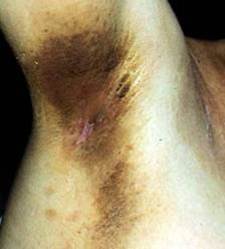
265 )  A 52 year old woman presents to your office with complaints of increased thirst and increased urinary frequency. Her other medical problems include Hypertension and Dyslipidemia. Blood pressure has been under control on enalapril. Her family history is significant for diabetes mellitus and Hypertension.  Physical examination reveals an obese woman in no apparent distress. Blood pressure is at 135/80 mm Hg. Velvety thickened skin is noted in bilateral axillae. Which of the following results will establish the diagnosis that could explain the symptoms and physical examination findings in this patient?

A) Random plasma glucose > 180mg%

B) Hemoglobin A1c > 6.5%

C) Fasting Blood Sugar > 110 mg%

D)  Oral Glucose Tolerance Test  , plasma glucose ≥120 mg% at 2 hours

E)  Urine glucose > 300 mg%

Question of the Week # 264

264 )  A 52 year old woman presents to your office with complaints of increased thirst and increased urinary frequency. Her family history is significant for diabetes mellitus and Hypertension. A glucometer reading obtained in the office shows 260mg%. Hemoglobin A1C is 7.0% . The patient is subsequently started on Metformin. Three days after starting Metformin, she presents with nausea and diarrhea. She denies any fever or abdominal pain. Physical examination is within normal limits. Random glucometer reading shows 130mg%. Comprehensive metabolic panel is within normal limits. Which of the following is the most appropriate next step in managing this patient’s symptoms?

A) Discontinue Metformin

B) Check lactic acid level

C) Recommend Metformin to be taken with meals.

D)  Check serum ketones

E) Insulin drip

Question of the week # 262

262) A 17 year old male is admitted with fever and severe pain while swallowing for the past 1 week. He denies any rash or joint pains. His girlfriend had similar symptoms 1 month ago that resolved spontaneously. He was started on azithromycin by his primary doctor as outpatient however, the symptoms have not subsided. On examination, temperature is 102F. Throat examination reveals diffuse pharyngeal erythema and swelling of the tonsils with exudates. There are no mucosal ulcerations. Abdominal examination reveals moderate splenomegaly. Laboratory investigations reveal WBC count 12000/µl with 60% Lymphocytes, Hemoglobin 14gm% and Platelet count 120k/µl. Peripheral smear shows atypical lymphocytes comprising 30% of lymphocyte population. Liver panel reveal mild elevation of transaminases with AST 80U/L and ALT 96U/L. Total bilirubin is 0.6gm%. A heterophile antibody test is negative on two occasions. Ebstein Barr Virus serology including EBV viral capsid antigen (VCA) – IgM and IgG as well as EBV nuclear antigen antibody (EBNA-IgG) has been ordered. Which of the following combinations are most consistent with this patient’s presentation?

A)     VCA IgG  negative, VCA IgM negative, EBNA-IgG positive

B)      VCA IgG  positive, VCA IgM negative, EBNA-IgG positive

C)      VCA IgG  negative, VCA IgM negative, EBNA-IgG negative

D)     VCA IgG  positive, VCA IgM positive, EBNA-IgG positive

E)      VCA IgG  positive, VCA IgM positive, EBNA-IgG negative

Question of the Week # 257

257)  A 72 year old man with history of Diabetes Mellitus is rushed to the emergency room by the EMS 30 minutes after he collapsed at his home with severe left sided chest pain. Upon arrival, the patient was found to have very low blood pressure at 70/40 mm Hg.  Chest examination revealed diffuse coarse crepitations. An electrocardiogram showed ST elevations in the anterior leads with reciprocal depressions. The patient was immediately started on Aspirin, GP IIb/IIIA inhibitors, Clopidogrel and Heparin. He is placed on 50% 02 by Venturi mask and his oxygen saturation on this supplemental oxygen is 92%. A diagnosis of cardiogenic shock and pulmonary edema is made and the patient is admitted to intensive care unit. The patient is placed on Intra-Aortic Balloon Counterpulsation Pump (IABP) and is rushed to cardiac catheterization lab. In which of the following situations, IABP confers more harm than benefit?

A) Acute Mycocardial Infarction (MI) with Cardiogenic Shock

B) Aortic dissection with aortic regurgitation

C) Severe left ventricular failure with pulmonary edema

D)  Post-MI Ventricular Septal Perforation

E) Post-MI Acute Mitral Regurgitation

Question of the Week # 256

256)  A 72 year old man with history of Diabetes Mellitus is rushed to the emergency room by the EMS 30 minutes after he collapsed at his home with severe left sided chest pain. Upon arrival, the patient was found to have very low blood pressure at 70/40 mm Hg.  Chest examination revealed diffuse coarse crepitations. An electrocardiogram showed ST elevations in the anterior leads with reciprocal depressions. The patient was immediately started on Aspirin, GP IIb/IIIA inhibitors, Clopidogrel and Heparin. He is placed on 50% 02 by Venturi mask and his oxygen saturation on this supplemental oxygen is 92%. A diagnosis of cardiogenic shock and pulmonary edema is made and the patient is admitted to intensive care unit. If performed immediately, which of the following interventions would most likely reduce his risk of death?

A)     Thrombolytic therapy

B)     Dopamine infusion

C)      Intra-Aortic Balloon Pump (IABP)

D)     Percutaneous Coronary Intervention

E)     Left Ventricular Assist Device (LVAD)

Note : SHOCK TRIAL

Question of the Week # 184

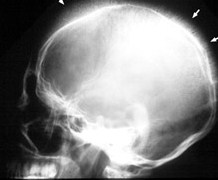
Q184)  A 10 year old boy is evaluated in the emergency room after he tripped over and fell during a basketball game. There is no history of loss of consciousness. He denies any injury except  some pain in the occipital area of the skull.  He also reports chronic fatigue. A routine skull x-ray is obtained for evaluation and is shown below:

Which of the following is most likely to be associated with these incidental skull x-ray findings ?

A) Monoclonal gammopathy

B) Pituitary tumor

C) Hemolysis

D) Paget disease

E) Glioma

Question of the Week # 182

Q182) A 65 year old woman  presents  with a white plaque on her vulva. She has no other hypo-pigmented lesions on her body.  She reports history of repeated itching in the area for past several years. She has seen by her gynecologist in the past. Repeated evaluation did not reveal any infection or candidiasis. She says the lesion has not changed in appearance but the itching bothers her. She denies any vaginal bleeding.  Physical examination reveals a raised white colored plaque on the vulva. There are excoriations adjacent to and overlying the lesion. Most likely diagnosis:

A) Lichen Sclerosus

B) Lichen Simplex Chronicus

C) Lichen planus

D) Vulvar Cancer

E) Vitiligo

Question of the Week # 180

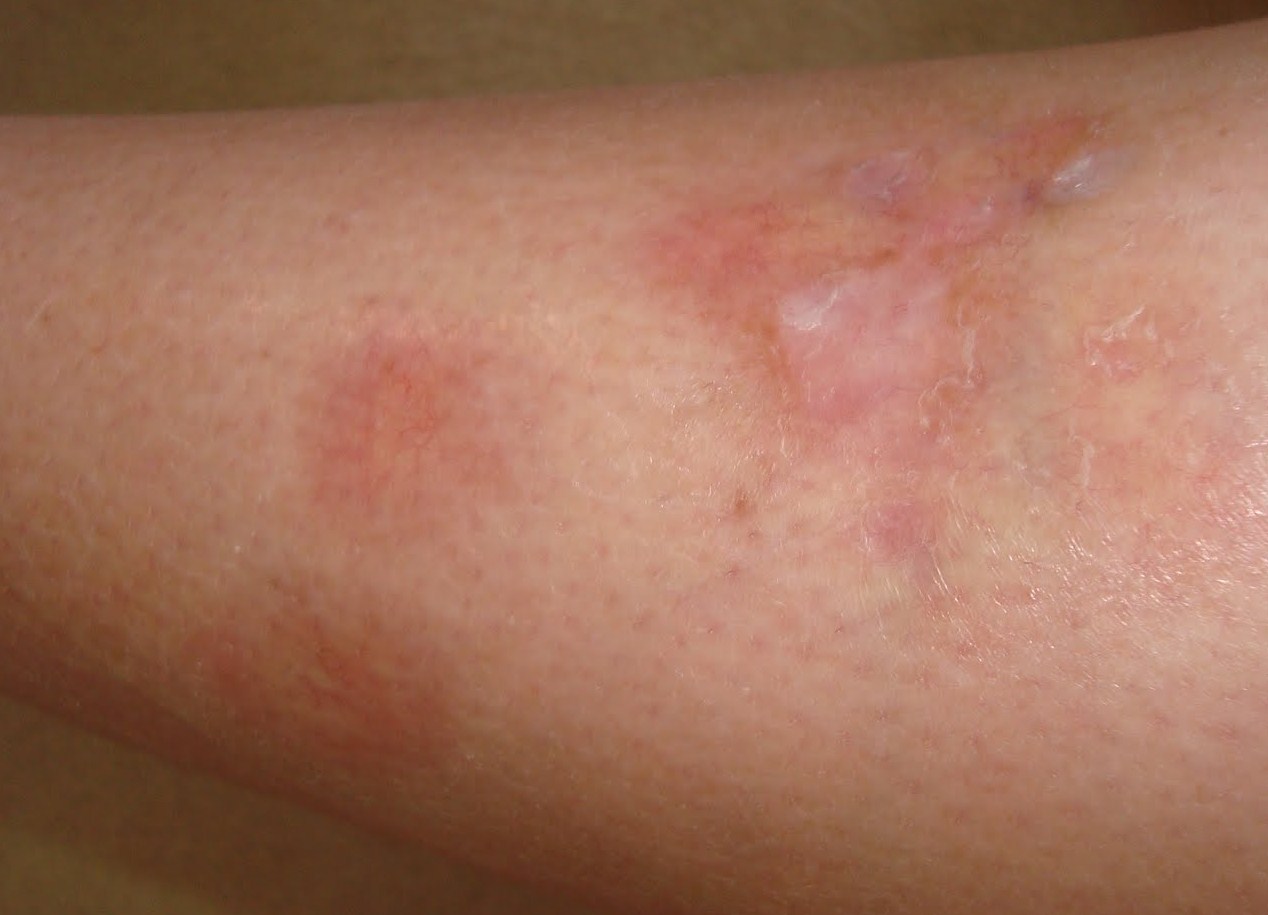
Q180) A 35 year old woman presents with a 3-week history of nodular lesions on her lower legs. She states that he had similar lesions that appeared few years ago and spontaneously resolved . She denies any recent infection except for an upper respiratory infection for which he was treated with antibiotics 2 weeks ago. She is currently not on any medications. He denies any weightloss or diarrhea or constipation. She has no cough or night sweats. Physical examination revealed erythematous nodular swellings on the anterior lower legs. The lesions are tender to palpation.


The most common etiology of these lesions world-wide:

A) Tuberculosis

B) Inflammatory bowel disease

C) Sarcoidosis

D) Diabetes Mellitus

E) Streptococcal infection

F) Herpes Simplex Virus

Question of the Week # 179

Q179) A 48  Year old woman is evaluated in your office for a skin eruption that appeared three days ago. Her past medical history is significant for Rheumatoid arthritis for which she uses Methotrexate. She recently had increasing joint pain and she was placed on ibuprofen which takes about three times daily. Her joint pain is well controlled now.  She is now concerned about the skin eruption that is predominantly distributed on her arms, hands and feet. The eruption is painless.  On examination, there is no joint swelling or tenderness, range of motion in the joints is normal. Skin examination reveals the lesions as shown in the image below.

The most appropriate management option for this patient:

A)     Observation

B)      Stop Ibuprofen

C)      Start Acyclovir

D)      Intra-lesional corticosteroids

E)      Anti-citrullinated pep-tide levels

Question of the Week # 178

Q177) A 55-year-old white woman is seen in your office for a 6-month  history of slowly enlarging lesions on both lower extremities. She is otherwise healthy. The lesions are painless. She denies any trauma to these areas. Her past medical history is significant for diabetes mellitus diagnosed 2 years ago and rheumatoid arthritis. Her medications include Metformin, Enalapril and Methotrexate. On skin examination, she has  2 cm yellow, smooth, firm centrally depressed plaques involving the thighs and knees. Image is shown below


The most likely underlying etiology :

A) Drug-induced

B) Rheumatoid arthritis

C) Diabetes Mellitus

D) Malignancy

E) Sarcoidosis

Question of the Week # 177

Q177) A 52 Year old obese man is evaluated in your office during a routine annual visit.  He denies any fatigue or recent weight changes. He has normal appetite and physically active. He had a colonoscopy 1 year ago that was normal. On physical examination, he is obese with a BMI of  34. Skin examination reveals the findings shown in the image below :


Which of the following is most likely to be seen in this patient?

A) Diabetes Mellitus, Type I

B) Gastric cancer

C) Increased Insulin levels

D) Hyperthyroidism

E) Addison’s disease

Question of the Week # 176

Q176) A 48 Year old woman is evaluated in your office for a skin eruption that appeared few days ago. She has a history of Non-Hodgkin’s lymphoma that was treated 2 years ago and is in remission. A PET ( positron emission tomography) scan that was performed 3months ago did not reveal any evidence of recurrent disease. She also reports recurrent episodes of genital herpetic lesions which  resolve spontaneously. Her most recent genital herpetic eruption was 4 weeks ago and it was self-limited. At this time, she is concerned about a skin eruption that is predominantly distributed on her arms, hands and feet.  On examination, there is no peripheral lymphadenopathy. Genital examination is normal with out any vesicles or papules. Skin examination reveals the lesions as shown in the image below.


The most appropriate management option for this patient:

A)     Observation

B)      Repeat PET/CT scan

C)      Start Acyclovir

D)     Biopsy of the lesion

E)      Start antihistamine

Question of the Week # 175

Q175) A 28 Year old man is evaluated in your office during a pre-employment health check-up . His history is notable for severe hypertension for which he was started on beta blocker a year ago. He says he stopped the medication 6 months ago because it interfered with his sexual activity. On examination his blood pressure is 172/94. Cardiovascular examination revealed a systolic murmur that radiates to the back and associated with ejection click. Brachio-femoral delay in pulses is noted. The patient is agreeable to restart antihypertensive therapy. The most appropriate management option for this patient:

A)     Cardiac catheterization with Stenting

B)      Percutaneous coronary intervention

C)      Surgery

D)     Medical management of Hypertension

E)      Aortic valvulotomy

Archer USMLE Step 3 CCS Workshop – June 2011

Archer live Online CCS Workshop– Live Webinar- June 2011

Archer Live Online USMLE Step3 CCS Workshops from http://www.CcsWorkshop.com

Archer is the only live CCS Workshop in which experienced Internal Medicine board certified physicians will teach you live how to apply unique high-yield CCS strategies to score the most in the CCS Component.

Archer online live step 3 reviews aims to bring USMLE step 3 courses on your desktop, at your doorstep! These highly successful live USMLE Step3 online reviews are an extension of our very popular and successful ” Dr.Red’s online ccs workshop, which has reached more than Twelve thousand step3 takers in less than 2 years and has resulted in 98% pass rate. Archer Reviews have achieved a high success rate even with examinees with multiple attempts by our unique approach. These online reviews are done live and in a webinar format. You can stay at home and listen to lectures live and like in a virtual classroom, you can raise your hand and your question will be immediately answered by the instructor. This is a live online classroom which reduces the pain of flying several miles to attend live reviews. These are the only one in the market that offer successful step 3 lectures in this unique, live format. Archer’s most successful endeavor has been Dr.Red’s CCS Workshop which has helped hundreds of examinees to pass easily by excelling on CCS component.

Archer’s next CCS online workshop for the month of June 2011 will be on Sunday 06/12/2011 at 10 AM EST.

If you are interested in registering for this course, you can pay for the course on the website at http://www.shop.ccsworkshop.com. Upon payment of the registration fee, your registration request will be automatically approved and an approval e-mail will be sent to you. This approval notice will have a button “Join Webinar” in it. Clicking this button on the day of the workshop will open up the live workshop on your desktop

To participate in the workshop, you will need a computer with internet access. For the audio, you can use either your computer’s microphone or a telephone. You will use the phone for the voice and log in to the conference call while you watch the power-point slides and the CCS demonstration on your desktop via. our unique net meeting software. You can also just opt to use your computer’s microphone in which case you do not need a telephone. Then you will get to practice a case while we watch and analyze your approach and correct it.

CCS Workshop Includes :

1. Lecture on CCS Strategies
2. Live demonstration of CCS cases
3. Common mistakes committed by the examinees and preventing them
4. Tips to score extremely high on CCS
5. Follow-ups of office and ER cases
6. Efficient use of time, doing more stuff without advancing the clock
7. Avoiding invasive tests
8. Basic set of orders for emergency cases
9. The 5-minute screen – adding/ disconinuing the orders that can matter
10. Obtaing consults and their appropriateness
11. Differential diagnosis for common ER and office presentations and easy tips to get the most out of few orders.
12. Working on efficiency
13. Live practice of 15 to 20 CCS cases by the attendees in the workshop
14. A these in addition to –> 20 minutes of supervised practice of one CCS case by each attendee who volunteers to practice. About 15 to 20 Highyield CCS cases will be practiced. During this time, you will be thoroughly analyzed, corrected and given instantaneous feedback by our experienced faculty

The total course fee is $97 .Slots are limited at 35.
If you are interested in the course, you visit Archer’s online store directly to pay : http://www.shop.ccsworkshop.com

If you have further questions, please directly contact support@ccsworkshop.com

Archer’s other courses include very informative topic reviews and the high-yield rapid review – please check our website. Next 3-Day Step 3 Rapid Review is in August -2011. Archer theory reviews are now available as streaming videos so that you can start accessing them from the beginning of your step 3 preperation and fine tune your conceptual understanding.

Archer releases online medical community for Resident physicians!

Archer releases online medical community website for Residents and Physicians. Journal articles, questions, images and most sought after lectures and powerpoint presentations, step-by-step guidance and videos on performing procedures in Internal Medicine – all under one roof! Soon to be released : Preparatory course and Question bank for Internal medicine in-training examination and Internal medicine boards.

Visit our new site www.ourmedical.net

Question if the week # 122 and 123

Q122) A 75 year old man presents to your office with complaints of severe fatigue and constipation for the past one week. He has no significant past medical history except for benign prostatic hypertrophy for which he takes terazosin. Physical examination reveals mild tenderness in left mid thigh area. Rest of the exam is normal. An x-ray of the left lower extremity reveals a lytic lesion in the shaft of the femur. A subsequent bone scan reveals multiple lytic lesions in the ribs, right iliac bone, left and right femur shaft as well as in the left femur neck. The most important next step in managing this patient’s symptoms is :
A) Serum PSA level
B) Serum protein electrophoresis
C) Start IV Bisphosphonates
D) Check serum calcium level and start IV hydration
E) Skeletal surevey
Q123) The patient was admitted to the hospital and his symptoms were managed appropriately. However, during the second hospital day the patient complains of pain in his left thigh. Review of his previous x-ray reveals lytic lesion occupying the head and neck of femur.  The most important immediate next step in managing this condition
A) MRI of the Hip
B) CT scan of the Hip
C) Orthopedic consultation for internal fixation
D) Radiation therapy
E) Chemotherapy
Filed under: USMLE Test Prep

Copy Rights – USMLEGalaxy, LLC

ALL CONTENTS ON THIS WEB SITE ARE PROTECTED BY COPYRIGHT.

Unauthorized use of Question Banks or any content of this blog with out written permission from USMLE Galaxy, LLC  is strictly prohibited.


Archer USMLE Step 3 Streaming Video Lectures

Full Length Review for USMLE Step 3

Question of the Week # 100

Q100) A 52 year-old man presents to your office with complaints of exertional chest pain for the past 4 weeks. The chest pain is usually left sided, occurs on walking about three blocks and goes away with rest. He has developed a habit of taking rest when the chest pain comes and he did not think it needed medical attention until his friend told him yesterday that it might be a symptom of heart disease. He is concerned and requests your recommendation. He denies any chest pain or shortness of breath now. He also reports no change in quality or intensity of his chest pain. His past medical history is significant for Hypertension and Smoking . His medications include lisinopril and hydrochlorthiazide. Physical examination is benign. The next best step in establishing the diagnosis and prognosis in this patient is :

A) Electrocardiogram
B) 2 D -Echocadiogram
C) Exercise – EKG Stress Test
D) Persantin Stress Test
E) Cardiac Catheterization

Archer Step 3 CCS Workshop – Live Webinar – September 2011

Archer live Online CCS Workshop – September 2011


Archer Live Online USMLE Step3 CCS Workshops from http://www.CcsWorkshop.com

Archer is the only live CCS Workshop in which experienced Internal Medicine board certified physicians will teach you live how to apply unique high-yield CCS strategies to score the most in the CCS Component.

Archer online live step 3 reviews aims to bring USMLE step 3 courses on your desktop, at your doorstep! These highly successful live USMLE Step3 online reviews are an extension of our very popular and successful ” Dr.Red’s online ccs workshop, which has reached more than Twelve thousand step3 takers in less than 2 years and has resulted in 98% pass rate. Archer Reviews have achieved a high success rate even with examinees with multiple attempts by our unique approach. These online reviews are done live and in a webinar format. You can stay at home and listen to lectures live and like in a virtual classroom, you can raise your hand and your question will be immediately answered by the instructor. This is a live online classroom which reduces the pain of flying several miles to attend live reviews. These are the only one in the market that offer successful step 3 lectures in this unique, live format. Archer’s most successful endeavor has been Dr.Red’s CCS Workshop which has helped hundreds of examinees to pass easily by excelling on CCS component.

Archer’s next CCS online workshop for the month of September 2011 will be on Sunday 09/11/2011 at 10 AM EST.

If you are interested in registering for this course, you can pay for the course on the website at http://www.shop.ccsworkshop.com. Upon payment of the registration fee, your registration request will be automatically approved and an approval e-mail will be sent to you. This approval notice will have a button “Join Webinar” in it. Clicking this button on the day of the workshop will open up the live workshop on your desktop

To participate in the workshop, you will need a computer with internet access. For the audio, you can use either your computer’s microphone or a telephone. You will use the phone for the voice and log in to the conference call while you watch the power-point slides and the CCS demonstration on your desktop via. our unique net meeting software. You can also just opt to use your computer’s microphone in which case you do not need a telephone. Then you will get to practice a case while we watch and analyze your approach and correct it.

CCS Workshop Includes :

1. Lecture on CCS Strategies
2. Live demonstration of CCS cases
3. Common mistakes committed by the examinees and preventing them
4. Tips to score extremely high on CCS
5. Follow-ups of office and ER cases
6. Efficient use of time, doing more stuff without advancing the clock
7. Avoiding invasive tests
8. Basic set of orders for emergency cases
9. The 5-minute screen – adding/ disconinuing the orders that can matter
10. Obtaing consults and their appropriateness
11. Differential diagnosis for common ER and office presentations and easy tips to get the most out of few orders.
12. Working on efficiency
13. Live practice of 15 to 20 CCS cases by the attendees in the workshop
14. A these in addition to –> 20 minutes of supervised practice of one CCS case by each attendee who volunteers to practice. About 15 to 20 Highyield CCS cases will be practiced. During this time, you will be thoroughly analyzed, corrected and given instantaneous feedback by our experienced faculty

The total course fee is $97 .Slots are limited at 35.
If you are interested in the course, you visit Archer’s online store directly to pay : http://www.shop.ccsworkshop.com

If you have further questions, please directly contact support@ccsworkshop.com

Archer’s other courses include very informative topic reviews and the high-yield rapid review – please check our website. Next 3-Day Step 3 Rapid Review is in November -2011. Archer theory reviews are now available as streaming videos so that you can start accessing them from the beginning of your step 3 preperation and fine tune your conceptual understanding.

Archer USMLE Step 3 CCS Workshop – August 22, 2010

Archer USMLE Step 3 CCS Workshop – August 22, 2010

Archer online live step 3 reviews aims to bring USMLE step 3 courses on your desktop, at your doorstep! These highly successful live USMLE Step3 online reviews are an extension of our very popular and successful ” Dr.Red’s online ccs workshop, which has reached more than two thousand step3 takers in less than 12 months and has resulted in 98% pass rate. Archer Reviews have achieved a high success rate even with examinees with multiple attempts by our unique approach. These online reviews are done live and in a webinar format. You can stay at home and listen to lectures live and like in a virtual classroom, you can raise your hand and your question will be immediately answered by the instructor. This is a live online classroom which reduces the pain of flying several miles to attend live reviews. These are the only one in the market that offer successful step 3 lectures in this unique, live format. Archer’s most successful endeavor has been Dr.Red’s CCS Workshop which has helped hundreds of examinees to pass easily by excelling on CCS component.

Archer’s next CCS online workshop for the month of January will be on Sunday 8/22/2010 at 10 AM EST.

If you are interested in registering for this course, you can pay for the course on the website at http://www.shop.ccsworkshop.com. Upon payment of the registration fee, your registration request will be automatically approved and an approval e-mail will be sent to you. This approval notice will have a button “Join Webinar” in it. Clicking this button on the day of the workshop will open up the live workshop on your desktop

To participate in the workshop, you will need a computer with internet access. For the audio, you can use either your computer’s microphone or a telephone. You will use the phone for the voice and log in to the conference call while you watch the power-point slides and the CCS demonstration on your desktop via. our unique net meeting software. You can also just opt to use your computer’s microphone in which case you do not need a telephone. Then you will get to practice a case while we watch and analyze your approach and correct it.

CCS Workshop Includes :

1. Lecture on CCS Strategies
2. Live demonstration of CCS cases
3. Common mistakes committed by the examinees and preventing them
4. Tips to score extremely high on CCS
5. Follow-ups of office and ER cases
6. Efficient use of time, doing more stuff without advancing the clock
7. Avoiding invasive tests
8. Basic set of orders for emergency cases
9. The 5-minute screen – adding/ disconinuing the orders that can matter
10. Obtaing consults and their appropriateness
11. Differential diagnosis for common ER and office presentations and easy tips to get the most out of few orders.
12. Working on efficiency
13. Live practice of 15 to 20 CCS cases by the attendees in the workshop
14. A these in addition to –> 20 minutes of supervised practice of one CCS case by each attendee who volunteers to practice. About 15 to 20 Highyield CCS cases will be practiced. During this time, you will be thoroughly analyzed, corrected and given instantaneous feedback by our experienced faculty

The total course fee is $97 .Slots are limited at 35.
If you are interested in the course, you visit Archer’s online store directly to pay : http://www.shop.ccsworkshop.com

If you have further questions, please directly contact support@ccsworkshop.com

Archer’s other courses include very informative topic reviews and the high-yield rapid review – please check our website.. Archer theory reviews are now available as streaming videos so that you can start accessing them from the beginning of your step 3 preperation and fine tune your conceptual understanding to score maximum on the Multiple Choice Questions on USMLE Step 3

Question of the Week # 8 – Archer USMLE Step 3

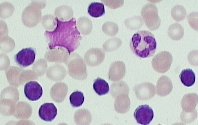
A 72 y/o man with hx of chronic alcoholism and smoking presents to your office with extreme fatigue. Denies any fever or weightloss or nightsweats. Vital signs were normal and physical examination reveals generalized small lymphadenopathy and mild splenomegaly. Laboratory studies reveal CBC with hgb 9.5, wbc 10k with 25% neutrophils, 65% mature lymphocytes and 9% monocytes, platelets 90k. LDH is increased at 600 and reticulocyte count of 8.0% . Haptoglobin level is 22mg% ( N 27 to 160) and urinary hemosiderin level is with in normal limits. Basic metabolic panel, Vitmain B12 and Folic acid levels are within normal limits. Peripheral smear is shown below and reveals many Smudge cells.

Archer USMLE Step 3 QBANK

Most likely etiology of this patient’s Anemia is :

A. Microangiopathic Hemolysis

B. Bone marrow infiltration with Chronic Lymphocytic Leukemia

C. Acute Lymphoblastic Leukemia

D. Autoimmune Hemolysis

E. Hypersplenism

Copy Rights: USMLEGalaxy

Question of the Week # 5

A 30 y/o pregnant woman has a one week history of a slowly enlarging red lesion on her right thigh. She reports having gone on a camping trip about 3 weeks ago and now recalls that she removed a tick from the site of the lesion. An ELISA test is negative for Lymes. Upon further questioning, she also reports contact with poison Ivy like  bushes during the same camping trip.

Archer USMLE Step 3 Qusetion Bank

What is the next step?
A. Re-assurance
B. Ampicillin
C. Doxycycline
D. Western blot testing
E. Topical Corticosteroid

Archer USMLE Step 3 Customer Satisfaction Survey

Please kindly complete the following survey. Your responses will help us to serve you better and improve Archer Review further. Archer Review was launched in 2008 and has always relied on customer feedback to improve it’s courses further. Today, Archer Review reaches about 8000 USMLE takers, residents and medical students each year. Your honest feedback has helped us reach this position and we remain as grateful as ever for making this review course most helpful and successful choice for the prospective USMLE examinees.

Archer Review Survey

Archer – Critical Care

Topic I Pulmonary Embolism

Pulmonary embolism is a highly questioned topic on USMLE Step 2 and Step 3. Many students have questions and concerns regarding :
1. Stable vs. Unstable PE. Diagnosis/ clinical scenarios
2. Acute management of stable vs. unstable Pulmonary embolism
3. Indications for IVC filter ( Greenfield filter)
4. Duration of anticoagulation
5. Hypercoagulability work-up

We will discuss these here in three parts and self assessment questions will follow after the discussion.

Chapter I – Clinical scenarios – Acute PE.

1. Pulmonary embolism can manifest in several ways. You need to familiarize yourself with various clinical scenarios associated with PE that can be often tested on the exam. Commonest symptoms would be chestpain and/ or shortness of breath. But other scenarios that can be tested are : ( You should consider and rule out the possibility of PE in the following scenarios)

a) Acute onset atrial fibrillation in an immobilized hospitalized patient.
b) Shock with no other obvious causes in a patient with risk factors for PE
( Obstructive shock – understand that the embolus can be massive and occlude the right ventricular outlet i.e; pulmonary artery there by preventing filling of the left heart leading to shock)
c) Persistent tachycardia in a patient with risk factors for PE.
d) Hypoxemic respiratory failure with increased A-a ( alveolar-arterial gradient)
e) Sudden right ventricular strain pattern on the EKG ( Typical S1Q3T3 pattern on EKG -sudden onset).
f) Pumonary Hypertension ( If chronic and no other etiology, suspect and rule out chronic thromboembolism in patients with risk factors for PE)

There are several other scenarios a PE can present in a hospitalized patient. However, the above scenarios are commonly asked on the exam. In the self-assessment questions at the end of the section, we will give you sample questions for some of these scenarios.

a) In an inpatient with acute onset atrial fibrillation – you need to control the rate with drugs like beta blocker or diltiazem but you must also consider the differential diagnosis regarding the etiology of afib such as hypoxia, electrolyte abnormalities, acute MI, valvular diseases, accelerated hypertension, hyperthyroidism and congestive heart failure. It is important to know the etiology so that you can treat the underlying issue that led to afib. Controlling the rate alone in afib is not enough , you must also address the reversible etiology so as to prevent recurrence of afib.

When you consider hypoxia as the cause, the evidence can be obtained by pulse oximetry which shows Sao2 usually less than 90 – now, you need to consider the etiology of hypoxia – is it a hypoventilation as in COPD or is it a deadspace such as in pulmonary embolism or is it shunting as in collapse, pneumonia or ARDS? Such information can be obtained by ordering initial tests such as arterial blood gases and chest x-ray. Calculate the A-a gradient from the blood gases. ABGs give important clues – presence of hypercapnia usually indicates COPD/ opiod overdose etc as the causes of hypoxia. Presence of hypocapnia with low po2 and increased A-a gradient goes more in favor of pulmonary embolism.

If chest x-ray is normal but A-a gradient is increased on the ABGs, you should question yourself on what could be possibly causing the gradient with out any evidence of obvious disease on the CXR. This most likely indicates underlying pulmonary embolism in which case you need to pursue further tests to diagnose it such as V/Q scan or Spiral CT scan. Such an analytical approach will allow you to choose the correct diagnosis.

b) Shock – shock is mainly of four types such as Hypovolemic, cardiogenic. distributive and obstructive. Understanding this simple basic pathophysiology behind shock can help you diagnose the etiology of shock and there by, institute life saving therapy.
Pulmonary embolism can cause obstructive shock i.e; hemodynamically unstable PE. This is also referred to as Acute corpulmonale ( Acute right ventricular failure). Diagnosing PE as the cause of shock is very important because immediate thrombolysis can lyse the thrombus that is obstructing the right ventricular outlet there by, restoring left ventricular filling and the blood pressure. Hence, it is a life saving decision to give thrombolytics in a hemodynamically unstable PE.

c) In any patient with persistent tachycardia with out obvious causes, one should consider if this patient is at risk for PE. If the patient has risk factors for PE, then a v/q scan or spiral CT must be obtained to rule out PE.

d) As mentioned above, hypoxemic respiratory failure in the presence of normal chest x-ray and increased A-a gradient on the ABGs strongly suggests PE as a possiblity.

e) Acute right ventricular strain can be presented to you in the form of an EKG with a typical S1Q3T3 pattern on the EKG or ST elevation in I or t-inversions in lead III. Always, it is important to rule our right ventricular MI or ischemia in these cases because such an MI can also cause similar changes. Obtaining cardiac enzymes is helpful to consider acute MI when there is elevated troponin but it should be remembered that a massive PE can also cause some elevation in troponin. So, best test in such a scenario where there is acute right ventricular strain pattern on the EKG would be a 2D-Echocardiogram. 2D-Echo will help you see wall motion abnormalities – if only some or single segment of the right ventricle wall are hypokinetic, it favors right ventricular MI. If the entire right ventricle is hypokinetic, it goes more in favor of Pulmonary embolism ( imagine a massive clot obstructing the right ventricle outlet, obviously, the entire right ventricle will not move – seen as global hypokinesis of RV on the 2D ECHO)

The above mentioned are some unique confusing scenarios in pulmonary embolism presentation. In the next chapter, we will discuss the diagnosis and management of stable vs. unstable PE

Self Assessment Questions:

1) A 75 year-old man with history of hypertension presents to the emergency room with complaints of shortness of breath and palpitations. His vital reveal a heart rate 142/min, blood pressure 130/86, temperature 98.6 and oxygen saturation of 89% on room air. On auscultation, there are no rhonchii or crepitations, the heart rate was irregular and rapid with out any murmurs. The patient is placed on oxygen by nasal cannula. An urgent EKG is obtained which reveals rapid atrial fibrillation with no evidence of significant ST-T changes. The patient is started on diltiazem. Chest x-ray is normal and a brain natriuretic peptide is 80ng/L. Electrolytes, TSH and complete blood count are with in normal limits. Cardiac enzymes are drawn. Arterial blood gases reveal a pH of 7.48, po2 of 58, pco2 of 20 on room air ( Fio2 of 21%). The next step in establishing the etiology of his atrial fibrillation :

A) Cardiac catheterization
B) Spiral CT scan of the chest
C) Venos doppler of lower extremities
D) 2D Echocardiogram
E) D-Dimer

2) What is the most likely etiology of atrial fibrillation in Case 1?

A) Acute ST elevation MI
B) Acute pulmonary embolism
C) Pneumothorax
D) COPD exacerbation
E) Congestive heart failure

3) A 65 year-old man with history of recently diagnosed metastatic colon cancer being treated with chemotherapy is admitted to the hospital with constipation and vomiting. His colon cancer was diagnosed by colonoscopy 2 months ago when he presented with massive GI bleeding. At this admission, patient is diagnosed with bowel obstruction secondary to descending colon cancer and underwent a palliative left hemicolectomy to provide symptomatic relief. He has no occult or gross GI bleeding at this time. On the sixth post-operative day, you are called by the nurse because the patient’s blood pressure is 80/40. His heart rate is 82, respiratory rate 24 and temperature of 100.6. The patient is given Normal saline bolus. A CXR is normal. EKG reveals a prominent S wave in lead I, a Q wave and inverted T wave in lead III. Of note, a pre-operative EKG was completely normal. First set of cardiac enzymes are negative. A bedside 2D echo reveals global hypokinesis of the right ventricle. A repeat blood pressure obtained after normal saline bolus is still low at 70/40. The most likely etiology of the shock in this patient is :

A) Hypovolemia
B) Septic shock
C) Acute myocardial infarction leading to cardiogenic shock
D) Acute pulmonary embolism
E) Tension Pneumothorax

4) Most important next step in treating this patient’s shock?

A) Continued fluid boluses
B) Antibiotics and pressor support with dopamine
C) Intra-aortic balloon counter-pulsation followed by urgent cardiac catheterization.
D) Anticoagulation with heparin
E) Tissue plasminogen activator ( tpA)
F) Embolectomy
G) Chest tube placement.
H) Inferior vena cava filter

5) The patient was appropriately treated. The discharge recommendations should include :
A) Inferior venacava filter
B) Life-long low-molecular weight heparin
C) Life-long coumadin
D) Hypercoagulability testing
E) Compression stockings

Q1) Ans. D
– 2D echocardiogram in this case will help to evaluate for different etiologies of atrial fibrillation such as acute MI, acute PE and valvular heart disease. From the question, we understand that hypoxia could have possibly initiated the atrial fibrillation. A normal CXR rules out gross lung pathologies such as emphysema, pneumothorax, ARDS, pulmonary edema and pneumonia which could be various etiologies of hypoxia. However, pulmonary embolism and acute MI can not be readily eliminated from a normal Chest X-ray. Hence, a quick bed side echo should be considered. If the Echo reveals segmental hypokinesis of right ventricle, this favors the diagnosis of Acute MI where as if it revealed a global hypokinesis of the right ventricle, it would more favor a diagnosis of acute pulmonary embolism.

– Spiral CT scan is a close distractor here since one may choose this considering the strong diagnosis of pulmonary embolism in the above case. However, spiral CT scan will help you to confirm or rule out PE but it does not help you to evaluate for other possible etiologies of atrial fibrillation at the same time. Hence, 2D echo is a superior initial test in the above case.

– Urgent cardiac catheterization should be performed in the presence of ST elevation MI. There is no evidence of ST elevation in the above case.

– Venos doppler of lower extremities should be considered once we are more certain that PE is the most likely etiology and hence, is not an initial test.

– D-Dimer can be used as a screening test for PE when the pre-test probability is low. A low D-dimer combined with a low pre-test probability of PE can be used to rule out PE. While a low D-dimer < 500 may exclude PE, a higher d-dimer is non-specific and does not differentiate between other causes of thromosis such as DIC, presence of arterial thrombi, PE and DVT.

Q2) B.
The presence of Hypoxia, hypocapnia and increased A-a gradient (about 70) with a normal CXR findings in the above question indicates that an Acute Pulmonary Embolus is the most likely diagnosis.
Choice A – is not the answer because the EKG did not reveal any ST elevations.
Choice C – is not the answer since the physical exam revealed normal breath sounds and CXR was normal.
Choice D – is not the answer since the ABGs in the above patient reveal Hypocapnia and increased A-a gradient. Hypercapnia secondary to acute CO2 retention is often a feature of COPD exacerbation. The A-a gradient is usually normal in COPD except in emphysema.
Choice E – a normal CXR, absence of significant CHF physical findings and a BNP ( brain natriuretic peptide) less than 100 virtually rules out Congestive Heart Failure.

Q3) D.
Pulmonary embolism is a common complication that can occur in post-surgical patients, usually after post-operative day 5.
The patient has a very high risk profile for pulmonary embolism. The clinical probability of the PE from his history is extremely high – age > 60 years, cancer, immobilization and surgery with in last few days are well known risk factors for pumonary embolism which this patient clearly possess. Also, sudden appearance of right ventricular strain pattern (S1Q3T3) and a classic acute corpulmonale findings on 2D Echo suggests that PE is the most underlying etiology for this patient’s shock. ( Obstructive type shock)

Although. all the other choices are potential causes for shock in the above patient, their probability can be reduced by considering and analyzing important clues in the question.

– Choice A not correct – Failure to respond to normal saline indicates that this is not hypovolemia. Also, hypovolemic shock should not produce acute right ventricular strain on the EKG or hypokinesis on the 2D Echo.

– Choice B not correct – Fever may suggest sepsis but it needs to be remembered that fever can also be seen with PE. Also, septic shock should not produce acute right ventricular strain on the EKG or acute right ventricular hypokinesis alone on the 2D Echo.

– Choice C not correct – Acute MI is a possiblity but it usually produces segmental hypokinesis rather than global hypokinesis on 2D Echo. The cardiac enzymes are also negative.

– Choice E not correct since CXR was normal.

Q4) F.
Pulmonary embolectomy is the correct choice. In scenarios where thrombolysis is contraindicated, embolectomy is used for patients with PE who are hypotensive despite supportive measures (persistent systolic BP ≤ 90 mm Hg after fluid therapy and O2) i.e; hemodynamically unstable PE.
The patient has obstructive shock and obstruction should be removed urgently to restore the blood pressure. Clot can be lysed by thrombolysis or mechanically with embolectomy. The patient had GI bleeding in last 6 months which is an absolute contraindication to thrombolysis and also, surgery 6 days ago which is a relative contraindication for tpa. Hence, embolectomy is the choice.

Choice A – not correct – this is the treatment of hypovolemic shock. Hypovolemic shock is unlikely because of the above mentioned reasons in this patient.

Choice B – not correct – this is the treatment of septic shock. Septic shock is unlikely because of the above mentioned reasons in this patient.

Choice C – not correct – this is the treatment of cardiogenic shock. Cardiogenic shock is unlikely because of the above mentioned reasons in this patient.

Choice D – not correct – this is the treatment of stable pulmonary embolism. In unstable pulmonary embolism, clot obstruction must be relieved rapidly with thrombolysis or embolectomy. If tpa is planned, Heparin should only be started 24 hours after thrombolytics. Heparin will help in preventing further clot extension or further embolism but will not help in immediately treating the obstructive shock.

Choice E – not correct – The patient has contraindications for tpa ( thrombolytics). Absolute contraindications to thrombolytics include prior hemorrhagic stroke, ischemic stroke within 1 yr, active external or internal bleeding from any source, intracranial injury or surgery within 2 mo, intracranial tumor, GI bleeding within 6 mo, and CPR.

Relative contraindications include recent surgery (≤ 10 days), hemorrhagic diathesis (as in hepatic insufficiency), pregnancy, current use of anticoagulants and an INR > 2, punctures of large noncompressible veins (eg, subclavian or internal jugular veins), recent femoral artery catheterization (eg, ≤ 10 days), peptic ulcer disease or other conditions that increase the risk of bleeding, and severe hypertension (systolic BP > 180 or diastolic BP > 110 mm Hg).

Choice G – not correct – This is the treatment for tension pneumothorax. Tension pneumothorax is an important cause of obstructive shock but a normak CXR rules it out.

Choice H – not correct – this is the treatment for pulmonary embolism or DVT in the presence of contraindications to anticoagulation with heparin or warfarin or in cases of warfarin failure.
Indications for IVC filters:
– Contraindications to anticoagulation
– Recurrent DVT (or pulmonary emboli) despite adequate anticoagulation ( i.e; warfarin failure)
– In patients with low cardio-pulmonary function and extensive DVT ( extending in to inferior venacava) – where any additional small pulmonary emboli may compromise their cardio-pulmonary status further.

Q5) B.
LMWH is superior to warfarin in preventic venos thromboembolism in cancer patients. Cancer is a hypercoagulable condition and this patient hence, requires life-long anticoagulation.
Choice A is incorrect. IVC filter is indicated for thromboembolism prophylaxis in the presence of absolute contraindication to anticoagulation. The patient has no active bleeding. Also, IVC filter can only protect against PE but not against DVT .
Choice C is incorrect because LMWH is superior to warfarin in cancer patients.
Choice D is incorrect – the patient already has a known hypercoagulable state which is a cancer and requires life long anticoagulation with LMWH. This is not a idiopathic PE where full hypercoagulability work-up would be warranted.
Choice E is incorrect – compression stockings are more effective for preventing calf than proximal DVT and thus, provides inadequate prevention. Also, they are contraindicated in patients with active DVT or those with possible occult DVT as compression can dislodge the clots and lead to PE in those with active DVT.

USMLE Step 3 CCS WORKSHOP – MAY 2010

Archer online live step 3 reviews aims to bring USMLE step 3 courses on your desktop, at your doorstep! These highly successful live USMLE Step3 online reviews are an extension of our very popular and successful ” Dr.Red’s online ccs workshop, which has reached more than two thousand step3 takers in less than 12 months and has resulted in 98% pass rate. Archer Reviews have achieved a high success rate even with examinees with multiple attempts by our unique approach. These online reviews are done live and in a webinar format. You can stay at home and listen to lectures live and like in a virtual classroom, you can raise your hand and your question will be immediately answered by the instructor. This is a live online classroom which reduces the pain of flying several miles to attend live reviews. These are the only one in the market that offer successful step 3 lectures in this unique, live format. Archer’s most successful endeavor has been Dr.Red’s CCS Workshop which has helped hundreds of examinees to pass easily by excelling on CCS component.

Archer’s next CCS online workshop for the month of January will be on Sunday 1/24/2010 at 10 AM EST.

If you are interested in registering for this course, you can pay for the course on the website at http://www.shop.ccsworkshop.com. Upon payment of the registration fee, your registration request will be automatically approved and an approval e-mail will be sent to you. This approval notice will have a button “Join Webinar” in it. Clicking this button on the day of the workshop will open up the live workshop on your desktop

To participate in the workshop, you will need a computer with internet access. For the audio, you can use either your computer’s microphone or a telephone. You will use the phone for the voice and log in to the conference call while you watch the power-point slides and the CCS demonstration on your desktop via. our unique net meeting software. You can also just opt to use your computer’s microphone in which case you do not need a telephone. Then you will get to practice a case while we watch and analyze your approach and correct it.

CCS Workshop Includes :

1. Lecture on CCS Strategies
2. Live demonstration of CCS cases
3. Common mistakes committed by the examinees and preventing them
4. Tips to score extremely high on CCS
5. Follow-ups of office and ER cases
6. Efficient use of time, doing more stuff without advancing the clock
7. Avoiding invasive tests
8. Basic set of orders for emergency cases
9. The 5-minute screen – adding/ disconinuing the orders that can matter
10. Obtaing consults and their appropriateness
11. Differential diagnosis for common ER and office presentations and easy tips to get the most out of few orders.
12. Working on efficiency
13. Live practice of 15 to 20 CCS cases by the attendees in the workshop
14. A these in addition to –> 20 minutes of supervised practice of one CCS case by each attendee who volunteers to practice. About 15 to 20 Highyield CCS cases will be practiced. During this time, you will be thoroughly analyzed, corrected and given instantaneous feedback by our experienced faculty

The total course fee is $97 .Slots are limited at 45.
If you are interested in the course, you visit Archer’s online store directly to pay : http://www.shop.ccsworkshop.com

If you have further questions, please directly contact support@ccsworkshop.com

Archer’s other courses include very informative topic reviews and the high-yield rapid review – please check our website. Next 3-Day Step 3 Rapid Review is in JULY -2010. Archer theory reviews are now available as streaming videos so that you can start accessing them from the beginning of your step 3 preperation and fine tune your conceptual understanding to score maximum on the Multiple Choice Questions on USMLE Step 3.

Archer live Online CCS Workshop – September 2009

Archer Live Online USMLE Step3 CCS Workshops from http://www.CcsWorkshop.com

Archer’s online live step 3 reviews aims to bring USMLE step 3 courses on your desktop, at your doorstep! These highly successful live USMLE Step3 online reviews are an extension of our very popular and successful ” Dr.Red’s online ccs workshop, which has reached more than two thousand step3 takers in less than 12 months and has resulted in 98% pass rate. Archer Reviews have achieved a high success rate even with examinees with multiple attempts by our unique approach. These online reviews are done live and in a webinar format. You can stay at home and listen to lectures live and like in a virtual classroom, you can raise your hand and your question will be immediately answered by the instructor. This is a live online classroom which reduces the pain of flying several miles to attend live reviews. These are the only one in the market that offer successful step 3 lectures in this unique, live format. Archer’s most successful endeavor has been Dr.Red’s CCS Workshop which has helped hundreds of examinees to pass easily by excelling on CCS component.

Archer’s next CCS online workshop for the month of September will be on Sunday 09/20/09 at 10 AM EST.

If you are interested in registering for this course, you can pay for the course on the website at http://www.shop.ccsworkshop.com. Upon payment of the registration fee, your registration request will be automatically approved and an approval e-mail will be sent to you. This approval notice will have a button “Join Webinar” in it. Clicking this button on the day of the workshop will open up the live workshop on your desktop

To participate in the workshop, you will need a computer with internet access. For the audio, you can use either your computer’s microphone or a telephone. You will use the phone for the voice and log in to the conference call while you watch the power-point slides and the CCS demonstration on your desktop via. our unique net meeting software. You can also just opt to use your computer’s microphone in which case you do not need a telephone. Then you will get to practice a case while we watch and analyze your approach and correct it.

CCS Workshop Includes :

1. Lecture on CCS Strategies
2. Live demonstration of CCS cases
3. Common mistakes committed by the examinees and preventing them
4. Tips to score extremely high on CCS
5. Follow-ups of office and ER cases
6. Efficient use of time, doing more stuff without advancing the clock
7. Avoiding invasive tests
8. Basic set of orders for emergency cases
9. The 5-minute screen – adding/ disconinuing the orders that can matter
10. Obtaing consults and their appropriateness
11. Differential diagnosis for common ER and office presentations and easy tips to get the most out of few orders.
12. Working on efficiency
13. Live practice of 15 to 20 CCS cases by the attendees in the workshop
14. A these in addition to –> 20 minutes of supervised practice of one CCS case by each attendee who volunteers to practice. About 15 to 20 Highyield CCS cases will be practiced. During this time, you will be thoroughly analyzed, corrected and given instantaneous feedback by our experienced faculty

The total course fee is $97 .Slots are limited at 45.
If you are interested in the course, you visit Archer’s online store directly to pay : http://www.shop.ccsworkshop.com

If you have further questions, please directly contact support@ccsworkshop.com

Archer’s other courses include very informative topic reviews and the high-yield rapid review – please check our website. Next 3-Day Step 3 Rapid Review is in September -2009

Archer launches PayPerView for USMLE Step 3 audio/video lectures

Archer Review releases Pay-Per-View option for those who missed out on their live reviews
Pay-Per-View enables you to watch the streaming video lectures for USMLE step 3 at your own convenience. These recordings are similar to the live webinar review in that you can see the powerpoint presentation running on your desktop screen while you also listen to the instructor’s audio.

Archer Review answers some of the frequently asked questions regarding Pay-Per-View
Please see below

What is Pay-Per-View?
Pay-Per-View system allows you to access the streaming video lectures online at your convenience and watch them at your home on your own desktop. You may purchase the full length course or topic-wise access.

Can I watch a Demo?
Yes! Contact us

What lectures for USMLE Step 3 do you currently offer via. Pay-Per-View?

The lectures that are currently available via. Pay-Per-View areA. Archer Full length ( 36 hours) USMLE Step 3 Review Course. B. Archer USMLE 3 Topic-Wise Lectures ( Hematology, Cardiology, Gastroenterology, Nephrology/Acid-base/Electrolytes, Pulmonology/Ventilators, Infectious diseases, Endocrinology, Neurology, Ethics, Rheumatology/ orthopedics/ sports medicine, Oncology, Preventive medicine, Psychiatry, Gynecology, Pediatrics and Dermatology )C. Lectures for USMLE Step2 CK will be available very soon.

What are these Video Lectures? Are they similar to your live reviews?

These streaming video lectures are the recordings of our live webinar sessions. These are exactly similar to our live review in that you can see both the powerpoint presentation ( a capture of the instructor’s desktop screen) as well as listen to the audio in conjunction with the powerpoint presentation. This eliminates the need for looking at a hand out or notes while listening to the lecture as you can directly see the powerpoint running on your screen.

Are we provided with any hand-outs or lecture notes?

Yes, you will be provided with relevant Archer USMLE Step 3 notes by e-mail once you purchase the streaming video for a particular topic or for the entire review.

Is Pay-Per-View more expensive than live review?

At this time, the cost of live review as well as Pay-Per-View is similar.What are the benefits of Pay-Per-View over the Live review?Live review needs to be attended at a designated time. Pay-per-view can be watched at your convenience. In Pay-Per-View, you can pause and listen to a particular portion again. You can also listen to the same lecture almost one and half times with the “watch time” that we currently provide.

What are the limitations of Pay-Per-View when compared to Live Review?

During the live review, you can directly ask questions and talk with the instructor. There is no such possibility via. Pay-Per-View. However, you may send us questions by e-mail and our instructor will try and answer them in about 3 days.

What is “Watch Time”?

Watch time is the amount time you are provided to watch the lecture. You are approximately provided with a watch time that is 50% greater than the length of the review. This allows to rewind and replay certain portions of the lecture if you wish. Watch time will not expire when you exit the lecture. Any unused watch time will be stored in your account and you can use it on an other day. When you resume the lecture, make sure to forward the player to the point where you left off. You can also replay the previous session as long as you have sufficient watch time in your accountFor each lecture, you will be provided with the duration of the lecture and the “Watch time” when you begin.

Do I need any special system requirements to play these?

These are WMV files and will play with any Windows Media Player.

How about the Internet connection requirements?Dial-Up connections are ok but broad band connection is preferred for uninterrupted access.

If interested, please visit Pay-Per-View to sign up!

Hematology for USMLE Step 3 – Archer Review

Pay-Per-View

Cardiology clip – Archer USMLE Step 3 Live Rapid Review

Due to codec issues, the video is not showing up in the above clip. If you need video access, please click here

A detailed video clip on stress tests and cardiac work up will be soon posted here on the blogs!

Archer USMLE Step 3 Live Rapid Review – A Webinar! Access it from Home!

Archer Online Step III review is the most unique way to listen & participate in the live reviews with out leaving your home. This innovative lectures have reached about 800 people in the last 6 months and have achieved a very high success rate. It is our practice to mail a survey to the attendees after each Rapid Review and CCS Workshop – about 100% of our attendees rated us “Very helpful”, “Extremely patient”, ” Very affordable” and “Very focused and highyield”. Almost 95% felt that they did not need any other review material for step 3 preperation apart from our powerpoint slides and live lectures.

The review is very affordable at $295 ( $50 off for early registrants until May 12th 009) and includes 26 hours of rapid live lectures and all the high-yield study material for all the topics mentioned below. The idea of the rapid review is to focus on most frequently tested Step3 clinical topics which are usually not clearly explained in many review books that are available on the market. This review intends to make step3 live lectures extremely affordable and easily accessible for everyone.

The rapid review online virtual classroom will be in the same way as CCS Workshop. You can raise your hand when you have a question and your question will be answered at the end of each sub section. We recommend you to write down all the questions as the topic lecture runs. At the end of each sub-section, our teaching physician will be available for you to answer your questions. This course is three-day cumulative session of about 26 hours long, stresses on high-yield topics and step3 questions. No extensive details – you will be provided with explainations on the concepts that are exactly needed to pass and score high on this exam. You will be quizzed during the session with sample questions after the topic Review. Extremely interactive with personal attention placed on each and every attendee. After you sign up, you will be provided with high-yield study material in a power-point format.
Our first two Rapid reviews were 2-day long (20 hours) in duration. But with a desire to cover more topics, we extended it now to 3-day (26 hour) long review in April 2009 ( 4/17 to 4/19). This review worked out very well and received a huge applause from the attendees. At this time the plan is to do this review on June 12th, 13th and 14th in the following format spread over 26 hours in three days.

Each day starts at 10 AM EST ( except Day I)

Day I – Friday ( 3 Hours) – June 12th 2009

7:00 PM to 9:00 PM EST – Preventive Medicine ( Topics – Smoking cessation, vaccinations, Lipid screening, Antibiotic prophylaxis prior to surgery, prevention of osteoporosis, steroid induced osteoporosis, Cancer screening discussed under oncology, AAA screening)

9:00 PM to 10:00 PM EST – Psychiatry/ ethics

DAY II Saturday(11.5 hours ) – June 13th 2009

10 to 12:30 pm – Cardiology
12:30 to 1:00 PM – Lunch BREAK
1:30 to 3:00 pm – Endocrinology
3:00 to 5:00 pm – Gastroenterology
5:00 to 5:15 – Break
5:15 to 7:15 – Pulmonary/ventilators/ critical care
7:15 to 8:45 – Infectious Diseases
8:45 to 9:00 – Break
9:00 to 9:30 – Dermatology

DAY III Sunday ( 11.5 hours) – June 14th 2009

10:00 to 12:00 – Nephrology/ Acid Base
12:00 to 1:30 – OBGYN ( Very Highyield only)
1:30 to 2:00 – Lunch Break
2:00 to 3:30 – Rheumatology/ Orthopedics/ Sports Medicine
3:30 to 5:30 – Hematology/ Oncology (cancer screening)
5:30 to 5:45– Break
5:45 to 8:00 – Pediatrics, Highyield only
8:00 to 8:15 – Break
8:15 to 9:30 – Neurology

This is a very extensive course and the price that has been set is too low to make it affordable to everyone including an IMG as well as to a medical student.. In view of price being set too low, we will not be able to do the session if a minimum number of 20 is not reached. Our last two Rapid Reviews have reached a maximum capacity of 70. Please send us an e-mail if you are interested. You will receive an invoice for $295 for this two day course and also for all the teaching slides that will be e-mailed to you in a PPT format. As soon as you sign up, you will me mailed our updated Archer rapid review notes in a powerpoint format. However, we may be adding several more highyield concepts to this notes by June 2009. In that case, we will send you the updated version of the notes again by e-mail a week before rapid review. You can also sign up for this course via. our online store at http://www.shop.ccsworkshop.com

The minimum number of enrollees is 20 and the maximum is 70.
If you have any questions, please feel free to contact us at support@ccsworkshop.com

Thank you very much
Sincerely yours,
Support Team
http://www.ccsworkshop.com
Your Key to Success!

How important is the CCS component in passing USMLE Step 3?

 Video Coming soon

A narration by Dr.Red demonstrating some sample score reports. This emphasises that CCS, even though, constitutes less than 25% of the total score, you should place equal importance on it as you do with MCQs

Excerpts from Archer Rapid Review – Nephrology by Dr.Red

this is a 30 minute clip from recent Archer USMLE Step 3 Rapid review quickly summarizing electrolyte imbalance and acid-base

The above embedded video is not displaying the video. For access to full video+ audio, click here : Nephrology

Archer USMLE Step3 Rapid Review – Samples

Rapid review sample video lectures will be posted soon after our current rapid review. Subscribe to the blog for updates!

What is the role of excelling CCS component in passing USMLE Step3?

A Commonly asked Question. Here is our analysis : http://www.ccsworkshop.com/About_us.html

Archer CCS Workshop – June 27th 2009

Interactive practice of USMLE Step3 CCS Cases.
The most time efficient strategy to pass USMLE Step 3!
A component of Archer Live USMLE Reviews.

Schedule ( Starts at 10 AM EST )

10 AM to 10:15 AM – Intro on the Webinar functions
10:15 AM to 12:15 PM – Recognizing Unstable vitals.
– General approach to ER cases
– Real time vs. Simulated time
– Strategies to keep Simulated time low (ER)
– Demonstration of high scoring strategies
12:15 pm to 12:30 pm – Q and A session
12:30 PM to 1:30 PM – Office case mangement principles
– General approach to office cases
– Indications for admisiion
– Scheduling follow up tests
– Navigating the clock with ease to score more.
– Demonstration of office cases
1:30 PM to 2:00 PM – Q and A session
2:00 PM to 2:30 PM – Lunch break
2:30 PM to 5:30 PM – Practice of very High Yield cases with one on one Q and A sessions
5:30 PM to 5:45 PM – Break
5:45 PM to 8:45 PM – Practice of Very Highyield CCS cases
8:45 PM to 9:00 PM – Break
9:00 PM to 10:00 PM – Case Practice, discussion and wrap-up!

Archer USMLE Step3 CCS Workshop Powerpoint

CCS Workshop Powerpoint

http://docs.google.com/Presentation?id=ddw827wv_1fk55bqg7 

Free Powerpoint slides from Archer CCS Workshop. Audio access and 12 hour live practice of CCS cases will be available only after sign up! To sign up, please visit http://shop.ccsworkshop.com

Archer USMLE Reviews – Group on Facebook!

Archer Usmle Reviews’s Profile | Create Your Badge
Archer Usmle Reviews's Facebook profile

USMLEGalaxy launches affordable live online USMLE Reviews!

Unique Live Review Courses

Unique Live Review Courses

USMLE Step1 and Step2 are the exams taken each year by thousands of doctors seeking admission in to various residency programs in the USA. USMLE Step3 on the other hand, is a mandatory exam that needs to be passed in order to get a license to practice as a physician in the United States. Yearly, thousands of medical graduates and students take these exams world-wide. They are usually looking for review courses that can best prepare them to ensure guaranteed success on these very competitive exams. There are several companies on the market that provide these review courses. However, most of them are expensive and also, require students to travel several hundred miles to attend their live reviews. Consequently, some students opt not to take the review courses there by, loosing the opportunity to get efficient guidance from the experts. The students that do take these courses are usually faced by time and money constraints as they are required to shell out an extra couple of thousand dollars on accomodation and travel expenses on top of what they have already paid for an already expensive live review. Some residents who are preparing for USMLE Step3 exam have huge time constraints that they cannot attend these live reviews unless they forego their valuable vacation period.

USMLE Galaxy, LLC has recognized these obstacles that limit USMLE exam takers from obtaining valubale advice and expert teaching. As an experiment, USMLE Galaxy LLC, has an initially launched USMLE Step3 Live Review courses ( Archer live USMLE Courses, Archer USMLE Step3 Rapid Review and Dr.Red CCS Workshop) through its division, http://www.CcsWorkshop.com. These reviews were a huge success and have reached about 3000 USMLE step3 examinees in a span of 8 months. Dr.Red CCS Workshop focuses on a unique way of preparing students for USMLE Step3 CCS and hence, is a grand success with consistent demand for about 2 workshops a month. Archer rapid review for Step3 was initially started as a 2 day course but now extended to 3-days. Archer USMLE Step3 rapid review attempts to cover all frequently tested USMLE Step3 topics over a duration of 26 hours. The most helpful feature of these reviews is that you can interact and participate in the live course with out having to leave your home. These reviews have been especially useful for the residents who are very busy with their training. Now, USMLE Galaxy, LLC is also releasing live, online reviews for USMLE Step1 and Step2. These reviews will be available right on your desktop and most importantly, they are live. All you need is a computer with internet access and a microphone. If you do not have a microphone, you can use a telephone to interact with your instructor. You can participate as you do in a classroom. A “hand” icon on the software lets you notify the instructor that you have a question any time during the session. Your question will be answered by the instructor at the end of each sub-topic. These reviews can be accessed from anywhere in the world.

Balaji.T, USMLE Galaxy’s ( http://www.ccsworkshop.com)(http://www.usmlegalaxy.com) Executive Vice President of Marketing said “These interactive, live sessions bring expert teaching and classroom atmosphere to your very own home. Most of our physicians are experts in teaching, have scored very high on their USMLEs and are board certified with top 10 percentile scores on the Internal Medicine board exams. We do rotate our teaching physicians to provide uninterrupted access to these live reviews. There are several review courses in the market but nothing gets more effective and extremely affordable than our unique sessions. Some companies offer online courses in a recorded format but you do not get a chance to interact with instructor in a classroom atmosphere. Eventhough, some of our future sessions will also be pre-recorded, our teaching physicians will actively supervise these lectures and after each sub-topic they will unmute you to see if you have any questions. They will actively answer all your questions during the session itself there by bringing interactive classroom atmosphere to your very own home. We have a practice of mailing surveys to our attendees after our rapid reviews. Our post-review surveys have revealed that almost 100% attendees have rated these reviews as “Very Helpful ” and “Extremely affordable”. More than 95% have commented and rated our teaching physicians as highly effective “

Hello Friends!

Welcome to WordPress.com. This is your first post. Edit or delete it and start blogging!