Posted on October 12, 2011 by Archer USMLE Reviews
262) A 17 year old male is admitted with fever and severe pain while swallowing for the past 1 week. He denies any rash or joint pains. His girlfriend had similar symptoms 1 month ago that resolved spontaneously. He was started on azithromycin by his primary doctor as outpatient however, the symptoms have not subsided. On examination, temperature is 102F. Throat examination reveals diffuse pharyngeal erythema and swelling of the tonsils with exudates. There are no mucosal ulcerations. Abdominal examination reveals moderate splenomegaly. Laboratory investigations reveal WBC count 12000/µl with 60% Lymphocytes, Hemoglobin 14gm% and Platelet count 120k/µl. Peripheral smear shows atypical lymphocytes comprising 30% of lymphocyte population. Liver panel reveal mild elevation of transaminases with AST 80U/L and ALT 96U/L. Total bilirubin is 0.6gm%. A heterophile antibody test is negative on two occasions. Ebstein Barr Virus serology including EBV viral capsid antigen (VCA) – IgM and IgG as well as EBV nuclear antigen antibody (EBNA-IgG) has been ordered. Which of the following combinations are most consistent with this patient’s presentation?
A) VCA IgG negative, VCA IgM negative, EBNA-IgG positive
B) VCA IgG positive, VCA IgM negative, EBNA-IgG positive
C) VCA IgG negative, VCA IgM negative, EBNA-IgG negative
D) VCA IgG positive, VCA IgM positive, EBNA-IgG positive
E) VCA IgG positive, VCA IgM positive, EBNA-IgG negative
Filed under: Uncategorized, USMLE Test Prep | Tagged: Archer Infectious Diseases, USMLE STEP 3 INFECTIOUS DISEASES | 9 Comments »
Posted on October 4, 2011 by Archer USMLE Reviews
261 ) A 30 year old woman presents to your office for a routine physical examination. She feels well and denies any symptoms. Her past medical history is significant for mediastinal Hodgkin’s lymphoma diagnosed at the age of 18 years. She was treated with chemotherapy and involved field radiation therapy at that time. She has a history of hypothyroidism that was diagnosed 8 years ago and has been on levothyroxine therapy. A Thyroid Stimulating Hormone level 2 months ago was within normal limits. Physical examination reveals normal vitals. There is no palpable goiter. Rest of the physical exam is unremarkable. Routine labortatory investigations and chest x-ray are normal. Which of the following is the most appropriate recommendation for this patient at this time?
A) PET/ CT scan
B) CT scan of Chest, Abdomen and Pelvis
C) Mammogram
D) Cardiac catheterization
E) Anti-microsomal antibodies
Filed under: USMLE Test Prep | Tagged: Archer endocrinology, Archer oncology, archer preventive medicine, endocrinology mcqs, STEP 3 ONCOLOGY, usmle step 3 endocrinology, USMLE STEP 3 ONCOLOGY, usmle step 3 preventive medicine | 14 Comments »
Posted on September 17, 2011 by Archer USMLE Reviews
260 ) A 30 year old woman is evaluated in your office during a routine antenatal visit. Her previous pregnancy 2 years was uneventful. She is now presenting at 12 week gestation. The patient has been compliant with antenatal vitamin supplements. She reports mild early morning nausea and vomiting. On physical examination, her vitals are with in normal limits. Cardiovascular examination reveal exaggerated heart sounds ( S1 and S2) and a new systolic ejection murmur across the lower left sternal border. An S3 gallop is present. A grade 1 diastolic murmur is heard at the left ventricular apex that increases in the left lateral decubitus position. Which of the following cardiovascular abnormalities would be best tolerated during an otherwise normal pregnancy?
A) Mitral Stenosis with pulmonary hypertension
B) Marfan syndrome with aortic valve involvement
C) Peri-partum cardiomyopathy in prior pregnancy
D) Atrial Septal Defect, Secundum type
E) Bicuspid aortic valve with mean gradient 55mmHg.
Filed under: USMLE Test Prep | Tagged: Archer cardiology, obstetrics, USMLE STEP 3 CARDIOLOGY, usmle step 3 gynecology and obstetrics, usmle step 3 obstetrics | 5 Comments »
Posted on September 17, 2011 by Archer USMLE Reviews
259) A 32 year old woman presents to your office after she discovered that she is pregnant based on a positive home pregnancy test. A repeat urine Beta-HCG is positive in the office. Her past medical history is significant for recurrent deep vein thromboses and homozygosity for Factor V leiden mutation. She has been on coumadin for the past three years. Her physical examination is benign with out any clinical evidence of deep vein thromboses. You advice her to stop coumadin. You prescribe unfractionated heparin at a dose of 5000 IU twice daily to be used through out her pregnancy . This patient is at risk for which of the follwing?
A) Hypokalemia
B) Fetal malformations
C) Vertebral fractures
D) Complete abortion
E) Thrombocytosis
Filed under: USMLE Test Prep | Tagged: Archer hematology, obstetrics, Physical examination, usmle step 3 gynecology and obstetrics, USMLE step 3 Hematology, usmle step 3 obstetrics | 9 Comments »
Posted on September 17, 2011 by Archer USMLE Reviews
258 ) A 32 year old woman is evaluated in your office during a routine antenatal visit. She is a primigravida and is now presenting at 14 week gestation. The patient has been compliant with antenatal vitamin supplements. She reports mild early morning nausea and vomiting. On physical examination, her vitals are with in normal limits. Cardiovascular examination reveal exaggerated heart sounds ( S1 and S2) and a new systolic ejection murmur across the lower left sternal border. An S3 gallop is present. A grade 1 diastolic murmur is heard at the left ventricular apex that increases in the left lateral decubitus position. There is an exaggerated drop in systemic blood pressure by 16m Hg during inspiration ( Pulsus paradoxus). Which of the following physical examination findings in this patient is most likely to be pathological?
A) New Systolic murmur
B) Pulsus paradoxus
C) S3 gallop
D) Diastolic murmur
E) Exaggerated heart sounds
Filed under: USMLE Test Prep | Tagged: Archer cardiology, obstetrics, Physical examination, USMLE STEP 3 CARDIOLOGY, usmle step 3 gynecology and obstetrics, usmle step 3 obstetrics | 6 Comments »
Posted on September 17, 2011 by Archer USMLE Reviews
257) A 72 year old man with history of Diabetes Mellitus is rushed to the emergency room by the EMS 30 minutes after he collapsed at his home with severe left sided chest pain. Upon arrival, the patient was found to have very low blood pressure at 70/40 mm Hg. Chest examination revealed diffuse coarse crepitations. An electrocardiogram showed ST elevations in the anterior leads with reciprocal depressions. The patient was immediately started on Aspirin, GP IIb/IIIA inhibitors, Clopidogrel and Heparin. He is placed on 50% 02 by Venturi mask and his oxygen saturation on this supplemental oxygen is 92%. A diagnosis of cardiogenic shock and pulmonary edema is made and the patient is admitted to intensive care unit. The patient is placed on Intra-Aortic Balloon Counterpulsation Pump (IABP) and is rushed to cardiac catheterization lab. In which of the following situations, IABP confers more harm than benefit?
A) Acute Mycocardial Infarction (MI) with Cardiogenic Shock
B) Aortic dissection with aortic regurgitation
C) Severe left ventricular failure with pulmonary edema
D) Post-MI Ventricular Septal Perforation
E) Post-MI Acute Mitral Regurgitation
Filed under: Uncategorized, USMLE Test Prep | Tagged: Archer cardiology, Archer Critical Care, cardiogenic shock, USMLE STEP 3 CARDIOLOGY, usmle step 3 critical care | 7 Comments »
Posted on September 7, 2011 by Archer USMLE Reviews
256) A 72 year old man with history of Diabetes Mellitus is rushed to the emergency room by the EMS 30 minutes after he collapsed at his home with severe left sided chest pain. Upon arrival, the patient was found to have very low blood pressure at 70/40 mm Hg. Chest examination revealed diffuse coarse crepitations. An electrocardiogram showed ST elevations in the anterior leads with reciprocal depressions. The patient was immediately started on Aspirin, GP IIb/IIIA inhibitors, Clopidogrel and Heparin. He is placed on 50% 02 by Venturi mask and his oxygen saturation on this supplemental oxygen is 92%. A diagnosis of cardiogenic shock and pulmonary edema is made and the patient is admitted to intensive care unit. If performed immediately, which of the following interventions would most likely reduce his risk of death?
A) Thrombolytic therapy
B) Dopamine infusion
C) Intra-Aortic Balloon Pump (IABP)
D) Percutaneous Coronary Intervention
E) Left Ventricular Assist Device (LVAD)
Note : SHOCK TRIAL
Filed under: Uncategorized, USMLE Test Prep | Tagged: Archer cardiology, Archer Critical Care, cardiogenic shock, USMLE STEP 3 CARDIOLOGY, usmle step 3 critical care | 17 Comments »
Posted on September 7, 2011 by Archer USMLE Reviews
A 16 year old woman is brought to your office by her mother for medical evaluation. Her mother has been out of country on a long business trip for 8 months and upon her return, she was shocked to notice that her daughter looked much skinnier than she was 8 months ago. The patient has lost about 30 lbs weight in the past 8 months and reports irregular menstruation. She is fearful of gaining weight and has been exercising excessively. Physical examination reveals a very thin woman with a Body Mass Index (BMI) of 16. She has fine, downy dark hair all over her body. Which of the following findings are frequently seen in association with this condition?
A) Diarrhea
B) Tachycardia
C) Hyperkalemia
D) Decreased Bone mineral density
E) Metabolic Acidosis
Filed under: USMLE Test Prep | Tagged: ARCHER GENERAL MEDICINE, Archer Gynecology, archer pediatrics, Archer Psychiatry, usmle step 3 gynecology, usmle step 3 pediatrics, USMLE Step 3 psychiatry | 15 Comments »
Posted on September 4, 2011 by Archer USMLE Reviews
254 ) A 72 year old man with history of metastatic prostate cancer is admitted with severe weakness and lethargy. He has been having vomiting and abdominal pain for the past two weeks. He also reports intermittent diarrhea alternating with constipation over the past 2 months. Three months ago, he was noted to have progressive prostate cancer despite therapy with bicalutamide and leuprolide. His PSA at that time was 300ng/ml. He was started on Ketoconozole at that time and he is compliant with it. His most recent visit to the outpatient clinic was 4 weeks ago at which time his PSA was 60ng/ml. On examination, his temperature is 98F, Heart rate is 130/min, Respiratory rate 20/min and Blood pressure 70/40 mm Hg. Chest is clear to auscultation and abdominal examination is benign. A CT scan of the adbomen reveals enlarged prostate and osteoblastic bone metastases in pelvis but no evidence of bowel obstruction. Urinalysis and Chest x-ray are benign. The patient is started on intravenous isotonic saline. Which of the following is the most appropriate next step in managing this patient?
A) Start Chemotherapy
B) Refer to Hospice
C) Intravenous Hydrocortisone
D) Start Norepinephrine drip
E) Intravenous Biphosphonates
Filed under: USMLE Test Prep | Tagged: Archer Critical Care, Archer endocrinology, Archer oncology, endocrinology questions, STEP 3 ONCOLOGY, usmle step 3 critical care, usmle step 3 endocrinology, USMLE STEP 3 ONCOLOGY | 9 Comments »
Posted on August 29, 2011 by Archer USMLE Reviews
253 ) A 75 year old african-american woman with history of Alzheimer’s dementia and recent cerebro-vascular accident is transferred from the Nursing home for deterioration in mental status and fever. As per the nursing home staff, she has stopped feeding and has been having fever for the past three days. On examination, her temperature is 102F, Heart rate is 130/min, Respiratory rate 28/min and Blood pressure 80/45 mm Hg. Chest is clear to auscultation and abdominal examination is benign. A foley catheter is in place draining very cloudy urine. Dipstick urinalysis revealed 2+ protein, positive leucoesterase and nitrite. Blood cultures are obtained and the intravenous normal saline is started via. two large bore needles. In managing her Septic Shock, which of the following is the most appropriate goal that must be met in the first 6 hours of adequate resuscitation?
A) Mean Arterial Blood pressure > 50mm Hg
B) Serum Creatinine < 1.5 mg%
C) Urine output > 0.25ml/kg/hr
D) Mixed Venous Saturation > 65%
E) Hematocrit > 30%
Note: Surviving Sepsis guidelines
Filed under: USMLE Test Prep | Tagged: Archer Critical Care, Archer Infectious Diseases, usmle step 3 critical care, USMLE STEP 3 INFECTIOUS DISEASES | 10 Comments »
Posted on August 29, 2011 by Archer USMLE Reviews
252 ) A 75 year old african-american woman with history of Alzheimer’s dementia and recent cerebro-vascular accident is transferred from the Nursing home for deterioration in mental status and fever. As per the nursing home staff, she has stopped feeding and has been having fever for the past three days. On examination, her temperature is 102F, Heart rate is 130/min, Respiratory rate 28/min and Blood pressure 80/45 mm Hg. Chest is clear to auscultation and abdominal examination is benign. A foley catheter is in place draining very cloudy urine. Dipstick urinalysis revealed 2+ protein, positive leucoesterase and nitrite. Blood cultures are obtained and the intravenous normal saline is started via. two large bore needles. Which of the following is the most important next step in managing this patient?
A) Put in reverse trendelenberg position
B) Place a central venos catheter
C) Start Dopamie infusion via. peripheral access
D) Intravenous Hydrocortisone
E) Obtain Arterial Blood Gas analysis
note: Surviving Sepsis guidelines
Filed under: USMLE Test Prep | Tagged: Archer Critical Care, Archer Infectious Diseases, usmle step 3 critical care, USMLE STEP 3 INFECTIOUS DISEASES | 6 Comments »
Posted on August 21, 2011 by Archer USMLE Reviews
251 ) A 65 year old woman is evaluated in your office for pain in bilateral feet for the past four weeks. The pain is burning in quality and is associated with intense itching. Her past medical history is significant for difficult to control Type II Diabetes Mellitus. Her recent HgbA1C was 7.9% and Creatinine was 1.8mg%. On physical examination, she is obese, afebrile and in no apparent distress. She has diminished pinprick and vibration sensation in glove and stocking pattern in bilateral upper and lower extremities. Dorsalis pedis and posterior tibial pulses are mildly diminished. There are multiple erythematous tiny vesicles between the toes and on the plantar aspect of the both feet. Which of the following is the most appropriate treatment option for this patient’s pain?
A) Oral Pregabilin
B) Topical Corticosteroids
C) Oral Cefazolin
D) Topical Terbinafine
E) Topical Acyclovir
Filed under: USMLE Test Prep | Tagged: archer dermatology, Archer endocrinology, Archer Infectious Diseases, archer neurology, USMLE STEP 3 DERMATOLOGY, usmle step 3 endocrinology, USMLE STEP 3 INFECTIOUS DISEASES | 9 Comments »
Posted on August 21, 2011 by Archer USMLE Reviews
250 ) A 30 year old woman presents to your office with complaints of fatigue and headache. She reports that the headaches occur almost daily and are mild to moderate. They are not associated with nausea or vomiting and are unrelated to menstrual cycles. She also reports chronic diffuse abdominal pain and pelvic pain for the past several months for which she did not seek any medical attention. Her chart reveals that she was seen by your colleague few months ago for similar complaints. She was asked to return after few laboratory investigations but she had been non-compliant with her follow-ups. Physical examination reveals an anxious appearing woman who otherwise appears healthy. She does not make an eye contact. Abdominal and pelvic examination is benign. There are no tender points. There are no neurological deficits. The most appropriate next step in managing this patient:
A) Support and Counseling
B) Refer to Psychiatry
C) Start Selective Serotonin Reuptake Inhibitors
D) Trial of Tricyclic anti-depressants
E) Screen for Domestic Violence
Filed under: USMLE Test Prep | Tagged: Archer Gynecology, archer neurology, Archer Psychiatry, neurology mcqs, Psychiatry, usmle step 3 gynecology and obstetrics, usmle step 3 neurology, USMLE Step 3 psychiatry | 6 Comments »
Posted on August 9, 2011 by Archer USMLE Reviews
249 ) A 64 year old man is evaluated in your office for a left sided headache that started 24 hours ago. He describes the headache as a burning sensation over his left temple and the forehead. He also reports fatigue and malaise for the past one day. He has no significant past medical history. On examination, he has a low grade fever at 100.4F, Blood pressure is 120/70 mm Hg. Physical examination reveals hyperesthesia on his left forehead and skin findings as shown in the picture below:

Which of the following is the most appropriate immediate next step in management ?
A) Mupirocin cream
B) Start Oral Cephalexin
C) Refer to Ophthalmology
D) Refer to Dermatology
E) Topical Acyclovir
Filed under: USMLE Test Prep | Tagged: archer dermatology, Archer Infectious Diseases, dermatology usmle, dermatology usmle step 3 questions, USMLE STEP 3 DERMATOLOGY, usmle step 3 dermatology images, USMLE STEP 3 INFECTIOUS DISEASES | 11 Comments »
Posted on August 5, 2011 by Archer USMLE Reviews
248 ) A 34 year old african-american man with past medical history of HIV infection is evaluated in the Emergency Room for severe shortness of breath on exertion for the past few hours. He also reports dry cough for the past 3 days. He has been non-compliant with Anti-retroviral therapy and his most recent CD4 count was 160 cells/µl. On examination, he is febrile with a temperature of 101F, respiratory rate is 22, Blood pressure is 120/70 mm Hg. Oxygen saturation is 86% by pulse-oximetry. Chest examination reveals scattered rhonchii bilaterally. He is immediately placed on 4 liters oxygen by nasal cannula and his repeat oxygen saturation is 94%. Arterial blood gases on 4 liters nasal oxygen show Ph 7.45, Po2 75, Pco2 32, Hco3- 24. A chest x-ray shows bilateral interstitial infiltrates. A Lactic Dehydrogenase level is elevated at 700U/L. Which of the following is most appropriate management ?
A) Intubation
B) Start Trimethoprim/ Suflamethoxazole
C) Start Trimethoprim/ Sulfamethoxazole, Levofloxacin and Corticosteroids
D) Start Trimethoprim/ Sulfamethoxazole and Corticosteroids
E) Start Levofloxacin
Filed under: USMLE Test Prep | Tagged: Archer Infectious Diseases, Archer pulmonology, USMLE STEP 3 INFECTIOUS DISEASES, USMLE STEP 3 PULMONOLOGY | 10 Comments »
Posted on August 3, 2011 by Archer USMLE Reviews
247 ) A 32 year old hispanic woman with past medical history of HIV infection on Anti-retroviral therapy evaluated in your office because she is concerned about her potential exposure to Tuberculosis. Her father has come to visit her from Mexico and he was diagnosed with cavitary tuberculosis of left lung three week ago. He is currently receiving multi-drug anti-tuberculosis therapy. The patient says she has been taking care of her father at home since the diagnosis was made. A Tuberculin skin test is administered and is negative after 72 hours. Patient denies any fever, cough, chest pain or weight loss. Which of the following is most appropriate management ?
A) Re-assurance
B) Repeat PPD in 3 months
C) Start Isoniazid
D) Chest X-ray
E) Repeat PPD in one year
Filed under: USMLE Test Prep | Tagged: Archer Infectious Diseases, Archer pulmonology, USMLE STEP 3 INFECTIOUS DISEASES, USMLE STEP 3 PULMONOLOGY | 13 Comments »
Posted on August 3, 2011 by Archer USMLE Reviews
246 ) A 32 year old Mexican woman is evaluated in your office because she is concerned about her potential exposure to Tuberculosis. Her father has come to visit her from Mexico and he was diagnosed with cavitary tuberculosis of left lung three week ago. He is currently receiving multi-drug anti-tuberculosis therapy. The patient says she has been taking care of her father at home since the diagnosis was made. A Tuberculin skin test is administered and is negative after 72 hours. Patient denies any fever, cough, chest pain or weight loss. Which of the following is most appropriate management ?
A) Re-assurance
B) Repeat PPD in 3 months
C) Start Isoniazid
D) Chest X-ray
E) Repeat PPD in one year
Filed under: USMLE Test Prep | Tagged: Archer Infectious Diseases, Archer pulmonology, USMLE STEP 3 INFECTIOUS DISEASES, USMLE STEP 3 PULMONOLOGY | 12 Comments »
Posted on August 3, 2011 by Archer USMLE Reviews
245 ) A 52-year-old man presents with acute onset of pain in his left testis which started abruptly after unprotected sexual intercourse. The pain started 3 hours ago, it is severe and constant. He denies any fever, chills, nausea or vomiting. On physical examination, the patient is afebrile and in severe distress. Testcular examination reveals a normal sized diffusely tender left testicle. Cremasteric reflex is absent on the left. A routine testicular ultrasound reveals normal testicles. A Complete Blood Count and Urinalysis are normal. What is the next step in management of this condition?
A) Observation and Antibiotics
B) Surgical exploration
C) Repeat Testicular Doppler Ultrasound
D) Laparotomy
E) Observation alone
Filed under: USMLE Test Prep | Tagged: archer surgery, ARCHER UROLOGY, usmle step 3 surgery, usmle step 3 urology | 16 Comments »
Posted on August 3, 2011 by Archer USMLE Reviews
244 ) A 10-year-old Caucasian boy presents with right scrotal pain of 7 hours duration. The pain is acute in onset, constant and does not change with position. The patient denies any fever, chills, dysuria, nausea or vomiting. He denies any recent history of trauma. On physical examination, the patient is afebrile and is in moderate distress secondary to pain. There is no urethral discharge. Cremasteric reflex is present bilaterally. There is bluish discoloration and localized tenderness in the upper part of the testes. Labs reveal a normal Complete Blood Count and Urinalysis. What is the most likely clinical diagnosis in this patient?
A) Testicular torsion
B) Strangulated Hernia
C) Congenital Hydrocele
D) Torsion of Testicular appendix
E) Acute Epidydimitis
Filed under: USMLE Test Prep | Tagged: archer pediatrics, archer surgery, ARCHER UROLOGY, usmle step 3 pediatrics, usmle step 3 surgery, usmle step 3 urology | 10 Comments »
Posted on August 3, 2011 by Archer USMLE Reviews
243) A 65 year old man with a long history of COPD and history of metastatic colon cancer presents with complaints of increasingly severe shortness of breath that occurred at rest today. He reports that his symptoms are much more severe than his usual baseline. On examination , he is afebrile and tachypneic. Blood pressure is normal. Chest exam reveals occassional rhonchii. EKG shows sinus tachycardia. Arterial blood gases are obtained on the room air and show Ph : 7.45 Po2 40 PCo2 50 and Bicarbonate of 36. Chest X-ray shows changes of emphysema. His home medications include ipratropium and albuterol inhalers. He is placed on 4 liters oxygen by nasal cannula.
Which of the following is the most appropriate next step?
A) Intravenos corticosteroids
B) Intubation
C) Spiral CT scan and empiric Low molecular weight heparin
D) Non invasive positive pressure ventilation
E) Bed-side Spirometry
Filed under: USMLE Test Prep | Tagged: Archer Critical Care, Archer pulmonology, usmle step 3 critical care, usmle-step-3-pulmoology | 17 Comments »
Posted on July 22, 2011 by Archer USMLE Reviews
242) A 64 year old man is evaluated in the clinic for moderately severe pain in his both legs for the past 6 months. He describes the pain that occurs upon standing and worse on walking. The pain is worse walking downhill and slightly less while walking uphill. He reports that the pain interferes with his activities and he has to sit for about 30 minutes each time to obtain relief from the pain. His history is significant for diabetes mellitus and chronic smoking about 1 pack per day for the past 45 years. On examination, he is afebrile and heart sounds are regular. Dorsalis pedis artery pulses are diminished bilaterally. Neurological examination is normal. Which of the following is the most appropriate next step in evaluating his pain?
A) Clopidogrel
B) Angiography
C) MRI lumbar spine
D) Ankle Brachial Index
E) Supervised Exercise
Filed under: USMLE Test Prep | Tagged: Archer cardiology, USMLE STEP 3 CARDIOLOGY | 9 Comments »
Posted on July 22, 2011 by Archer USMLE Reviews
241) A 44 year old man is evaluated in the clinic for moderately severe pain in his bilateral lower extremities for the past 6 months. He describes pain that occurs at rest and is increased on walking. The pain is worse in winters. His history is significant for chronic smoking about 2 packs per day for the past 25 years. He denies any history of thrombosis. On examination, he is afebrile and heart sounds are regular. Distal lower extremities are tender to touch. An ulcer measuring 2cm is noted on the left great toe. Posterior tibial and dorsalis pedis artery pulses are diminished. There is erythema and tenderness along the course of great saphenous vein. Laboratory investigations including complete blood count, chemistry panel and anti-nuclear antibodies are with in normal limits. Which of the following is most helpful in distinguishing this disorder from other vaso-occlusive diseases?
A) Raynaud phenomenon
B) Superficial Phlebitis
C) Digital ulcers
D) Young age
E) Diminished arterial pulses
Filed under: USMLE Test Prep | Tagged: Archer cardiology, USMLE STEP 3 CARDIOLOGY | 9 Comments »
Posted on July 13, 2011 by Archer USMLE Reviews
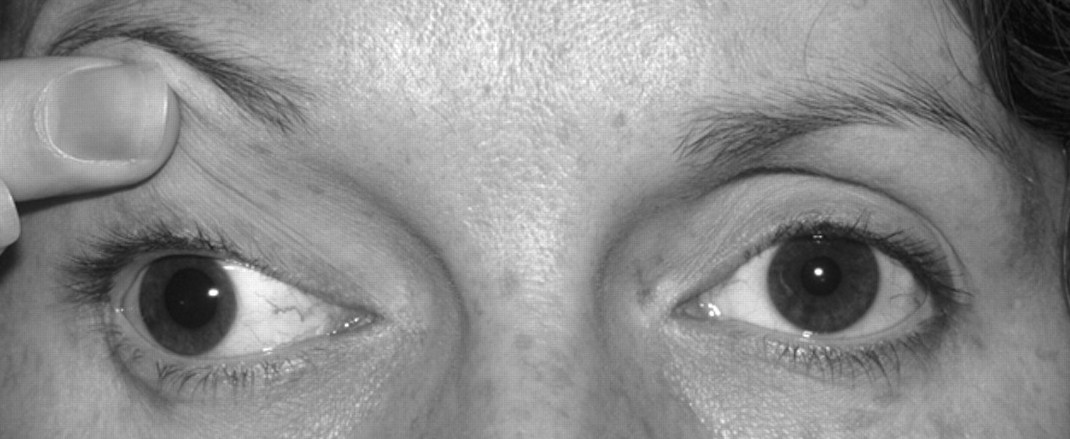
240) A 55 year old woman is evaluated in the emergency room for acute development of double vision and droopy right eyelid. She also reports pain in her right eye. She denies any fever. She has no significant past medical history. On physical examination, she is afebrile and her blood pressure 132/88 mm Hg. Head and neck examination reveals ptosis of the right eyelid. Pupillary light reflex is lost. She can not adduct her right eye past the midline. The right eye is deviated downwards and laterally as shown in the picture below. There is no sensory loss on her face and the function of her other facial muscles are intact. Power is normal in all her extremities and deep tendon reflexes are intact.
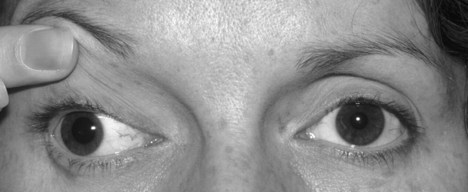
The most appropriate next step in management?
A) Temporal artery biopsy
B) Obtain Erythrocyte Sedimentation Rate
C) Observation
D) Magenetic Resonance Angiography (MRA)
E) Ptosis Surgery
Filed under: USMLE Test Prep | Tagged: archer neurology, archer ophthalmology, usmle ophthalmology images, usmle step 3 neurology, usmle step 3 ophthalmology | 8 Comments »
Posted on July 13, 2011 by Archer USMLE Reviews
239) A 64 year old woman is evaluated in the emergency room for acute development of double vision and droopy left eyelid. She denies any fever or headache. Her past medical history is significant for diabetes mellitus and hypertension. On physical examination, she is afebrile and her blood pressure 132/88 mm Hg. Head and neck examination reveals ptosis of the left eyelid. Pupillary light reflex is intact . She can not adduct her left eye past the midline. The left eye is deviated downwards and laterally as shown in the picture below. There is no sensory loss on her face and the function of her other facial muscles are intact. Power is normal in all her extremities and deep tendon reflexes are intact.
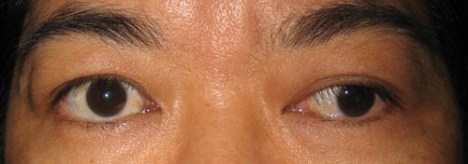
Which of the following is the most likely eventual outcome of her condition?
A) Sub-arachnoid hemorrhage
B) Spontaneous resolution
C) Cerebellar ataxia
D) Persistent visual deficits
E) Aneurysmal Rupture
Filed under: USMLE Test Prep | Tagged: archer neurology, archer ophthalmology, usmle ophthalmology images, usmle step 3 neurology, usmle step 3 ophthalmology | 7 Comments »
Posted on July 13, 2011 by Archer USMLE Reviews
238) A 64 year old woman is evaluated in the emergency room for acute development of double vision and droopy left eyelid. She denies any fever or headache. Her past medical history is significant for diabetes mellitus and hypertension. On physical examination, she is afebrile and her blood pressure 132/88 mm Hg. Head and neck examination reveals ptosis of the left eyelid. Pupillary light reflex is intact . She can not adduct her left eye past the midline. The left eye is deviated downwards and laterally as shown in the picture below. There is no sensory loss on her face and the function of her other facial muscles are intact. Power is normal in all her extremities and deep tendon reflexes are intact.
Which of the following is the most likely cause of her symptoms?
A) Ophthalmoplegic migraine
B) Diabetic Mono-neuropathy
C) Posterior communicating artery aneurysm
D) Weber syndrome
E) Lateral medullary syndrome
Filed under: USMLE Test Prep | Tagged: archer neurology, archer ophthalmology, usmle ophthalmology images, usmle step 3 neurology, usmle step 3 ophthalmology | 7 Comments »
Posted on July 12, 2011 by Archer USMLE Reviews
237 ) A 25-year old primi-para is evaluated for soreness in her breasts. She just started breast feeding her three day old male infant. She also reports low grade fever over the past few hours. On examination, her temperature is 99.2F. Her breasts are hard and swollen. They are warm to touch. She has pain on movement of the breast. Which of the following is the most appropriate recommendation?
A) Hand expression of milk between feedings
B) Use of ”Breast Pump”
C) Correction of improper “Latch on”
D) Re-assurance
E) Breast massage
Filed under: USMLE Test Prep | Tagged: archer obstetrics, archer pediatrics, breast feeding problems, obstetrics, usmle step 3 gynecology and obstetrics, usmle step 3 obstetrics, USMLE STEP3 PEDIATRICS | 9 Comments »
Posted on July 12, 2011 by Archer USMLE Reviews
236) A 25-year woman presents to your office with complaints of soreness in her right nipple. She had a uneventful delivery 10 days ago. She has been breast feeding for the past ten days. She had some nipple soreness initially however, it resolved after five days. The soreness returned on the eighth day and is persistent since then . The pain is present through out the nursing episode. On examination, she is afebrile. Her right breast is full. There is no erythema or tenderness. Which of the following is the most appropriate recommendation to the patient?
A) Hand expression of milk between feedings
B) Use of “Breast Pump”
C) Correction of improper “Latch on”
D) Re-assurance
E) Breast massage
Filed under: USMLE Test Prep | Tagged: archer obstetrics, archer pediatrics, breast feeding problems, obstetrics, usmle step 3 gynecology and obstetrics, usmle step 3 obstetrics, USMLE STEP3 PEDIATRICS | 11 Comments »
Posted on July 12, 2011 by Archer USMLE Reviews
235) A 25-year woman presents to your office with complaints of soreness in her right nipple. She had a uneventful delivery 10 days ago. She has been breast feeding for the past ten days. She had some nipple soreness initially however, it resolved after five days. The soreness returned on the eighth day and is persistent since then . The pain is present through out the nursing episode. On examination, she is afebrile. Her right breast is full. There is no erythema or tenderness. Which of the following is the most likely cause of her clinical presentation?
A) Poor positioning of infant while feeding
B) Prolonged suckling
C) Inadequate feeding
D) Infection
E) “Normal” Nipple Sensitivity
Filed under: USMLE Test Prep | Tagged: archer obstetrics, archer pediatrics, breast feeding problems, obstetrics, usmle step 3 gynecology and obstetrics, usmle step 3 obstetrics, USMLE STEP3 PEDIATRICS | 10 Comments »
Posted on July 12, 2011 by Archer USMLE Reviews
234 ) A 25-year old primi-para is evaluated for soreness in her breasts. She just started breast feeding her three day old male infant. She also reports low grade fever over the past few hours. On examination, her temperature is 99.2F. Her breasts are hard and swollen. They are warm to touch. She has pain on movement of the breast. Which of the following is the most likely cause of her clinical presentation?
A) Poor positioning of infant while feeding
B) Prolonged suckling
C) Inadequate feeding
D) Infection
E) Plugged ducts
Filed under: USMLE Test Prep | Tagged: archer obstetrics, archer pediatrics, breast feeding problems, obstetrics, usmle step 3 gynecology and obstetrics, usmle step 3 obstetrics, USMLE STEP3 PEDIATRICS | 7 Comments »
Posted on July 11, 2011 by Archer USMLE Reviews
233 ) A 36 year old man is evaluated in the emergency room for nausea, vomiting and diarrhea. He also reports fever of one day duration. He denies any rash. He has had 4 to 5 watery bowel movements in the last 24 hours. The diarrhea started 3 days ago and is progressively worse. He feels extremely weak. His last sexual activity was 6 months ago and he always uses condoms. He denies any fever or using any recent medications. He works in tourism industry and returned from a business trip to Mexico one week ago. On examination, temperature is 101F, blood pressure 90/50 mm hg, his oral mucosa are dry. Abdominal examination is benign. The patient has been adequately hydrated and feels better now though, he continues to have diarrhea. Which of the following is the most appropriate next step in management?
A) Observation
B) Rifaximin
C) Amoxicillin
D) Trimethoprim-Sulfamethoxazole
E) Metronidazole
Filed under: USMLE Test Prep | Tagged: ARCHER GASTROENTEROLOGY, Archer Infectious Diseases, archer travel medicine, travel medicine, USMLE STEP 3 GASTROENEROLOGY, USMLE STEP 3 INFECTIOUS DISEASES, usmle step 3 travel medicine | 9 Comments »
Posted on July 11, 2011 by Archer USMLE Reviews
232 ) A 32 year old man is evaluated in the clinic for an intensely itchy rash on his feet. He denies any fever or using any recent medications. He just returned yesterday from a pleasure trip to Philippines. While on vacation , he spent his time visiting historical sites, rivers and beaches. He does not swim but enjoys walking in the water near shore. On examination, there are multiple papules on the plantar and dorsal aspect of the feet bilaterally. There are no vesicles or pustules. The skin above the level of calves is not involved. Which of the following is the most likely diagnosis?
A) Hot tub folliculitis
B) Vibrio Vulnificus
C) Cutaneous Larva Migrans
D) Swimmer’s itch
E) Strongyloidiasis
Filed under: USMLE Test Prep | Tagged: Archer Infectious Diseases, archer travel medicine, itchy traveler, travel medicine, USMLE STEP 3 DERMATOLOGY, usmle step 3 travel medicine | 5 Comments »
Posted on July 11, 2011 by Archer USMLE Reviews
231) A 62 year old woman was admitted to the hospital two days ago for complicated acute pyelonephritis. She was initially started on piperacillin-tazobactam. On day 2 of hospital stay, urinary cultures are positive for ampicillin resistant enterococci. The patient is started on Vancomycin . While receiving her first dose of vancomycin, she develops flushing, redness and itching over her upper body. On physical examination, her temperature is 101F, HR 120/min and blood pressure is 120/70 mm hg. There is erythema on her chest. An intravenous cannula is in place on her left arm. There is no erythema or tenderness at the cannula site. Which of the following is the most appropriate next step in management?
A) Diphenhydramine
B) Stop Vancomycin and switch to Linezolid
C) Change the IV cannula
D) Methylprednisolone
E) Stop Vancomycin and restart at slower rate
Filed under: USMLE Test Prep | Tagged: Archer Infectious Diseases, USMLE STEP 3 INFECTIOUS DISEASES | 12 Comments »
Posted on July 10, 2011 by Archer USMLE Reviews
230) A 72-year-old white man with history of type 2 diabetes mellitus and hypertension is evaluated in your office during a follow up visit. He was discharged 3 days ago from the hospital after undergoing diagnostic cardiac catheterization for an abnormal exercise stress test. Femoral sheath was removed three days ago. He denies any chest pain or shortness of breath. On physical examination, he is afebrile, HR 120/min and blood pressure is 120/70 mm hg. There is a new palpable mass in the right groin and systolic bruit is heard at the catheter insertion site. Dorsalis pedis and posterior tibial pulses are intact. Which of the following is the most likely diagnosis?
A) Arterio-venos fistula
B) Local Hematoma
C) Femoral artery true aneurysm
D) Hematoma in continuity with arterial lumen
E) Femoral artery thrombosis
Filed under: USMLE Test Prep | Tagged: Archer cardiology, Archer Critical Care, archer surgery, USMLE STEP 3 CARDIOLOGY, usmle step 3 critical care, usmle step 3 surgery | 9 Comments »
Posted on July 10, 2011 by Archer USMLE Reviews
229 ) A 70-year-old white man with history of poorly controlled type 2 diabetes mellitus and hypertension is evaluated in the emergency room for severe pain in the right thigh. The patient has a coronary artery disease for which he underwent cardiac catheterization with percutaneous coronary intervention 2 days ago. He denies any chest pain or shortness of breath. On physical examination, temperature is 99.2F, HR 120/min and blood pressure is 80/40 mm Hg. There is erythema at the site of cardiac catheterization in the femoral area. Laboratory studies reveal a creatinine of 4.2mg% as opposed to his baseline creatinine of 1.8mg% one week ago. Which of the following is the most likely diagnosis?
A) Toxic shock syndrome
B) Atheroembolism
C) Contrast Nephropathy
D) Ruptured femoral artery pseudo-aneurysm
E) Retroperitoneal bleeding
Filed under: USMLE Test Prep | Tagged: Archer cardiology, Archer Critical Care, ARCHER NEPHROLOGY, dr.red nephrology lecture, USMLE STEP 3 CARDIOLOGY, usmle step 3 critical care, usmle step 3 nephrology | 14 Comments »
Posted on July 10, 2011 by Archer USMLE Reviews
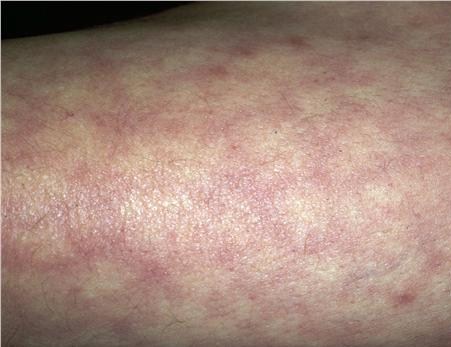
228 ) A 70-year-old white man with type 2 diabetes mellitus and hypertension is evaluated in the emergency room for lacy purplish discoloration of the lower extremities that developed few hours ago. He reports diffuse bodyaches and low grade fever. He denies chest pain or shortness of breath. His past medical history is significant for coronary artery disease for which he underwent cardiac catheterization with percutaneous coronary intervention one week ago. He has a history of chronic atrial fibrillation for which he is on 5mg coumadin daily. His most recent INR has been therapeutic at 2.5. Physical examination reveals lacy purplish pattern on bilateral lower extremities shown in the image below.

The site of cardiac catheterization in the femoral area is clean and healing with out any tenderness or erythema. Neurological examination is normal. Laboratory studies reveal a creatinine of 4.2mg% as opposed to his baseline creatinine of 1.8mg% one week ago. Hemoglobin and platelet count are within normal limits. WBC count is 12.6k/µl with neutrophils 70%, bands of 2% , eosinophils 18% and lymphocytes 10%. Which of the following is the most likely diagnosis?
A) Toxic shock syndrome
B) Atheroembolism
C) Contrast Nephropathy
D) Anti-Phospholipid antibody syndrome
E) Cryoglobulinemia
Filed under: USMLE Test Prep | Tagged: Archer cardiology, Archer Critical Care, ARCHER NEPHROLOGY, dr.red nephrology lecture, USMLE STEP 3 CARDIOLOGY, usmle step 3 critical care, usmle step 3 nephrology | 8 Comments »
Posted on July 9, 2011 by Archer USMLE Reviews
227 ) A 32 year old man is evaluated in the clinic for intensely itchy rash . The rash appeared suddenly on his trunk 24 hours ago and has spread to his extremities. He denies any fever or using any recent medications. His travel history is significant for a trip to Colarado 3 days ago where he stayed with his friend in a hotel room. He enjoyed camping in the mountains and spent his evenings in the hotel building’s swimming pool. On examination, there are multiple red papules all over his body and extremities but not on the head and the neck. Some of the papules are tender. Which of the following is the most appropriate next step in management?
A) Doxycycline
B) Lyme Serology
C) Ciprofloxacin
D) Reassurance
E) Amoxicillin-Clavulunate
Filed under: USMLE Test Prep | Tagged: archer dermatology, Archer Infectious Diseases, archer pediatrics, archer preventive medicine, archer travel medicine, itchy traveler, travel medicine, USMLE STEP 3 DERMATOLOGY, USMLE STEP 3 INFECTIOUS DISEASES, usmle step 3 pediatrics, usmle step 3 preventive medicine, usmle step 3 travel medicine | 4 Comments »
Posted on July 9, 2011 by Archer USMLE Reviews
226 ) A 2 year old male child is brought by his pregnant mother for evaluation of a rash all over his body. The rash developed 48 hours ago and is associated with fever. She also has a 12 year old daughter at home who is being treated for acute lymphoid leukemia. On examination, the patient has rash in different stages including papules, pustules and vesicles. You suspect chickenpox. The mother denies any history of chickenpox in the past. Which of the following is the most appropriate recommendation?
A) Varicella vaccine to the male child
B) Varicella vaccine to the mother
C) Varicella Zoster immunoglobulin to mother and the daughter
D) Varicella vaccine to mother and VZIG to the daughter
E) Varicella vaccine to the mother and the daughter
Filed under: USMLE Test Prep | Tagged: archer pediatrics, archer preventive medicine, usmle step 3 pediatrics, usmle step 3 preventive medicine | 5 Comments »
Posted on July 9, 2011 by Archer USMLE Reviews
225 ) A 40 year-old man presents to office for routine follow-up visit. His past medical history is significant for hypertension for which he is on Hydrochlorthiazide. He denies any chest pain, palpitatations, shortness of breath or syncope. He is a journalist by occupation. A routine EKG is obtained and is shown below:
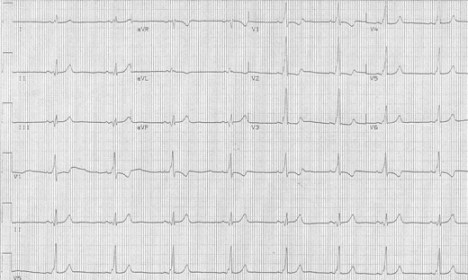
Which of the following is the most appropriate managment of this patient?
A) Beta-blocker
B) Catheter ablation
C) Diltiazem
D) Observation
E) Electrophysiological studies
Filed under: USMLE Test Prep | Tagged: Archer cardiology, ARCHER ELECTROCARDIOGRAMS, USMLE ECGS, USMLE EKG, USMLE ELECTROCARDIOGRAMS, USMLE STEP 3 CARDIOLOGY, usmle step 3 critical care, USMLE STEP 3 ELECTROCARDIOGRAMS | 13 Comments »
Posted on July 9, 2011 by Archer USMLE Reviews
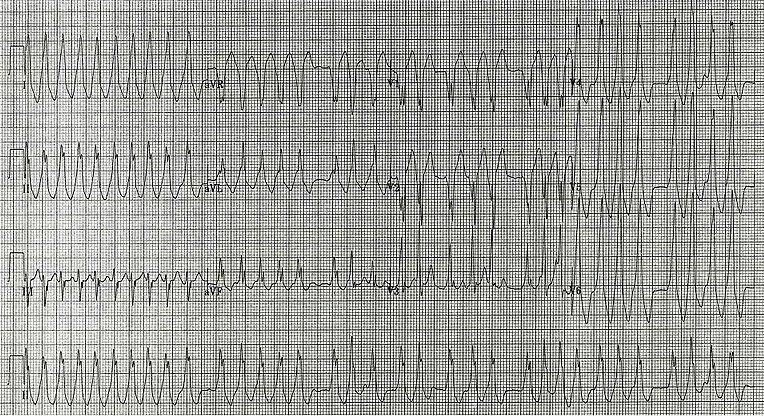
224 ) A 38 year old man presents to the emergency room with complaints of palpitations that started 5 hours ago and are persistent. He denies having similar episodes in the past. He has no fever or shortness of breath or chest pain. His past medical history is unremarkable and he is not on any medications. On examination, blood pressure is 110/60 mmHg, heart rate 130/min, RR 20/min and temperature 98.6 F. Cardiovascular examination reveals irregularly, irregular heart rate at 140beats/min. An Electrocardiogram now is shown below :
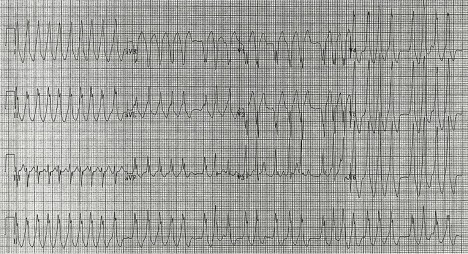
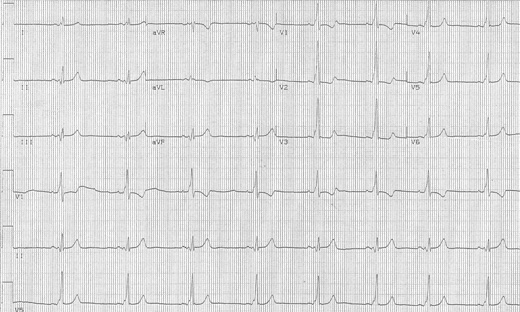
An EKG that was done during a pre-employment health check-up upon patient’s own request two months ago is shown below:

The most appropriate next step in managing this patient:
A) Defibrillation
B) Intravenous metoprolol
C) Intravenous Diltiazem
D) Intravenous Procainamide
E) Synchronized Cardioversion
Filed under: USMLE Test Prep | Tagged: Archer cardiology, ARCHER ELECTROCARDIOGRAMS, USMLE ECGS, USMLE EKG, USMLE ELECTROCARDIOGRAMS, USMLE STEP 3 CARDIOLOGY, usmle step 3 critical care, USMLE STEP 3 ELECTROCARDIOGRAMS | 7 Comments »
Posted on July 9, 2011 by Archer USMLE Reviews
223 ) A 38 year old obese African American man presented to the emergency department with headache, blurred vision and weakness. His past medical history was unremarkable. He smoked about 1 pack per day for 20 years. On examination, this patient’s blood pressure was 210/140 mmHg, heart rate 98/min, RR 20/min and temperature 98.6 F. He is alert, awake and oriented. Physical examination is unremarkable. There are neurological deficits. Laboratory investigations showed Hemoglobin 8.2 g/dl, White cell count 10k/µl, Platelets 97000/µl, Sodium 140meq/L, Potassium 4.0meq/L, Bicarbonate 24meq/L, BUN 34 and Creatinine 3.2mg% . Further investigations included a Lactic dehydrogenase which was elevated at 900U/L and a reticulocyte count of 7.0% . A periphreral smear is shown below :

The most appropriate next step in managing this patient:
A) Fresh frozen plasma
B) Intravenous Labetalol
C) Plasmapheresis
D) Intravenous Nitroprusside
E) Hemodialysis
Filed under: USMLE Test Prep | Tagged: Archer cardiology, Archer hematology, ARCHER NEPHROLOGY, USMLE STEP 3 CARDIOLOGY, usmle step 3 critical care, USMLE step 3 Hematology, usmle step 3 nephrology | 12 Comments »
Posted on July 9, 2011 by Archer USMLE Reviews
222 ) A 70-year-old white man with type 2 diabetes mellitus, hypertension, coronary artery disease, chronic kidney disease and severe chronic obstructive pulmonary disease is admitted with increasing shortness of breath. The patient lives by himself and he has not been very compliant with his medications. On examination, he is awake and oriented, blood pressure is 230/140 . Funduscopic examination reveals papilledema. Chest exam reveals bilateral crepitations. Neurological examination is normal. An electrocardiogram reveals non specific ST segment changes. A chest x-ray shows bilateral pulmonary edema. Pulse oximetry reveals a saturation of 89% on room air. The patient is started on oxygen by nasal cannula. Laboratory studies reveal a creatinine of 4.2mg% as opposed to his baseline creatinine of 2.2mg%. Which of the following is the most appropriate next step in management?
A) Non-contrast CT Scan, head
B) Intravenous Sodium nitroprusside
C) Intravenous Labetalol
D) Fenoldapam
E) Cardiac catheterization.
Filed under: USMLE Test Prep | Tagged: Archer cardiology, Archer pulmonology, USMLE STEP 3 CARDIOLOGY, usmle step 3 critical care, USMLE STEP 3 PULMONOLOGY | 5 Comments »
Posted on July 9, 2011 by Archer USMLE Reviews
221 ) A 73-year-old white man with type 2 diabetes mellitus, hypertension, coronary artery disease is admitted with increasing shortness of breath and lower-extremity edema. A brain natriuretic peptide level is 1000 pg/ml. His medications include glyburide, aspirin, atorvastatin and enalapril. He is allergic to sulfonamides. On physical examination, he has bilateral crepitations more in the right chest. Extremity examination reveals 3+ edema bilaterally. An electrocardiogram reveals changes consistent with left venricular hypertrophy but no evidence of acute ischemia. Cardiac enzymes are negative. A chest x-ray reveals bilateral pulmonary edema. Pulse oximetry reveals a saturation of 89% on room air. The patient is started on oxygen by nasal cannula. Which of the following is the most appropriate next step in management?
A) Intubation
B) Intravenous Furosemide
C) Bilevel Positive Airway pressure (BIPAP)
D) Intravenous Ethacrynic acid
E) Cardiac catheterization.
Filed under: USMLE Test Prep | Tagged: Archer cardiology, Archer pulmonology, USMLE STEP 3 CARDIOLOGY, usmle step 3 critical care, USMLE STEP 3 PULMONOLOGY | 6 Comments »
Posted on July 9, 2011 by Archer USMLE Reviews
220 ) A 32 year old woman presents to the office for evaluation of dysuria, frequency and urgency. She has had two episodes of urinary tract infection in the last 4 months. Her previous episodes were managed with 3 day course of trimethoprim-sulfamethoxazole. She has been using cranberry juice but has not experienced any improvement in recurrences. At this time, she denies any flank pain or fever. She is sexually active with one partner and uses diaphragms with spermicide for contraception. Physical examination is normal except for mild supra-pubic tenderness. There is no costo-vertebral angle tenderness. Urinalysis reveals pyuria and 3+ leukoesterase. There are no WBC casts. Which of the following is the most appropriate recommendation to avoid recurrent urinary tract infections in this patient?
A) Post-coital voiding
B) Post-Coital Trimethoprim-sulfamethoxazole
C) Avoid vaginal spermicides
D) CT scan abdomen
E) Daily Trimethoprim-Sulfamethoxazole
Filed under: USMLE Test Prep | Tagged: Archer Infectious Diseases, ARCHER NEPHROLOGY, ARCHER UROLOGY, USMLE STEP 3 INFECTIOUS DISEASES, usmle step 3 nephrology, usmle step 3 urology | 4 Comments »
Posted on July 9, 2011 by Archer USMLE Reviews
219 ) A 32 year old woman presents to the office for evaluation of recurrent urinary tract infections. She has had two episodes of cystitis in the last 4 months. In the past she was managed with 3 day course of trimethoprim-sulfamethoxazole. Now, she presents with burning micturition, urgency and frequency. She denies flank pain or fever. She uses diaphragms with spermicide for contraception. She is sexually active with one partner and her last sexual intercourse was 5 months ago since her partner is away on a business tour. Physical examination is normal except for mild supra-pubic tenderness. Which of the following is the most appropriate recommendation to avoid recurrent urinary tract infections in this patient?
A) Post-coital voiding
B) Post-Coital Trimethoprim-sulfamethoxazole
C) Avoid vaginal spermicides
D) CT urogram and Cystoscopy
E) Daily Trimethoprim-Sulfamethoxazole
Filed under: USMLE Test Prep | Tagged: Archer Infectious Diseases, ARCHER NEPHROLOGY, ARCHER UROLOGY, USMLE STEP 3 INFECTIOUS DISEASES, usmle step 3 nephrology, usmle step 3 urology | 5 Comments »
Posted on July 9, 2011 by Archer USMLE Reviews
218 ) A 36 year old woman presents to the office for a routine follow up visit. Her past medical history is significant for recurrent urinary tract infections which are unrelated to sexual intercourse. She was initially managed on intermittent self-treatment with Trimethoprim-Sulfamethoxazole. However, in view of frequent episodes of UTI she was started on continuous Trimthoprim prophylaxis one week ago. She denies any fever or abdominal pain. She has not had dysuria or frequency or urgency over the last 5 days. Physical examination is normal. Laboratory investigations reveal a WBC count of 6.3k/µl with normal differential, Sodium 140meq/l, Potassium 4.0meq/l, Blood urea nitrogen 10mg% and Creatinine 1.4mg% . Her labs obtained 1 month ago show Blood urea nitrogen of 12mg% and creatinine of 0.7mg%. The most likely explanation for her increased creatinine?
A) Allergic Interstitial Nephritis
B) Acute Tubular Necrosis
C) Pyelonephritis
D) Decreased tubular secretion
E) Papillary necrosis
Filed under: USMLE Test Prep | Tagged: Archer Infectious Diseases, ARCHER NEPHROLOGY, USMLE STEP 3 INFECTIOUS DISEASES, usmle step 3 nephrology | 5 Comments »
Posted on July 9, 2011 by Archer USMLE Reviews
217 ) A 36 year old woman presents to the office complaining of burning urination, urgency and frequency. She denies fever or abdominal pain. She is sexually active with one partner for the past 1 month and her partner always uses condoms. Her past medical history is significant for peri-partum cardiomyopathy 2 years ago which spontaneously resolved. She recalls that she was treated with furosemide for her peripheral edema at that time however, the drug had to be stopped due to a severe rash. On physical examination, she is afebrile. There is mild supra-pubic tenderness with out any costo-vertebral angle tenderness. Urinalysis reveals bacteriuria and several white blood cells with out any casts. Which of the following is the most appropriate next step in managing this patient?
A) Admit for Intravenous antibiotics
B) Trimethoprim-Sulfamethoxazole
C) Piperacillin-Tazobactam
D) Moxifloxacin
E) Trimethoprim
Filed under: USMLE Test Prep | Tagged: Archer Infectious Diseases, ARCHER NEPHROLOGY, USMLE STEP 3 INFECTIOUS DISEASES, usmle step 3 nephrology | 5 Comments »
Posted on June 29, 2011 by Archer USMLE Reviews
216 ) A 75 year old woman with past medical history of hypertension and diabetes is evaluated in your office for 20 lb weight loss. She reports decreased appetite and depressed mood for the past 6 months. Her history is significant for chronic smoking 1 pack per day for last 50 years. She lives alone and does all her daily activities by herself. She has no known cardiac problems. She denies shortness of breath or cough. On examination, scleral icterus is noted. Lab studies show total bilirubin elevated at 10gm% with predominantly direct component. A subsequent CT of the abdomen shows a heterogeneous mass of about 4cm in diameter. A triphasic CT with pancreatic protocol shows invasion of the portal vein and encasement of superior mesenteric artery by the mass. There are no distant metastases. A chest X-Ray is normal. CA 19-9 level 1400U/ml. Which of the following is the most appropriate next step ?
A) Hospice Evaluation
B) Surgical resection
C) Fine needle aspiration biopsy
D) Chemotherapy
E) Radiation therapy
Filed under: USMLE Test Prep | Tagged: ARCHER GASTROENTEROLOGY, Archer oncology, archer surgery, USMLE STEP 3 GASTROENEROLOGY, USMLE STEP 3 ONCOLOGY, usmle step 3 surgery | 10 Comments »
Posted on June 29, 2011 by Archer USMLE Reviews
215 ) A 65 year old woman with past medical history of chronic smoking is evaluated in the office for painless jaundice. She has noticed yellow coloring of her skin about 3 weeks ago and it has been progressively increasing. She denies abdominal pain, fever or altered bowel movements. On examination, she has profoundly icteric sclerae. Lab studies show total bilirubin elevated at 5gm% with predominantly direct component. A subsequent CT of the abdomen shows a heterogeneous mass of about 4cm in diameter. A triphasic CT with pancreatic protocol shows no involvement of portal vein or superior mesenteric artery. No lymphadenopathy is evident. CA 19-9 level 400u/ML. Which of the following is the most appropriate next step?
A) Fine needle aspiration biopsy
B) Surgical resection
C) Radiation therapy
D) Chemotherapy
E) Hospice evaluation
Filed under: USMLE Test Prep | Tagged: ARCHER GASTROENTEROLOGY, Archer oncology, USMLE STEP 3 GASTROENEROLOGY, USMLE STEP 3 ONCOLOGY | 6 Comments »
Posted on June 29, 2011 by Archer USMLE Reviews
214 ) A 58 year old woman presents to the office because her friend noticed that she looked yellow and asked her to seek medical attention. Lately, her urine has turned dark yellow but she thought it was because of reduced fluid intake. She has lost 10lb weight in the last 3 months. She denies any abdominal pain, nausea or vomiting. She denies any fever. She smoked about 2 packs per day for the past 30 years. She quit smoking 1 month ago. Physical examination reveals profound scleral icterus. Laboratory investigations reveal a Hemoglobin 10gm%, MCV 88, Total Bilirubin 17gm% , Direct bilirubin 13gm%, AST 120U/L, ALT 110U/L and ALP 600U/L. A CT scan of the abdomen does not show any mass in the pancreas. Ultrasound of the abdomen reveals common bile duct diameter of 12mm. Which of the following is the most appropriate next step in management?
A) CA 19-9 level
B) Endoscopic Retrograde Cholangiopancreatography
C) CT guided biopsy of Pancreatic Head
D) Percutaneous Biliary Stent
E) Haptoglobin level
Filed under: USMLE Test Prep | Tagged: ARCHER GASTROENTEROLOGY, Archer oncology, USMLE STEP 3 GASTROENEROLOGY, USMLE STEP 3 ONCOLOGY | 9 Comments »
Posted on June 28, 2011 by Archer USMLE Reviews
213 ) A 38 year old woman with manic depressive illness is evaluated in the emergency department for slurred speech and severe fatigue of one day duration. She also has nausea and vomiting since morning. She denies any recent fever. She has been on Lithium Carbonate for the past 3 months and her level was therapeutic 1 month ago. She is a very compliant patient and denies overdosing herself with lithium. Her past medical history is significant for hypertension for which she was started on combination of Hydrochlorthiazide and Enalapril one week ago. She does report “salt craving” for past few days and has been taking excessive amount dietary salt though she is aware that it is not good for blood pressure. Physical examination reveals coarse tremors and fasciculations. Laboratory investigations reveal slightly increased serum creatinine at 1.2mg%. Her baseline creatinine is 1.0mg%. Today, the Lithium level is 3.0 mmol/L. Which of the following is responsible for acute lithium toxicity in this patient?
A) Acute renal failure
B) Drug interaction
C) Increased absorption
D) Excess Salt intake
E) Intentional overdose
Filed under: USMLE Test Prep | Tagged: Archer Psychiatry, USMLE Step 3 psychiatry | 9 Comments »
Posted on June 28, 2011 by Archer USMLE Reviews
212 ) A 40 year old man is brought by his sister to the Emergency room for a change in his mental status. The patient appears slightly confused but as per his sister, he reported weakness and blurred vision yesterday. She also noticed that his gait has been abnormal and un-coordinated for the past one day. She reports that he was diagnosed with a psychiatric disorder few months ago and was started on a medication 4 months ago. He seems to be compliant with his medications but has not followed up with his psychiatrist for the past 3 months. His Past Medical History is unremarkable except for the mental illness. Physical examination reveals a slightly confused male. Neck examination shows mild but diffuse enlargement of thyroid with out any nodules. Nystagmus and exaggerated reflexes are noted. The drug that is most likely responsible for this patient’s presentation?
A) Fluoxetine
B) Venlafaxine
C) Lithium
D) Amitryptyline
E) Escitalopram
Filed under: USMLE Test Prep | Tagged: Archer Psychiatry, USMLE Step 3 psychiatry | 8 Comments »
Posted on June 28, 2011 by Archer USMLE Reviews
211 ) A 42 year old woman in otherwise good health presents to the Emergency room for severe headache. She has history of migraines in the past for which she uses sumatriptan at the onset of Headache and usually, she has relief. Though this is not the worst headache of her life, she says that it is very severe and is upset that the headache did not resolve even after injecting herself with a triptan. She denies any fever. Her physical and neurological examination is benign. There is no neck stiffness. A computed tomography (CT) scan of the head is obtained, which did not reveal any abnormalities. A subsequent lumbar puncture reveals bloody fluid. The specimen was transported to the lab for further evaluation. It was processed in the laboratory 12 hours later and the report indicates “Xanthochromia” Which of the following most likely explains the CSF findings?
A) Status migranosus
B) Meningitis
C) Sub-arachnoid Hemorrhage
D) Sentinel bleed
E) Delay in CSF processing
Filed under: USMLE Test Prep | Tagged: archer neurology, neurology usmle mcqs, usmle step 3 neurology | 10 Comments »
Posted on June 28, 2011 by Archer USMLE Reviews
210 ) A 42 year old woman in otherwise good health presents to the Emergency room for sudden onset of severe headache 2 hour ago. She has no previous history of headache or migraine . Upon arrival in the ER, she described her headache as “10 out of 10” in severity. She thinks this is the worst headache of her life. She denies any fever or visual problems or drug abuse. Her physical and neurological examination is benign. There is no neck stiffness at this time. A computed tomography (CT) scan of the head is obtained, which did not reveal any abnormalities. A subsequent lumbar puncture reveals bloody fluid which shows decreasing red color in subsequent collection tubes. The last collection tube shows red fluid but much decreased color as opposed to the first collection tube. Which of the following is the most appropriate management decision?
A) Repeat Lumbar Puncture at a different site
B) Immediate CSF centrifugation
C) Neurosurgery evaluation
D) Re-assurance and analgesic therapy
E) Subcutaneous Sumatriptan
Filed under: USMLE Test Prep | Tagged: archer neurology, neurology mcq, neurology mcqs, usmle step 3 neurology | 8 Comments »
Posted on June 27, 2011 by Archer USMLE Reviews
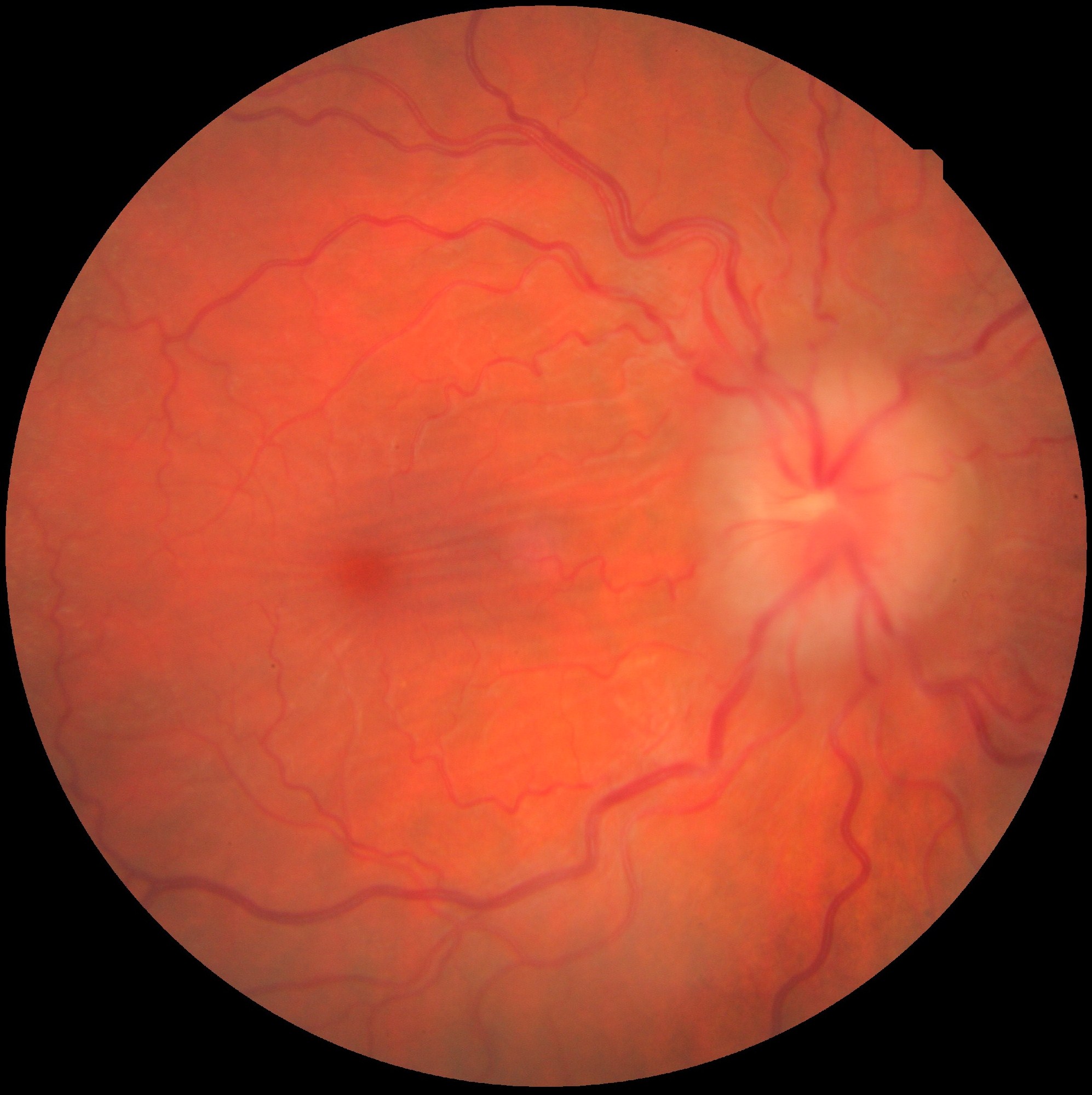
209) A 35 Year old woman presents for evaluation of recurrent headaches for the past few months. Lately, she has been waking up with a headache almost daily though it tends to improve in the latter half of the day. She is frustrated as she can not even get some sleep during the attack since lying down makes her feel worse . She has associated nausea. She has transient attacks of light flashes that resolve spontaneously. Her menstrual history is unremarkable. On physical examination, she has no neurological deficits. Funduscopic examination shown below:
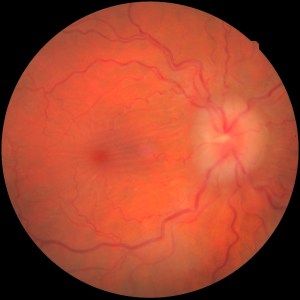
Which of the following information, if elicited in the patient history, would increase the clinical suspicion of the diagnosis?
A) Constipation
B) Family History
C) Recent weight gain
D) Galactorrhea
E) Urinary incontinence
Filed under: USMLE Test Prep | Tagged: archer neurology, archer ophthalmology, neurology mcq, neurology mcqs, usmle ophthalmology images, usmle step 3 neurology, usmle step 3 ophthalmology | 6 Comments »
Posted on June 27, 2011 by Archer USMLE Reviews
208) A 31 Year old woman with suspected diagnosis of Idiopathic intracranial hypertension underwent a lumbar puncture. An MRI of the brain that was obtained prior to lumbar puncture did not reveal any structural abnormalities or mass effect. Laboratory investigations including coagulation parameters were normal. About 12 hours after the procedure, she complains of moderate to severe headache. Headache is mainly in the occipital region which increases while sitting up and improves on lying flat. She has two episodes of vomiting in the last one hour. She also complains of dizziness and ringing sensation in her ears. Physical examination does not reveal any papilledema or focal neurological deficits. Most appropriate next step in managing this patient?
A) Blood cultures
B) MRI of the Lumbar Spine
C) Non-Contrast CT scan of brain
D) Observation
E) Acetazolamide
Filed under: USMLE Test Prep | Tagged: archer neurology, neurology mcq, neurology mcqs, usmle step 3 neurology | 4 Comments »
Posted on June 26, 2011 by Archer USMLE Reviews
207) A 30 year old pregnant woman with 32 week gestation presents with severe itching that is present through out the day and interferes with her sleep at night. The itching is more on palms and soles. She had a similar problem during her previous pregnancy. She denies any history of eczema or liver disease in the past. Physical examination reveals excoriations on the skin. There are no papules, wheals or plaques. There is no scleral icterus. Laboratory investigations reveal an elevated Asparate aminotransferase ( AST) 140u/l , Alanine Aminotransferase (ALT) 150u/l, alkaline phosphatase at 280U/L ( Normal 40 to 120U/L) and Total bilirubin 2.2mg%. Complete blood count is with in normal limits. Hepatitis profile is negative. Which of the following is the most common complication associated with this entity:
A) Hepatic Failure
B) Fetal Prematurity
C) Renal Failure
D) Disseminated Intravascular Coagulation
E) Severe Post-Partum Hemorrhage
Filed under: USMLE Test Prep | Tagged: Archer Gynecology, archer obstetrics, archer ostetrics and gynecology, obstetrics, usmle step 3 gynecology, usmle step 3 gynecology and obstetrics, usmle step 3 obstetrics | 6 Comments »
Posted on June 26, 2011 by Archer USMLE Reviews
206) A 30 year old pregnant woman with 32 week gestation presents with severe itching that is present through out the day and interferes with her sleep at night. The itching is more on palms and soles. She had a similar problem during her previous pregnancy. She denies any history of eczema or liver disease in the past. Physical examination reveals excoriations on the skin. There are no papules, wheals or plaques. There is no scleral icterus. Laboratory investigations reveal an elevated Asparate aminotransferase ( AST) 140u/l , Alanine Aminotransferase (ALT) 150u/l, alkaline phosphatase at 280U/L ( Normal 40 to 120U/L) and Total bilirubin 2.2mg%. Complete blood count is with in normal limits. Hepatitis profile is negative. The most appropriate next step in managing this patient?
A) Serum Bile Acid level
B) Liver Biopsy
C) Ursodeoxycholic acid
D) Immediate delivery
E) Long-chain 3-hydroxyacyl CoA dehydrogenase (LCHAD) mutation testing
Filed under: USMLE Test Prep | Tagged: Archer Gynecology, archer obstetrics, archer ostetrics and gynecology, obstetrics, usmle step 3 gynecology, usmle step 3 gynecology and obstetrics, usmle step 3 obstetrics | 8 Comments »
Posted on June 26, 2011 by Archer USMLE Reviews
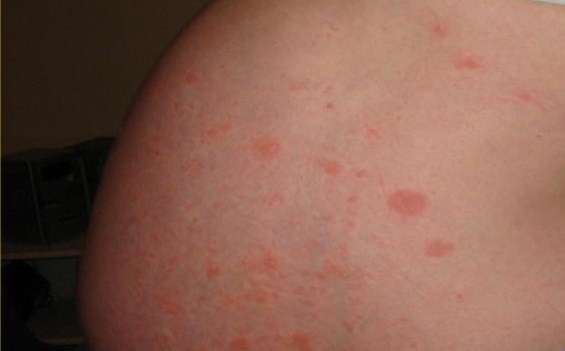
205) A 27 year old woman, primigravida at 35 week gestation is evaluated in your office for extreme itching associated with rash. The rash and itching first started on her abdomen but now spread to her buttocks and legs as well. She denies similar complaints in any of her family members. On physical examination, an eruption consisting of small erythematous wheals is noted mostly in the abdominal striae with sparing of the peri-umbilical skin. Some rash is also noted on her lower extremities. There is no involvement of palms and soles. A picture of her abdomen is shown below:
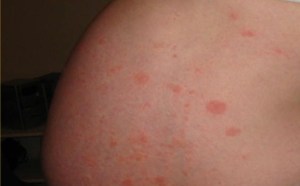
Most likely diagnosis:
A) Scabies
B) Pemphigoid Gestationis
C) Intahepatic Cholestasis of Pregnancy (ICP)
D) Pruritic Urticarial Papules of Pregnancy (PUPP)
E) Pruritic folliculitis of Pregnancy
Filed under: USMLE Test Prep | Tagged: archer dermatology, Archer Gynecology, archer obstetrics, archer ostetrics and gynecology, obstetrics, USMLE STEP 3 DERMATOLOGY, usmle step 3 dermatology images, usmle step 3 gynecology, usmle step 3 gynecology and obstetrics, usmle step 3 obstetrics | 5 Comments »
Posted on June 25, 2011 by Archer USMLE Reviews
204) A 16 year old boy presents for pre-participation examination prior to athletic training in his college campus. He denies any history of dizziness or palpitations or shortness of breath upon exertion. He denies any syncopal episodes. His father died of cardiac arrest during a marathon at the age of 32 years. Physical examination reveals a systolic murmur that increases with valsalva maneuver. Electrocardiogram reveals changes consistent with left ventricular hypertrophy. An echocardiogram reveals asymmetric septal hypertrophy and Systolic Anterior Motion (SAM) of the Anterior Mitral Leaflet. Which of the following is an indication for Implantable Cardioverter-Defibrillator in this patient?
A) Left Ventricular Thickness of 22mm
B) Increase in blood pressure upon exercise
C) His age
D) Systolic Anterior Motion of Mitral leaflet
E) Decrease in blood pressure during exercise
Filed under: USMLE Test Prep | Tagged: Archer cardiology, archer pediatrics, archer sports medicine, USMLE STEP 3 CARDIOLOGY, usmle step 3 sports medicine | 7 Comments »
Posted on June 25, 2011 by Archer USMLE Reviews
203) A 16 year old boy presents for pre-participation examination prior to athletic training in his college campus. He denies any history of dizziness or palpitations or shortness of breath upon exertion. He denies any syncopal episodes. He denies any family history of Sudden Cardiac Death. Physical examination reveals a systolic murmur that increases with valsalva maneuver. Electrocardiogram reveals changes consistent with lEft ventricular hypertrophy. An echocardiogram reveals asymmetric septal hypertrophy and Systolic Anterior Motion (SAM) of the Anterior Mitral Leaflet. The findings are discussed with patient and he intends to participate in athletics because he does not have any symptoms. Which of the following is the most appropriate next step?
A) Clear the patient for athletic training
B) Start Beta Blocker Therapy
C) Exercise Stress Test
D) Cardiac catheterization
E) Implantable Cardioverter-Defibrillator
Filed under: USMLE Test Prep | Tagged: Archer cardiology, archer pediatrics, archer sports medicine, USMLE STEP 3 CARDIOLOGY, usmle step 3 sports medicine | 6 Comments »







 Archer USMLE Step 3 Blog