Posted on June 25, 2011 by Archer USMLE Reviews
202) A 36 year old male athlete is rushed to the Emergency Room after he collapsed during a soccer game. In the Emergency Room, he is found to be in cardiac arrest and cardio-pulmonary resuscitation is begun as per ACLS protocol. There is no history of trauma during the game. As per his brother, the patient does not have any history of hypertension or diabetes or known cardiac disease.There is no family history of sudden cardiac death. Which of the following is the most common cause of sudden cardiac death in athletes with a clinical profile similar to this patient?
A) Aortic dissection
B) Idiopathic
C) Coronary artery disease
D) Hypertrophic Obstructive Cardiomyopathy
E) Valvular Heart Disease
Filed under: USMLE Test Prep | Tagged: Archer cardiology, archer sports medicine, USMLE STEP 3 CARDIOLOGY, usmle step 3 sports medicine | 5 Comments »
Posted on June 25, 2011 by Archer USMLE Reviews
201) A 16 year old male athlete is rushed to the Emergency Room after he collapsed during a basket ball match. In the Emergency Room, he is found to be in cardiac arrest and cardio-pulmonary resuscitation is begun as per ACLS protocol. A electrocardiogram reveals ventricular fibrillation which is successfully defibrillated with 200 joules. The patient is currently awake but confused. His mother is present at the bed-side and denies any family history of sudden cardiac death. Which of the following is the most common cause of sudden death in young athletes?
A) Aortic dissection
B) Long QT syndrome
C) Blunt trauma to the chest
D) Hypertrophic Obstructive Cardiomyopathy
E) Mitral valve prolapse
Filed under: USMLE Test Prep | Tagged: Archer cardiology, archer pediatrics, archer sports medicine, USMLE STEP 3 CARDIOLOGY, usmle step 3 pediatrics, usmle step 3 sports medicine | 3 Comments »
Posted on June 25, 2011 by Archer USMLE Reviews
200) A 26 year old pregnant woman is evaluated in the emergency Room for severe weakness and dehydration from persistent vomiting. She is a primigravida at 9 weeks gestation. She reports that her nausea and vomiting started at 5 weeks of pregnancy and have progressively become worse. She denies any abdominal pain or vaginal bleeding. She denies any headache. Her bowel movements are normal. Her past medical history is unremarkable. Her pre-pregnancy weight was 60lbs but now she weighs about 55lbs. Physical examination reveals dry oral mucosa. Laboratory tests reveal Serum sodium 140 meq/l, potassium 3.2meq/L, Chloride 102meq/l, Bicarbonate 34meq/L. hematocrit of 52 (normal = 36 to 46%). Urine reveals ketonuria. The most appropriate next step in investigating this patient:
A) Hemoglobin A1C level
B) Serum Uric acid
C) Urine for total protein
D) Ultrasound Pelvis
E) Plain X-Ray abdomen
Filed under: USMLE Test Prep | Tagged: Archer Gynecology, archer obstetrics, archer ostetrics and gynecology, obstetrics, usmle step 3 gynecology, usmle step 3 gynecology and obstetrics, usmle step 3 obstetrics | 8 Comments »
Posted on June 25, 2011 by Archer USMLE Reviews
199) A 32 year old pregnant woman with 32 week gestation is evaluated in your office during a regular follow up visit. She denies any abdominal pain or vomiting or vaginal bleeding or headache. She denies any headache or pruritis. She feels healthy and is hoping for a normal delivery. Physical examination is consistent with 32 week gestation. Extremities do not reveal any edema. Laboratory investigations reveal a mild anemia at 12.0gm%. Rest of the lab results are normal except for elevated alkaline phosphatase at 280U/L ( Normal 40 to 120U/L) . The patient is very concerned. Most appropriate next step in managing this patient?
A) Ultrasound of the liver and gall bladder
B) Immediate Delivery
C) Ursodeoxycholic acid
D) Reassurance
E) Obtain Peripheral Smear
Filed under: USMLE Test Prep | Tagged: Archer Gynecology, archer obstetrics, archer ostetrics and gynecology, obstetrics, usmle step 3 gynecology, usmle step 3 gynecology and obstetrics, usmle step 3 obstetrics | 4 Comments »
Posted on June 25, 2011 by Archer USMLE Reviews
198) A 26 year old pregnant woman is evaluated in the emergency Room for severe weakness and dehydration from persistent vomiting. She is a primigravida at 9 weeks gestation. She reports that her nausea and vomiting started at 5 weeks of pregnancy and have progressively become worse. She denies any abdominal pain or vaginal bleeding. She denies any headache. Her bowel movements are normal. Her past medical history is unremarkable. Her pre-pregnancy weight was 60lbs but now she weighs about 55lbs. Physical examination reveals dry oral mucosa. Laboratory tests reveal Serum sodium 140 meq/l, potassium 3.2meq/L, Chloride 102meq/l, Bicarbonate 34meq/L. hematocrit of 52 (normal = 36 to 46%); Total bilirubin of 2mg/dl; ALT of 160U/L and AST of 140U/L. Urine is positive for ketones. Ultrasound reveals normal fetus appropriate for 9 week gestation. Which of the following explains her jaundice and elevated liver function tests:
A) Acute pancreatitis
B) Acute Fatty Liver of pregnancy
C) Cholestatis of Pregnancy
D) Hyperemesis Gravidarum
E) HELLP Syndrome
Filed under: USMLE Test Prep | Tagged: Archer Gynecology, archer obstetrics, archer ostetrics and gynecology, obstetrics, usmle step 3 gynecology, usmle step 3 gynecology and obstetrics, usmle step 3 obstetrics | 6 Comments »
Posted on June 25, 2011 by Archer USMLE Reviews
197) A 26 year old pregnant woman is evaluated in the emergency Room for severe weakness and dehydration from persistent vomiting. She is a primigravida at 9 weeks gestation. She reports that her nausea and vomiting started at 5 weeks of pregnancy and have progressively become worse. She denies any abdominal pain or vaginal bleeding. She denies any headache. Her bowel movements are normal. Her past medical history is unremarkable. Her pre-pregnancy weight was 60lbs but now she weighs about 55lbs. Physical examination reveals dry oral mucosa. Laboratory tests reveal hematocrit of 52 ( normal = 36 to 46%) ; Total bilirubin of 2mg/dl; ALT of 160U/L and AST of 140U/L . Urine is positive for ketones. Ultrasound reveals normal fetus appropriate for 9 week gestation. The most likely diagnosis:
A) Diabetic Ketoacidosis
B) Acute Pancreatitis
C) Hyperemesis Gravidarum
D) Cholestasis of Pregnancy
E) Morning Sickness
Filed under: USMLE Test Prep | Tagged: Archer Gynecology, archer obstetrics, archer ostetrics and gynecology, obstetrics, usmle step 3 gynecology, usmle step 3 gynecology and obstetrics, usmle step 3 obstetrics | 2 Comments »
Posted on June 25, 2011 by Archer USMLE Reviews
196) A 72 year old obese woman is evaluated during a follow up visit for Diabetes Mellitus Type II. She had been started on Insulin therapy 5 years ago after several months of oral hypoglycemic drug therapy that failed to improve her glycemic control. Her insulin regimen includes 40 units of Insulin Glargine at bed time and 10 units of Regular insulin 30 minutes before each meal. She has been maintained on this regimen for the past 2 years. She had two recent hypoglycemic episodes for which she was treated in the Emergency Room. She now reports that she had been taking only 5 units of Regular insulin before meals but her post-prandial glucometer reading has usually, been on the lower side of the normal range. At this rate of decreased insulin use, she believes she will be cured of diabetes by the end of the year. She denies any recent weight changes. She denies any depression or drug overdose. Physical examination is consistent with diabetic neuropathy in bilateral lower extremities. The most appropriate next step in managing this patient:
A) Urine Sulfonyl Urea screen
B) C-peptide level
C) Renal Function Tests
D) Stop Insulin therapy
E) Switch to Regular insulin to Lispro
Filed under: USMLE Test Prep | Tagged: Archer endocrinology, DIABETES MELLITUS TYPE ii, usmle step 3 endocrinology | 5 Comments »
Posted on June 24, 2011 by Archer USMLE Reviews
195) A 3 year old male child is brought to emergency room by his concerned mother because of history of fever for the past 5 days. The patient also has developed a red rash on his extremities. On physical examination, temperature is 102F. The tongue is very inflamed and has red, enlarged papillae. Posterior pharynx is erythematous without any exudate. There is a palpable cervical lymph node of 1.8cm on the right side of the neck. There is conjunctival erythema bilaterally. Erythema is noted on palms and soles. and skin appears to be peeling off around the nails. Laboratory investigations reveal a WBC count of 15,000/µl, platelet count of 550000 per μl and an ESR of 50mm/hr. Which of the following therapeutic interventions are most helpful in preventing the complications associated with this condition?
a) Penicillin
b) Corticosteroids
c) Aspirin
d) Intravenous Immunoglobulin
e) Clindamycin
Filed under: USMLE Test Prep | Tagged: archer pediatrics, usmle step 3 pediatrics | 6 Comments »
Posted on June 24, 2011 by Archer USMLE Reviews
194) A 3 year old male child is brought to emergency room by his concerned mother because of history of fever for the past 5 days. The patient also has developed a red rash on his extremities. On physical examination, temperature is 102F. The tongue is very inflamed and has red, enlarged papillae. Posterior pharynx is erythematous without any exudate. There is a palpable cervical lymph node of 1.8cm on the right side of the neck. There is conjunctival erythema bilaterally. Erythema is noted on palms and soles. and skin appears to be peeling off around the nails. Laboratory investigations reveal a WBC count of 15,000/µl, platelet count of 550000 per μl and an ESR of 50mm/hr. Which of the following is the complication that is most likely to develop if this condition is not treated early in the course?
A) Toxic Shock Syndrome
B) Acute Glomerulonephritis
C) Coronary artery aneurysm
D) Carditis
E) Aortic regurgitation
Filed under: USMLE Test Prep | Tagged: archer pediatrics, usmle step 3 pediatrics | 4 Comments »
Posted on June 24, 2011 by Archer USMLE Reviews
193) A 22 year old woman is evaluated in the office for recurrent attacks of colicky abdominal pain that resolve spontaneously. During the episodes, the pain lasts about 8 to 10 hours and resolves spontaneously. Several clinical examinations, laboratory investigations and imaging studies in the past have failed to reveal any clear etiology. She also reports recurrent swelling of her hands and feet, the last episode being 2 weeks ago. Physical examination is benign. A complete blood count and comprehensive metabolic panel are with in normal limits. Which of the following is most helpful in confirming the suspected diagnosis?
a) Urinary Porphobilinogen
b) Radio Allergosorbent Test ( RAST)
c) Anti-nuclear antibodies
d) C1-Inhibitor
e) 24 hour delta-aminolevulinic acid
Filed under: USMLE Test Prep | Tagged: archer dermatology, ARCHER GASTROENTEROLOGY, USMLE STEP 3 DERMATOLOGY, USMLE STEP 3 GASTROENEROLOGY | 5 Comments »
Posted on June 24, 2011 by Archer USMLE Reviews
192) A 26-year-old man is evaluated for a history of recurrent headaches and palpitations for the past one month. At this time, he has no headache or palpitations. He denies any chest pain, dizziness or shortness of breath. His past history is unremarkable except for fleshy nodules over his trunk that have been present since adolescence and have been increasing in number. On physical examination, heart rate is 102/min; blood pressure is 168/100 (Lying) and 138/90 ( Standing). Skin examination reveals freckling in the inguinal region and several fleshy tumors on his back as shown in the picture:
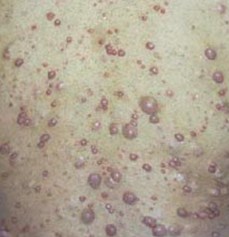
An Electrocardiogram reveals Sinus Tachycardia. The most appropriate next step in management of this patient?
a. Biopsy of the tumors
b. Plasma Metanephrines
c. CT Scan of the abdomen
d. Intravenous fluids
e. 24-Hour holter monitoring
Filed under: USMLE Test Prep | Tagged: Archer cardiology, archer dermatology, USMLE STEP 3 CARDIOLOGY, USMLE STEP 3 DERMATOLOGY, usmle step 3 dermatology images | 5 Comments »
Posted on June 24, 2011 by Archer USMLE Reviews
191) A 68-year-old man with history of chronic obstructive pulmonary disease presents with increasing shortness of breath and increasing sputum production over the past 5 days. The patient also has history of atrial fibrillation for which he is on beta blocker and aspirin. Physical examination reveals a fever of 102°F, scattered wheezes and reduced breath sounds at the right lung base. He is awake and oriented to place, person and time. EKG shows atrial fibrillation that is rate controlled. Chest X-ray reveals a new right sided pleural effusion. A diagnostic thoracentesis is planned. Which of the following is a contraindication for thoracentesis in this patient?
a. Fever > 101F
b. A new right sided effusion
c. Severe left lung disease
d. Atrial Fibrillation
e. Age
Filed under: USMLE Test Prep | Tagged: Archer pulmonology, USMLE STEP 3 PULMONOLOGY | 8 Comments »
Posted on June 17, 2011 by Archer USMLE Reviews
190) A 45 year old man presents to your office for follow up of his dyslipidemia that was diagnosed 6 month. His lipid panel at that time was consistent with high Total cholesterol , Low HDL and high triglyceride levels. He was instructed on dietary modification. He presents for a follow up visit today and reports that he had been strictly compliant with reduced fat diet. His social history is significant for smoking 1 pack per day for the past 25 years . He reports drinking about 1 pint vodka per day for past 10 years. He read on an online magazine that drinking alcohol would boost his “Good” cholesterol. At this time, a repeat fasting lipid profile reveals:
Total Cholesterol : 250mg%
HDL cholesterol : 35mg%
Triglycerides: 500mg%
The most important step at this time to address his lipid abnormalities:
A) Niacin
B) Gemfibrozil
C) Fenofibrate
D) Alcohol cessation
E) Smoking cessation
Filed under: USMLE Test Prep | Tagged: Archer cardiology, archer preventive medicine, archer usmle step 3, USMLE STEP 3 CARDIOLOGY, usmle step 3 preventive medicine, usmle step 3 questions | 3 Comments »
Posted on June 17, 2011 by Archer USMLE Reviews
189) A 38 year old woman presents for follow up visit of right leg weakness. Her history is significant for episodes of diplopia and right sided weakness that recurred thrice in the last 3 months. These presentations were also associated with concomitant urinary incontinence and ataxia. Her most recent hospitalization for such an episode was three weeks ago. She was discharged after her symptoms improved upon using intravenous steroids. An MRI brain taken during the initial episode revealed multiple white matter lesions in the peri-ventricular area. Today, she feels well except for minimal weakness in her right leg. Most appropriate drug that should be administered to this patient to reduce the frequency and severity of these recurrences?
A) Methyl dopa
B) Interferon Beta
C) Methyl Prednisolone
D) Interferon Alpha
E) Intravenos Immunoglobulin ( IVIG)
Filed under: USMLE Test Prep | Tagged: Archer hematology, Archer hematology. usmle step 3 hematology, archer usmle step 3, USMLE step 3 Hematology, usmle step 3 questions | 3 Comments »
Posted on June 17, 2011 by Archer USMLE Reviews
188) A 24 year old woman is evaluated for a history of chronic anemia. Her history is significant for anemia for the past 7 years. She has been treated with oral iron supplements in the past with out any response. She denies any gastrointestinal bleeding. Her menstrual cycle is 3 days in duration and her menses have been scant for the past 5 years. There is no family history of anemia or bleeding disorder or cancer. Physical examination is unremarkable. Laboratory investigations reveal :
Hemoglobin : 10.6gm%
MCV: 68fl ( normal 80 to 100)
WBC : 8.8K/μl
Platelets: 230k/μl
Red Cell Distribution Width : 12.8% ( 10.2 to 14.5%)
Reticulocyte count : 6% ( normal 0.5% to 1.5%)
Which of the following are most helpful in diagnosing this patient’s anemia?
A) Serum ferritin
B) Bone marrow biopsy
C) Direct Coombs’ test
D) Hemoglobin Electrophoresis
E) Anti-endomysial antibodies
Filed under: USMLE Test Prep | Tagged: Archer hematology, Archer hematology. usmle step 3 hematology, archer usmle step 3, USMLE step 3 Hematology, usmle step 3 questions | 4 Comments »
Posted on June 17, 2011 by Archer USMLE Reviews
187) A 34 year old obese man presents with complaints of cough of 3 months’ duration. His cough is non-productive and occurs daily. It is worse in the night. He also reports a need to clear his throat constantly. He denies any nasal congestion. He denies smoking or alcohol. He also reports a chronic history of heart burn for which he uses over the counter antacids intermittently. He works as a nurse in a health care facility. He denies any fever or night sweats or weightloss. On examination, throat is normal in appearance with out any exudate or eythema. Lungs are clear to auscultation. A Chest X-ray is normal. The most appropriate initial diagnostic step in evaluating his cough is :
A) Tuberculin skin test
B) Methacholine challenge
C) Albuterol trial
D) Omeprazole trial
E) 24 Hour esophageal pH monitoring
Filed under: USMLE Test Prep | Tagged: archer step 3 pulmonology, archer usmle step 3, USMLE STEP 3 PULMONOLOGY, usmle step 3 questions | 7 Comments »
Posted on June 16, 2011 by Archer USMLE Reviews
186) A 65 year old woman is evaluated in your office for lower extremity swelling and weakness. She has difficulty speaking for the past 3 months. Her past medical history is significant for renal insufficiency and hypertension that was diagnosed 6 months ago. A TSH level that was obtained 3 weeks ago was normal. She smokes cigarettes, about 1 pack per day for the past 35 years. Her medications include Lisinopril and Hydrochlorthiazide. On physical examination, her heart rate and rhythm are regular. Lungs are clear to auscultation. She has gross edema of the lower extremities. There is no extremity weakness. Head and neck examination reveals findings as shown below:
 Most appropriate next step in management of this patient:
A) Stop Lisinopril
B) Start Levothyroxine
C) Intubation
D) Abdominal fat pad biopsy
E) Serum immunoelectrophoresis
Filed under: USMLE Test Prep | Tagged: archer usmle step 3, USMLE step 3 Hematology, usmle step 3 nephrology, usmle step 3 questions, USMLE step 3 Rheumatology | 2 Comments »
Posted on June 16, 2011 by Archer USMLE Reviews
185) A 65 year old woman is evaluated in your office for lower extremity swelling and weakness. She reports difficulty speaking for the past three months. Her past medical history is significant for renal insufficiency and hypertension that was diagnosed 6 months ago. A TSH level that was obtained 3 weeks ago was normal. She smokes cigarettes, about 1 pack per day for the past 35 years. Her medications include Lisinopril and Hydrochlorthiazide. On physical examination, her heart rate and rhythm are regular. Lungs are clear to auscultation. She has gross edema of the lower extremities. There is no extremity weakness. Head and neck examination reveals findings as shown below:
Which of the following is most likely to be abnormal in this patient?
A) Free thyroxine
B) Serum immunoelectrophoresis
C) Rheumatoid factor
D) ACE Level
E) Bradykinin level
Filed under: USMLE Test Prep | Tagged: archer usmle step 3, USMLE step 3 Hematology, usmle step 3 nephrology, usmle step 3 questions, USMLE step 3 Rheumatology | 1 Comment »
Posted on June 16, 2011 by Archer USMLE Reviews
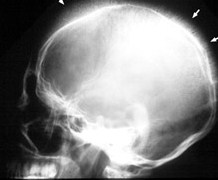
Q184) A 10 year old boy is evaluated in the emergency room after he tripped over and fell during a basketball game. There is no history of loss of consciousness. He denies any injury except some pain in the occipital area of the skull. He also reports chronic fatigue. A routine skull x-ray is obtained for evaluation and is shown below:
 Which of the following is most likely to be associated with these incidental skull x-ray findings ?
A) Monoclonal gammopathy
B) Pituitary tumor
C) Hemolysis
D) Paget disease
E) Glioma
Filed under: Uncategorized, USMLE Test Prep | Tagged: archer pediatrics, Archer radiology, usmle step 2ck radiology, usmle step 2ck radiology questions, usmle step 2ck x-rays, usmle step 3 pediatrics, USMLE Step 3 question bank, USMLE STEP 3 RADIOLOGY, USMLE Step3 | 4 Comments »
Posted on June 14, 2011 by Archer USMLE Reviews
183) A 65 year old woman presents with a white plaque on her vulva. It is associated with occasional itching. She has no other hypo-pigmented lesions on her body. She denies any post-coital bleeding. Physical examination reveals a white colored plaque on the vulva. The lesion is atrophic, thin with a crinkled surface and is well-demarcated. There is atrophy of the labia minora. Most appropriate next step in managing this patient?
A) Topical Corticosteroids
B) Fluconazole
C) Vulvar Biopsy
D) HPV testing
E) Topical Testosterone
Filed under: USMLE Test Prep | Tagged: Archer Gynecology, archer usmle step 3, dermatology usmle, dermatology usmle step 3 questions, USMLE STEP 3 DERMATOLOGY, usmle step 3 gynecology, usmle step 3 questions, Vulvar Lesions, vulvar white plaque | 4 Comments »
Posted on June 14, 2011 by Archer USMLE Reviews
Q182) A 65 year old woman presents with a white plaque on her vulva. She has no other hypo-pigmented lesions on her body. She reports history of repeated itching in the area for past several years. She has seen by her gynecologist in the past. Repeated evaluation did not reveal any infection or candidiasis. She says the lesion has not changed in appearance but the itching bothers her. She denies any vaginal bleeding. Physical examination reveals a raised white colored plaque on the vulva. There are excoriations adjacent to and overlying the lesion. Most likely diagnosis:
A) Lichen Sclerosus
B) Lichen Simplex Chronicus
C) Lichen planus
D) Vulvar Cancer
E) Vitiligo
Filed under: Uncategorized, USMLE Test Prep | Tagged: Archer Gynecology, USMLE STEP 3 DERMATOLOGY, usmle step 3 dermatology images, USMLE Step 3 question bank, usmle step 3 questions, Vulvar Lesions, vulvar white plaque | 3 Comments »
Posted on June 14, 2011 by Archer USMLE Reviews
181) A 35 year-old man with history of ulcerative colitis is seen in your office for nodular, tender skin lesions on both of his anterior legs. He was diagnosed with ulcerative colitis about 6 months ago when he first presented with severe bloody diarrhea. He was initially managed with steroids and is now, being maintained on Mesalamine. A colonoscopy at the time of diagnosis revealed pancolitis. He has no diarrhea now. There is no evidence of weight-loss. Physical examination reveals tender erythematous lesions on the anterior aspect of his bilateral lower extremities. Laboratory investigations reveal leucocytosis and elevated C-reactive protein. Which of the following is a poor prognostic factor in Inflammatory Bowel Disease?
A) Proctitis
B) Erythema nodosum
C) Albumin of 4.1 gm/dl
D) Lymphocytosis
E) Elevated ANCA (anti-neutrophilic cytoplasmic antibodies) level.
Filed under: USMLE Test Prep | Tagged: archer dermatology, ARCHER GASTROENTEROLOGY, USMLE STEP 3 DERMATOLOGY, USMLE STEP 3 GASTROENEROLOGY | 4 Comments »
Posted on June 14, 2011 by Archer USMLE Reviews
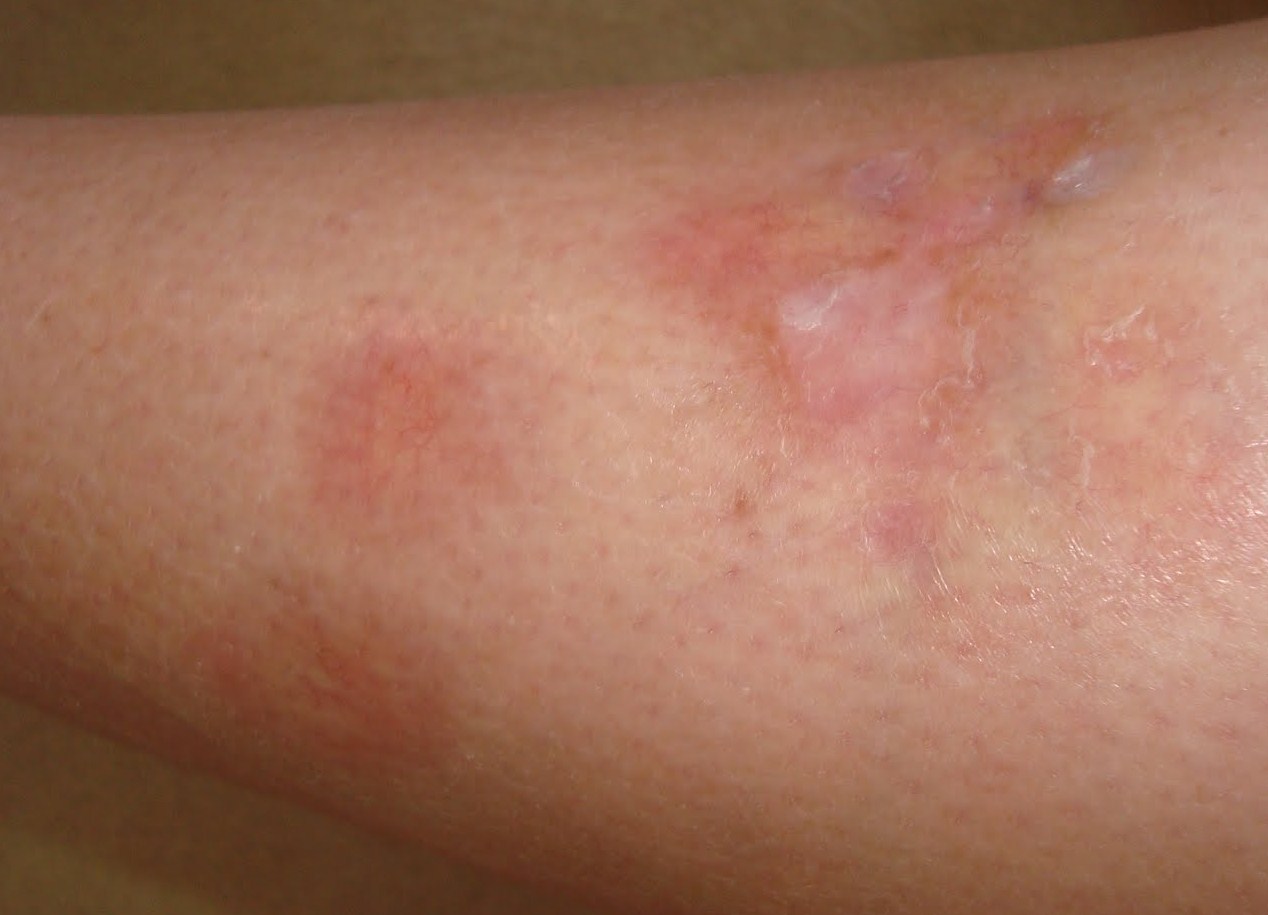
Q180) A 35 year old woman presents with a 3-week history of nodular lesions on her lower legs. She states that he had similar lesions that appeared few years ago and spontaneously resolved . She denies any recent infection except for an upper respiratory infection for which he was treated with antibiotics 2 weeks ago. She is currently not on any medications. He denies any weightloss or diarrhea or constipation. She has no cough or night sweats. Physical examination revealed erythematous nodular swellings on the anterior lower legs. The lesions are tender to palpation.

–
The most common etiology of these lesions world-wide:
A) Tuberculosis
B) Inflammatory bowel disease
C) Sarcoidosis
D) Diabetes Mellitus
E) Streptococcal infection
F) Herpes Simplex Virus
Filed under: Uncategorized, USMLE Test Prep | Tagged: archer dermatology, USMLE STEP 3 DERMATOLOGY, usmle step 3 dermatology images, USMLE Step 3 question bank, usmle step 3 questions | 3 Comments »
Posted on June 14, 2011 by Archer USMLE Reviews
Q179) A 48 Year old woman is evaluated in your office for a skin eruption that appeared three days ago. Her past medical history is significant for Rheumatoid arthritis for which she uses Methotrexate. She recently had increasing joint pain and she was placed on ibuprofen which takes about three times daily. Her joint pain is well controlled now. She is now concerned about the skin eruption that is predominantly distributed on her arms, hands and feet. The eruption is painless. On examination, there is no joint swelling or tenderness, range of motion in the joints is normal. Skin examination reveals the lesions as shown in the image below.

The most appropriate management option for this patient:
A) Observation
B) Stop Ibuprofen
C) Start Acyclovir
D) Intra-lesional corticosteroids
E) Anti-citrullinated pep-tide levels
Filed under: Uncategorized, USMLE Test Prep | Tagged: archer dermatology, USMLE STEP 3 DERMATOLOGY, usmle step 3 dermatology images, USMLE Step 3 question bank, usmle step 3 questions | 4 Comments »
Posted on June 14, 2011 by Archer USMLE Reviews
Q177) A 55-year-old white woman is seen in your office for a 6-month history of slowly enlarging lesions on both lower extremities. She is otherwise healthy. The lesions are painless. She denies any trauma to these areas. Her past medical history is significant for diabetes mellitus diagnosed 2 years ago and rheumatoid arthritis. Her medications include Metformin, Enalapril and Methotrexate. On skin examination, she has 2 cm yellow, smooth, firm centrally depressed plaques involving the thighs and knees. Image is shown below
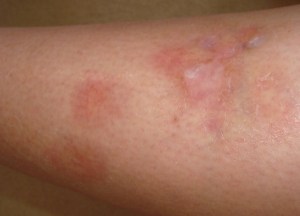
The most likely underlying etiology :
A) Drug-induced
B) Rheumatoid arthritis
C) Diabetes Mellitus
D) Malignancy
E) Sarcoidosis
Filed under: Uncategorized, USMLE Test Prep | Tagged: archer dermatology, Archer endocrinology, USMLE STEP 3 DERMATOLOGY, usmle step 3 dermatology images, USMLE Step 3 question bank, usmle step 3 questions | 3 Comments »
Posted on June 14, 2011 by Archer USMLE Reviews
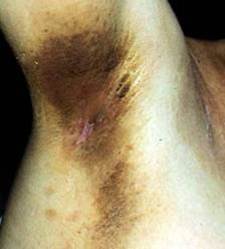
Q177) A 52 Year old obese man is evaluated in your office during a routine annual visit. He denies any fatigue or recent weight changes. He has normal appetite and physically active. He had a colonoscopy 1 year ago that was normal. On physical examination, he is obese with a BMI of 34. Skin examination reveals the findings shown in the image below :

Which of the following is most likely to be seen in this patient?
A) Diabetes Mellitus, Type I
B) Gastric cancer
C) Increased Insulin levels
D) Hyperthyroidism
E) Addison’s disease
Filed under: Uncategorized, USMLE Test Prep | Tagged: archer dermatology, Archer endocrinology, Archer oncology, USMLE STEP 3 DERMATOLOGY, usmle step 3 dermatology images, USMLE Step 3 question bank, usmle step 3 questions | 4 Comments »
Posted on June 14, 2011 by Archer USMLE Reviews
Q176) A 48 Year old woman is evaluated in your office for a skin eruption that appeared few days ago. She has a history of Non-Hodgkin’s lymphoma that was treated 2 years ago and is in remission. A PET ( positron emission tomography) scan that was performed 3months ago did not reveal any evidence of recurrent disease. She also reports recurrent episodes of genital herpetic lesions which resolve spontaneously. Her most recent genital herpetic eruption was 4 weeks ago and it was self-limited. At this time, she is concerned about a skin eruption that is predominantly distributed on her arms, hands and feet. On examination, there is no peripheral lymphadenopathy. Genital examination is normal with out any vesicles or papules. Skin examination reveals the lesions as shown in the image below.
The most appropriate management option for this patient:
A) Observation
B) Repeat PET/CT scan
C) Start Acyclovir
D) Biopsy of the lesion
E) Start antihistamine
Filed under: Uncategorized, USMLE Test Prep | Tagged: Archer cardiology, ARCHER NEPHROLOGY, USMLE STEP 3 CARDIOLOGY, usmle step 3 nephrology, USMLE Step 3 question bank, usmle step 3 questions | 4 Comments »
Posted on June 8, 2011 by Archer USMLE Reviews
Q175) A 28 Year old man is evaluated in your office during a pre-employment health check-up . His history is notable for severe hypertension for which he was started on beta blocker a year ago. He says he stopped the medication 6 months ago because it interfered with his sexual activity. On examination his blood pressure is 172/94. Cardiovascular examination revealed a systolic murmur that radiates to the back and associated with ejection click. Brachio-femoral delay in pulses is noted. The patient is agreeable to restart antihypertensive therapy. The most appropriate management option for this patient:
A) Cardiac catheterization with Stenting
B) Percutaneous coronary intervention
C) Surgery
D) Medical management of Hypertension
E) Aortic valvulotomy
Filed under: Uncategorized, USMLE Test Prep | Tagged: Archer cardiology, ARCHER NEPHROLOGY, USMLE STEP 3 CARDIOLOGY, usmle step 3 nephrology, USMLE Step 3 question bank, usmle step 3 questions | 7 Comments »
Posted on June 8, 2011 by Archer USMLE Reviews
174) A 52 year old African-american woman is seen in the office during a regular follow-up visit. Her history is significant for diabetes mellitus and hypertension. She has been suffering from cough over the past two weeks. She feels that there is a tickle at the back of the throat which leads to paroxysms of coughing. Her medications include Aspirin, Glipizide, atorvastatin, enalapril and Hydrochlorthiazide. Enalapril was started 3 weeks ago at a low dose of 5mg/day. On examination, blood pressure is 132/90 mm Hg seated and standing. Her physical examination is normal. Laboratory values reveal a serum creatinine concentration of 1.8mg/dl. Her baseline creatinine 1 month ago was 1.5mg%. Which of the following is not an indication to stop ACE inhibitor?
A) Swelling of the lips and tongue
B) 20% increase in serum creatinine
C) Intractable severe cough
D) Serum potassium of 6.5mmol/L
E) Hypovolemia with shock
Filed under: USMLE Test Prep | Tagged: ARCHER NEPHROLOGY, usmle step 3, usmle step 3 nephrology | 5 Comments »
Posted on June 8, 2011 by Archer USMLE Reviews
173) A 52 year old African-american woman is seen in the office during a regular follow-up visit. Her history is significant for diabetes mellitus and hypertension. Her medications include Aspirin, Glipizide, atorvastatin and losartan. She states that she stopped taking diuretic because it increased her frequency of urination that it interfered with her active lifestyle.
On examination, blood pressure is 152/94 mm Hg seated and standing. Her physical examination is normal. Laboratory values reveal microalbuminuria of 250mg/24hours and a serum creatinine concentration of 1.3mg/dl. Based on the findings above, her blood pressure medications should be optimized to achieve which of the following targets?
A) < 140/90
B) < 135/85
C) <130/80
D) <120/70
E) <130/90
Filed under: USMLE Test Prep | Tagged: ARCHER NEPHROLOGY, usmle step 3 nephrology, usmle step 3 questions | 6 Comments »
Posted on June 6, 2011 by Archer USMLE Reviews
172) A 44 year old obese woman presents with complaints of abdominal pain in the right upper quadrant that started 4 hours ago and is persistent. She has mild nausea. On physical examination, there is tenderness in right upper quadrant which increases with deep breath. Her liver function tests are normal; WBC count is 24,000/µl with neutrophilic predominance. Amylase and Lipase are with in normal limits. An ultrasound of the gall bladder reveals gall stones but there is no pericholecystic fluid or any other sonographic evidence of acute cholecystitis. Sonographic murphy’s sign is absent. The most appropriate next step in managing this patient:
A) Percutaneous Cholecystostomy
B) Laparoscopic Cholecystectomy
C) HIDA scan
D) Endoscopic Retrograde Cholangiopancreatography (ERCP)
E) Magnetic Resonance CholangiOpancreatography ( MRCP)
Filed under: USMLE Test Prep | Tagged: ARCHER GASTROENTEROLOGY, USMLE STEP 3 GASTROENEROLOGY, usmle step 3 questions | 6 Comments »
Posted on June 6, 2011 by Archer USMLE Reviews
171) A 54 year old woman presents with complaints of abdominal pain in the right upper quadrant that started 4 hours ago and is persistent. She denies any fever, nausea or vomiting.
On physical examination, there is mild tenderness in right upper quadrant. Her liver function tests reveal an AST (SGOT) 160U/L ( N= 5 to 40U/L) , ALT (SGPT) 240U/L( N= 8 to 55U/L) , Alkaline phosphatase 110 U/L ( 40 TO 130U/L) , Total Bilirubin 1.2mg%. An ultrasound of the gall bladder does not reveal any gall stones or pericholecystic fluid and shows a common bile duct diameter of 9mm (normal 6mm). The most appropriate next step in managing this patient:
A) Hepatitis Serology
B) Laparoscopic Cholecystectomy
C) HIDA scan
D) Endoscopic Retrograde Cholangiopancreatography (ERCP)
E) Magnetic Resonance CholangiOpancreatography ( MRCP)
Filed under: USMLE Test Prep | Tagged: ARCHER GASTROENTEROLOGY, USMLE STEP 3 GASTROENEROLOGY, usmle step 3 questions | 5 Comments »
Posted on June 6, 2011 by Archer USMLE Reviews
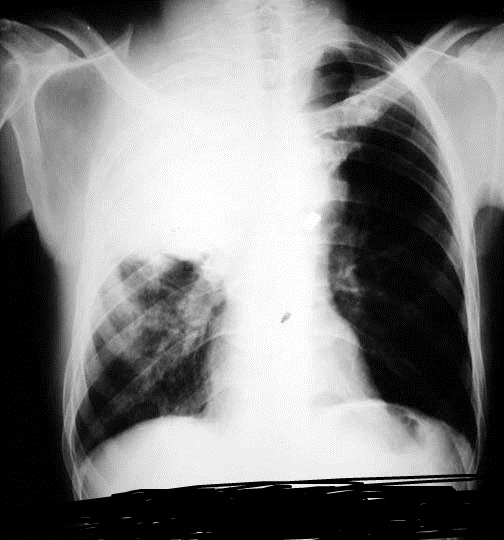
170) A 41 year old woman is evaluated in the office for 20lb weight loss over the last three months. She has a history of Hodgkin’s disease involving mediastinal and cervical lymph nodes and was treated with chemotherapy and Involved field radiation therapy at the age of 12. She is born in the USA and never traveled outside United States. Her recent tuberculin skin test was 2mm about 1 month ago. Recent mammogram was normal. She denies any night sweats or pruritus. She reports chronic cough over the last 6 months associated with intermittent mild hemoptysis. On physical examination, there is no peripheral lymphadenopathy. A Chest X-ray is shown below:

Which of the following is the most likely explanation for the patient’s abnormalities?
A) Tuberculosis
B) Long term sequel of Hodgkin’s therapy
C) Recurrent Hodgkin’s disease
D) Radiation fibrosis
E) Radiation Pneumonitis
Filed under: USMLE Test Prep | Tagged: Archer oncology, Archer pulmonology, Archer radiology, Archer USMLE Step 3 X-rays, Archer X-rays, USMLE STEP 3 ONCOLOGY, USMLE STEP 3 PULMONOLOGY, usmle step 3 questions, USMLE STEP 3 RADIOLOGY, Usmle step 3 X-rays | 7 Comments »
Posted on June 3, 2011 by Archer USMLE Reviews
169) A 77 year old woman is brought by her son for evaluation in your office for excessive forgetfulness. Her son discovered that the patient has become increasingly forgetful over the last two years. She has difficulty managing her finances. She lives alone, drives her own car and prepares her own meals. As per son, several recent new dents were noted on her mother’s car. She is dressed well and is comfortable. Visual acuity on examination is 20/100 in both eyes and is partially corrected with glasses. She also has a fixed visual field deficit that is persistent for past one year due to a cerebrovascular accident. Rest of the physical including sensory and motor functions are grossly normal. She scores 25/30 on Mini-Mental Status examination.
The most appropriate recommendation regarding her driving at this time:
A) Limit driving to day-time only
B) Unrestricted driving
C) Complete cessation of driving
D) On-Road performance based driving test
E) Adaptive devices for safe driving
Filed under: USMLE Test Prep | Tagged: ARCHER ETHICS, aRCHER GERIATRICS, usmle step 3 questions | 4 Comments »
Posted on June 3, 2011 by Archer USMLE Reviews
168) A 70 year old woman with history of Hypertension, Diabetes mellitus, severe osteoarthritis and Macular degeneration is seen during a follow-up visit. He was seen a month ago in your office for evaluation of his driving capacity. At that time, he was noted to have significant impairment of vision and motor skills. His visual impairment persisted despite corrective glasses. He also uses cane to walk and has persistent deficits of left sided weakness and hemi spatial inattention secondary to a stroke 8 months ago. He was subsequently referred to driving rehabilitation specialist and was deemed unsafe to drive. During his visit 2 weeks ago, he has been counseled and was instructed to stop driving. While talking him about his transportation, he tells you that he drove himself to the clinic today.
Your most appropriate response at this time:
a) “When do you think it’s an appropriate time for a person to stop driving?”
b) Let’s talk about some of your concerns regarding retiring from driving
c) I am wondering, is there someone whom you trust, and who would tell you when they thought it was unsafe for you to continue driving?
d) “You are a threat to others while driving on the road”
e) “I have a duty to protect you and so, I will have to report you to DMV”
f) “Let me refer you to Driving Rehabilitation so that they can help you with adaptive devices”
Filed under: USMLE Test Prep | Tagged: ARCHER ETHICS, aRCHER GERIATRICS, usmle step 3 questions | 6 Comments »
Posted on June 3, 2011 by Archer USMLE Reviews
167) A 77 year old woman is brought by her son for evaluation in your office for excessive forgetfulness. Her son discovered that the patient has become increasingly forgetful over the last two years. She has difficulty managing her finances. She lives alone, drives her own car and prepares her own meals. As per her son, several recent new dents were noted on her mother’s car. She is dressed well and is comfortable. Visual acuity on examination is 20/40 in both eyes. She has seen her ophthalmologist recently and was prescribed corrective glasses which correct her vision to normal. She is compliant with using her glasses during driving. Rest of the physical including sensory and motor functions are grossly normal. She scores 25/30 on Mini-Mental Status examination.
The most appropriate recommendation regarding her driving at this time:
A) Limit driving to day-time only
B) Unrestricted driving
C) Complete cessation of driving
D) Referral to Driving Rehabilitation Service
E) Start therapy for Alzheimer’s
Filed under: USMLE Test Prep | Tagged: ARCHER ETHICS, aRCHER GERIATRICS, usmle step 3 questions | 5 Comments »
Posted on June 3, 2011 by Archer USMLE Reviews
166) A 42 year old woman with history of lupus nephritis presents with complaints of pain in her right thigh. Pain increases on walking and standing. Her kidney disease is under control on Prednisone maintenance for past one year. She denies any recent trauma. On physical examination, she is noted to have a right sided limp on walking. Her Hip X-ray is shown below:
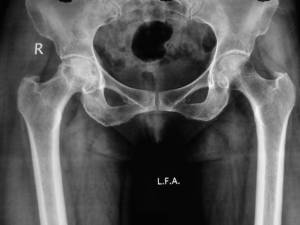
The most likely etiology for the condition shown above:
A) Renal insufficiency
B) Secondary Hyperparathyroidism
C) Systemic Lupus Erythematosus
D) Vitamin D deficiency
E) Prednisone therapy
Filed under: USMLE Test Prep | Tagged: Archer cardiology, USMLE STEP 3 CARDIOLOGY, usmle step 3 questions | 4 Comments »
Posted on June 3, 2011 by Archer USMLE Reviews
165) A 42 year old woman with history of lupus nephritis presents with complaints of pain in her right thigh. Pain increases on walking and standing. Her kidney disease is under control on Prednisone maintenance for past one year. She denies any recent trauma. On physical examination, she is noted to have a right sided limp on walking. Her Hip X-ray is shown below:
The most likely diagnosis is:
A) Osteosarcoma
B) Osteonecrosis
C) Lupus arthritis
D) Osteoarthritis
E) Osteoporosis
Filed under: USMLE Test Prep | Tagged: Archer cardiology, USMLE STEP 3 CARDIOLOGY, usmle step 3 questions | 5 Comments »
Posted on June 2, 2011 by Archer USMLE Reviews
164) A 64 year old man is seen in the Emergency room for sharp sub sternal chest pain that started few hours ago. The pain increases on coughing and deep breathing. His history is significant for Acute Myocardial Infarction about 6 weeks ago. At that time, he was treated with percutaneous coronary intervention and stent placement. On physical examination, temperature is 100F, Heart rate 88/min, and Blood pressure 110/70 mm Hg. Pulsus paradoxus is 8mm Hg and lungs are clear to auscultation. A chest X-ray reveals enlargement of cardiac shadow. The most appropriate treatment for this patient’s presentation:
A) Pericardiocentesis
B) Oral Ibuprofen
C) Oral Prednisone
D) Metoprolol
E) Cardiac catheterization to evaluate stent re-occlusion
Filed under: USMLE Test Prep | Tagged: Archer cardiology, USMLE STEP 3 CARDIOLOGY, usmle step 3 questions | 4 Comments »
Posted on June 2, 2011 by Archer USMLE Reviews
163) A 62 year old man with past medical history significant for Congestive Heart Failure presents with progressively increasing shortness of breath over the past 2 months. He denies any chest pain on exertion or at rest. He was recently started on furosemide for management of peripheral edema and is compliant with low salt diet. An Echocardiogram obtained 3 months ago revealed an Ejection Fraction of 32% (Normal = above 55%) at which time he was started on Enalapril. On physical examination, there is trace ankle edema. There are no lung crackles on auscultation. Rest of the examination is normal. An EKG reveal changes of left ventricular hypertrophy with normal QRS duration. The most important intervention at this time that would most improve his survival is
A) Start Losartan
B) Start Carvedilol
C) Start Isosorbide and Hydralazine
D) Add Digoxin
E) Biventricular Pacing
Filed under: USMLE Test Prep | Tagged: Archer cardiology, archer usmle step 3, USMLE STEP 3 CARDIOLOGY | 7 Comments »
Posted on June 2, 2011 by Archer USMLE Reviews
162) A 42 year old man is evaluated in your office for pain in his left hand. He has a chronic history of biciptal tendinopathy in his left upper extremity and Gastro-esophageal Reflux disease. He denies any history of recent trauma. He reports sudden onset of pain in his left hand that is associated with burning sensation. On physical examination, the left hand is swollen, pal, cool and tender to touch. Radial and ulnar pulses are intact. The image of his hands is shown below:

The cornerstone of the treatment modalities in this condition:
A) Encouraging normal use of the limb
B) Immobilization in plaster cast
C) Surgical decompression
D) Arterial Bypass surgery
E) Prevention of exposure to cold temperatures
Filed under: USMLE Test Prep | 8 Comments »
Posted on June 2, 2011 by Archer USMLE Reviews
161) A 42 year old man is evaluated in your office for pain in his left hand. He has a chronic history of biciptal tendinopathy in his left upper extremity and Gastro-esophageal Reflux disease. He denies any history of recent trauma. He reports sudden onset of pain in his left hand that is associated with burning sensation. On physical examination, the left hand is swollen, pal, cool and tender to touch. Radial and ulnar pulses are intact. The image of his hands is shown below:
Most likely diagnosis of this patient’s presentation
A) Scleroderma
B) Raynaud’s phenomenon
C) Complex regional pain syndrome
D) Acute arterial occlusion
E) Carpal Tunnel Syndrome
F) Compartment Syndrome
Filed under: USMLE Test Prep | Tagged: Archer Rheumatology, archer usmle step 3, USMLE step 3 Rheumatology | 6 Comments »
Posted on June 1, 2011 by Archer USMLE Reviews
159) A 65 year old man with history of Diabetes Mellitus Type II and Hypertension is evaluated for a one month history of numbness in bilateral hands and feet. He has been feeling excessively tired lately. His medications include Glyburide, Metformin and Enalapril for the past 5 years. Physical examination reveals loss of position sensation in bilateral lower extremities. He reports good control of blood pressure and Diabetes. His recent HgBA1C was 6.0% 1 month ago. His laboratory tests reveal a Hemoglobin of 9.0gm%; WBC of 8.0k/µl, MCV of 103 and Platelets of 200k/µl. Once the diagnosis is confirmed, the most important therapeutic step in addressing this patient’s presentation:
A) Stop Metformin
B) Switch to insulin
C) Vitamin b12 and Calcium supplementation
D) Start Gabapentin
E) Start Thyroid Supplements
160) In Question above, the most likely underlying cause of this patient’s presentation:
A) Diabetes related complications
B) Chronic Metformin Use
C) Poor Glycemic Control
D) Myelodysplastic Syndrome
E) Hypothyroidism
Filed under: USMLE Test Prep | Tagged: Archer endocrinology, ARCHER FLUID AND ELECTROLYTES, archer usmle step 3 | 8 Comments »
Posted on May 23, 2011 by Archer USMLE Reviews
158) A 55 year old man comes to the Emergency Room complaining of left upper quadrant discomfort. His physical examination reveals Splenomegaly. Laboratory investigations were sent but there was a significant delay in sending the specimen to the laboratory after collection. Laboratory investigations reveal a WBC count of 110,000/µl with neutrophilia, basophilia and eosinophilia and Serum potassium of 3.0/µl. Leucocyte Alkaline Phosphatase level is low. A bone marrow biopsy is obtained and the results are pending. The most likely explanation of the patients hypokalemia :
A) Delay in specimen transport to lab
B) Marked Leucocytosis and Delay in specimen transport
C) Tumor Lysis
D) Splenomegaly
E) Renal loss
Filed under: USMLE Test Prep | Tagged: ARCHER FLUID AND ELECTROLYTES, ARCHER NEPHROLOGY, archer usmle step 3 | 4 Comments »
Posted on May 23, 2011 by Archer USMLE Reviews
157) A 25 year old woman presents to your office with complaints of muscle cramps and weakness. She smokes 1 pack cigarettes per day and chews tobacco and flavored gum. She also has history of alcoholism and ingests about one pint of vodka every day for the past 2 years. She also uses “Ecstasy” during weekend parties. She has a history of snoring in the night. On examination, afebrile, heart rate is 88/min and blood pressure is 150/98. Laboratory investigations reveal a Sodium of 144 meq/L, potassium of 3.0meq/L, Chloride 98meq/L , Bicarbonate of 34meq/L and Creatinine of 0.8mg%. Urinary chloride is 45meq/L. Which of the following points in the patient’s history is most helpful in diagnosing her condition?
A) Alcohol use
B) Chewing tobacco and flavored gum
C) Snoring in the night
D) Smoking
E) Use of Ecstasy
Filed under: USMLE Test Prep | Tagged: ARCHER ACID-BASE, ARCHER FLUID AND ELECTROLYTES, ARCHER NEPHROLOGY, archer usmle step 3 | 6 Comments »
Posted on May 23, 2011 by Archer USMLE Reviews
156) A 25 year old woman presents to your office with complaints of muscle cramps and weakness. On examination, she is afebrile, heart rate is 88/min and blood pressure is 150/98. Ophthalmoscopic examination shows the following :
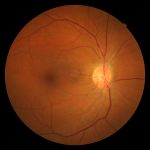
Laboratory investigations reveal a Sodium of 144 meq/L, potassium of 3.0meq/L, Chloride 98meq/L , Bicarbonate of 34meq/L and Creatinine of 0.8mg%. Urinary chloride is 45meq/L. The most likely diagnosis that explains this patient’s clinical features :
A) Gitelman’s syndrome
B) Chronic Laxative abuse
C) Diuretic Abuse
D) Primary Hyperaldosteronism
E) Bartter’s syndrome
Filed under: USMLE Test Prep | Tagged: ARCHER ACID-BASE, ARCHER FLUID AND ELECTROLYTES, ARCHER NEPHROLOGY, archer usmle step 3 | 3 Comments »
Posted on May 23, 2011 by Archer USMLE Reviews
155) A 55 year old man presents to the clinic for progressive right hip pain. He has a history of hearing impairment. He reports pain in the right hip when walking more than 1 block and also, has difficulty putting shoes on his right foot. On examination, the range of motion is significantly limited in the right hip. An X-ray of the right hip reveals significant loss of cartilage, subchondral sclerosis and sub-chondral cysts. X-ray also reveals pagetoid changes in the right iliac wing and right femoral neck. Serum alkaline phosphatase level is 432 IU/L (n = 20 to 140 IU/L). The most appropriate initial step in managing this patient is:
A) Bisphosphanates
B) Acetaminophen
C) Bisphosphanates and Acetaminoiphen
D) Calcitonin Intranasally
E) Oral prednisone
Filed under: USMLE Test Prep | Tagged: Archer Rheumatology, Musculoskeletal Disorders, USMLE step 3 Rheumatology | 4 Comments »
Posted on May 22, 2011 by Archer USMLE Reviews
154) A 68 year old man presents to the clinic for progressive right hip pain. He reports pain in the right hip when walking more than 1 block and also, has difficulty putting shoes on his right foot. On examination, the range of motion is significantly limited in the right hip. An X-ray of the right hip reveals significant loss of cartilage, subchondral sclerosis and sub-chondral cysts. The patient is diagnosed with Right Hip Osteoarthritis and is started on Acetaminophen. Which of the following exercises should not be recommended to this patient at this time:
A) Stair climbing
B) Quadriceps strtengthening
C) Tai-Chi
D) Swimming
E) Bicycling
Filed under: USMLE Test Prep | Tagged: Archer Rheumatology, archer usmle step 3 | 3 Comments »
Posted on May 22, 2011 by Archer USMLE Reviews
153) A 68 year old man presents to the clinic for progressive right hip pain. He has a history of hearing impairment. He reports pain in the right hip when walking more than 1 block and also, has difficulty putting shoes on his right foot. On examination, the range of motion is significantly limited in the right hip. An X-ray of the right hip reveals significant loss of cartilage, subchondral sclerosis and sub-chondral cysts. X-ray also reveals pagetoid changes in the right liac wing and right femoral neck. Serum alkaline phosphatase level is normal. The most appropriate initial step in managing this patient is:
A) Bisphosphanates
B) Acetaminophen, Quadriceps strtengthening and Tai-Chi
C) Bisphosphanates and Acetaminoiphen
D) Calcitonin
E) Oral prednisone
Filed under: USMLE Test Prep | Tagged: Archer Rheumatology, archer usmle step 3, Archer USMLE Step 3 X-rays | 4 Comments »
Posted on May 18, 2011 by Archer USMLE Reviews
152) A 34 year old woman with history of recently diagnosed Rheumatoid Arthritis presents to your office for follow up. She reports much improvement in her symptoms after starting Ibuprofen for pain. She was also started on Hydroxychloroquine 3 weeks ago. Which of the following is most appropriate in monitoring her therapy?
A) Liver function tests every month
B) Complete Blood Count every 3 months
C) Serum Creatinine every week
D) Ophthalmologic evaluation every year
E) Hydroxychloroquine serum levels every month
Filed under: USMLE Test Prep | Tagged: Archer Rheumatology, Hydroxychloroquine, Musculoskeletal Disorders, Rheumatoid arthritis, USMLE step 3 Rheumatology | 11 Comments »
Posted on May 18, 2011 by Archer USMLE Reviews
151) A 65 year old man is evaluated in the Emergency room for Shortness of breath and mild chestpain. On examination, he has dullness to percussion in the left lung base. The breath sounds are bronchial in nature. Vocal and tactile fremitus is increased in this area. Most likely lung abnormality that can explain this patient’s physical examination findings:
A) Consolidation
B) Pneumothorax
C) Pleural Effusion
D) Lung Collapse
E) Hydropneumothorax
Filed under: USMLE Test Prep | Tagged: Archer pulmonology, archer usmle step 3, Archer USmle step 3 physical exam, Dyspnea, Physical examination, Pleural cavity, Pleural effusion, Pneumothorax | 7 Comments »
Posted on May 18, 2011 by Archer USMLE Reviews
Q150) A 34 year old male nurse is brought to the Emergency Room by the EMS with altered mental status. As per his sister, the patient has been on Lithium for his manic symptoms for the past one year. However, his psychiatrist added Fluoxetine and Amitriptyline about 1 week ago for history of depression symptoms.
On physical examination, he has low grade fever at 100.5F, Blood pressure of 110/82 and Heart rate of 120/min. He is confused and the pupils are dilated. There is rigidity in extremities and deep tendon reflexes are exaggerated. Complete blood count, creatinine and Creatine kinase level are within normal limits. Most likely diagnosis:
A) Neuroleptic Malignant Syndrome
B) Lithium Toxicity
C) Serotonin Syndrome
D) Amphetamine abuse
E) Cocaine Intoxication
Filed under: USMLE Test Prep | Tagged: Archer Critical Care, Archer Psychiatry, Cocaine abuse, Neuroleptic Malignant syndrome, Serotonin syndrome, USMLE Step 3 psychiatry | 7 Comments »
Posted on May 15, 2011 by Archer USMLE Reviews
149) A 29 year old internal medicine resident physician has been exposed to a patient with cavitary pulmonary tuberculosis 1 month ago. He denies any symptoms. His physical examination is normal. A tuberculin skin test reaction is positive now at 6mm. His Skin test one year ago was negative. A chest X-ray is within normal limits and chemistry panel is normal. The most appropriate management optiuon for this patient is :
A) Isoniazid, Pyrazinamide, Rifampin and Ethambutol for 9 months
B) Observation as ≥ 10mm is considered positive in health care workers
C) Isoniazid for 9 months
D) Rifampin for 9 months
E) Isoniazid for 6 months
Filed under: USMLE Test Prep | Tagged: Archer Infectious Diseases, archer usmle step 3 | 10 Comments »
Posted on May 15, 2011 by Archer USMLE Reviews
148) A 55 year old nurse has recently been exposed to an in-patient with active Tuberculosis about 2 months ago. Her tuberculin skin test was negative a year ago however; the skin test reveals an 12 mm induration at this time. A chest x-ray is normal. She denies any cough or fever or weightloss. A comprehensive metabolic panel is within normal limits. She is started on Isoniazid for the treatment of latent tuberculosis. Two weeks after the therapy, patient develops edema in the face and neck, maculopapular rash, lymphadenopathy, asthenia, and a fever of 38°C. Laboratory tests reveal a WBC count 20k/µl with a differential showing neutrophils of 50%, eosinophils of 30% and lymphocytes 20%. The most appropriate next step in management:
A) Start antifungal therapy
B) Discontinue Isoniazid and re-administer after de-sensitization
C) Discontinue Isoniazid and administer Rifampin for four months
D) Start Metronidazole
E) Change to multi-drug therapy, Isoniazid , Pyrazinamide, Rifampin and Ethambutol
Filed under: USMLE Test Prep | Tagged: Archer Infectious Diseases, archer usmle step 3, usmle step 3 | 3 Comments »
Posted on May 15, 2011 by Archer USMLE Reviews
147) A 55 year old nurse has recently been exposed to an in-patient with active Tuberculosis about 2 months ago. Her tuberculin skin test was negative a year ago however; the skin test reveals an 12 mm induration at this time. A chest x-ray is normal. She denies any cough or fever or weightloss. A comprehensive metabolic panel is within normal limits. She is started on Isoniazid for the treatment of latent tuberculosis. Two weeks after the therapy, patient develops edema in the face and neck, maculopapular rash, lymphadenopathy, asthenia, and a fever of 38°C. Laboratory tests reveal a WBC count 20k/µl with a differential showing neutrophils of 50%, eosinophils of 30% and lymphocytes 20%. The most likely diagnosis is :
A) Hypersensitivity syndrome
B) Histoplasmosis
C) Disseminated Tuberculosis
D) Parasitic infection
E) Strogyloides infection
Filed under: USMLE Test Prep | Tagged: Archer Infectious Diseases | 4 Comments »
Posted on May 15, 2011 by Archer USMLE Reviews
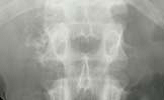
146) A 65 year old Hispanic man presents to your office for intermittent abdominal discomfort. He is afebrile and his he physical examination is benign.
A plain x-ray of his abdomen is obtained , the film is shown below :

The most likely complication that this patient is likely to develop:
A) Inflammatory bowel disease
B) Colon cancer
C) Diabetes Mellitus
D) Chronic Renal Insufficiency
E) Hyperparthyroidism.
Filed under: USMLE Test Prep | Tagged: Archer USMLE Step 3 X-rays | 5 Comments »
Posted on April 17, 2011 by Archer USMLE Reviews
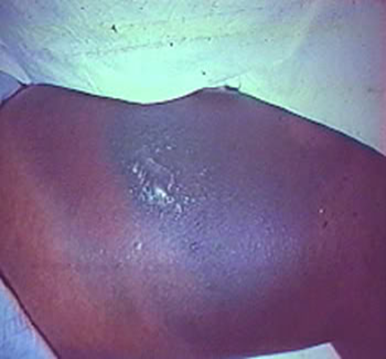
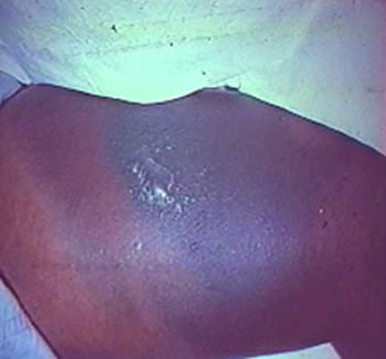
Q143) A 50 year old obese woman with history of uncontrolled Hypertension and congestive heart failure is admitted with complaints of palpitations for the past one week. Her symptoms have worsened over the past 24 hours. An electrocardiogram shows atrial fibrillation with rapid ventricular response. After adequately controlling her heart rate with pharmacotherapy, warfarin therapy is initiated at 10mg per day and the patient is discharged. Three days after her discharge, patient presents to the ER with erythematous and painful lesion on her right thigh.
 About 1/3rd of these patients tend to have an underlying abnormality which is :
A) Fat Malabsoprtion
B) Vitamin K deficiency
C) Protein C deficiency
D) Protein S deficiency
E) Antiphospholipid Antibody Syndrome
144) Which of the following step could have prevented patient’s symptoms in the above case:
A) Checking Factor VII level
B) Checking Protein C level
C) Checking Protein S level
D) Initiation of Warfarin at a low dose
E) Vitmain K Supplementation
Filed under: USMLE Test Prep | 8 Comments »
Posted on April 17, 2011 by Archer USMLE Reviews
Q141) A 50 year old obese woman with history of uncontrolled Hypertension and congestive heart failure is admitted with complaints of palpitations for the past one week. Her symptoms have worsened over the past 24 hours. An electrocardiogram shows atrial fibrillation with rapid ventricular response. After adequately controlling her heart rate with pharmacotherapy, warfarin therapy is initiated at 10mg per day and the patient is discharged. Three days after her discharge, patient presents to the ER with erythematous and painful lesion on her right thigh 
The most likely etiology of this condition is:
A) Cholesterol Embolism
B) Toxic Epidermal Necrolysis
C) Steven Johnson Syndrome
D) Sudden drop in Protein C levels
E) Necrotizing Fascitis
142) The next IMMEDIATE step in managing this patient is:
A) Initiate Heparin
B) Surgical Debridement
C) Intravenos Clindamycin
D) Stop Warfarin, administer Vitamin K and initiate Heparin
E) Intravenos Corticosteroids
Appropriate treatment has been initiated and the patient symptoms have much improved. Patient is concerned about the potential risks from her chronic atrial fibrillation.Which of the following is important in long term management of this patient’s atrial fibrillation associated risks?
A) Clopidogrel
B) Low molecular weight heparin daily
C) Initiate Warfarin at a low dose and titrate slowly to INR of 2 to 3
D) Aspirin only
E) No anticoagulation is necessary
Filed under: USMLE Test Prep | 6 Comments »
Posted on April 17, 2011 by Archer USMLE Reviews
140) A 15 year old boy with history of Cystic Fibrosis presents to the Emergency room with complaints of severe right lower quadrant abdominal pain. He also gives a history of nausea and vomiting for the past 8 hours. On examination, his temperature is 102F and he has right lower quadrant tenderness at McBurney’s Point. CT scan of the abdomen revealed calcified appendicolith within the dilated, fluid-filled appendix and infiltration of the surrounding retroperitoneal fat. The patient is scheduled for Appendicectomy. However, pre-operative labs reveal an abnormal result that would put the patient at an increased risk of bleeding from surgery. The patient is referred for medical clearance. Which of the following is most likely to be abnormal in this patient?
A) Platelet count
B) Prothrombin time
C) Partial Thromboplastin Time
D) Both Prothrombin time and Partial Thromboplastin time
E) Bleeding time
Filed under: USMLE Test Prep | Tagged: Archer hematology, Cystic Fibrosis, Hematology, Partial thromboplastin time, Prothrombin time, USMLE step 3 Hematology, usmle step 3 pediatrics, Vitamin K deficiency in Cystic Fibrosis | 7 Comments »
Posted on March 11, 2011 by Archer USMLE Reviews
138) A 25-year-old woman is diagnosed with major depression. She denies any suicidal ideation. She has no history of manic episodes. She smokes about 1 pack of cigarettes per day. The patient has been appropriately counselled on smoking cessation and is offered antidepressant therapy. She agrees to antidepressant therapy. The patient is very particular about her weight and would never consider any therapy that would lead to weight gain. Which of the following is the most appropriate next step?
A) Start Mirtazepine
B) Start Fluoxetine
C) Start Venlafaxine
D) Start Bupropion
E) Psychotherapy alone
Q139) After one week of beginning the therapy, the patient calls you and reports no improvement in her symptoms. She has been using the therapy regularly. She is upset and would like to discontinue the therapy. Which of the following is most appropriate response?
A) “The Medication is not working. I can switch you to a different therapy”
B) “I am concerned about your compliance with the medications”
C) “You will need group therapy”
D) “You will need Electro-convulsive therapy”
E) “There may be a lag of two to six weeks before the therapy works”
Filed under: USMLE Test Prep | Tagged: Antidepressant, Major depressive disorder, USMLE Step 3 psychiatry | 7 Comments »









 Archer USMLE Step 3 Blog